Trinity Window

Thirteen years ago, I took this picture out the window of my dorm room in Trinity College’s Jarvis Hall. Over the years of renovations and upgrades between then and now, I don’t believe the room or the tree are still there. The iconic Neo-Gothic windows, however, are still there.

Trinity Window

Water in the Desert

From the Interstate across Nevada, the desert landscape astonishes me with its variety. Far from being a boring wasteland, the expanses of waving grasses, shrubs, shallow water, and rock hills provide a spectacular mixture. Even when I know the biology and ecology behind it, my east-coast-calibrated brain still can’t quite grasp that all of this water doesn’t equal trees.

Water in the Desert

Peak View

Cityscapes function best with depth: layers of structures and pathways for the eye. The Bay Area view from Grizzly Peak was one of the earliest cityscapes I experimented with photographing. In those early times, it was Berkeley and San Francisco in the distance that most interested me; after my sabbatical at Berkeley Lab, the winding roads where I rode the bus to work and the bright shapes of the Molecular Foundry and JCAP in the foreground hold my interest far more. I enjoy the way in which subsequent experiences can retroactively shift the meaning in an image.

Peak View

Sunset Drive to Grizzly Peak

Grizzly Peak’s superhuman view of the Bay Area seems so inaccessible; that we could drive there (albeit on steep, winding roads) is surreal. The alignment of mundane cars along the ridge seems like a different phase of matter from the glowing roads and epic accomplishments of civil engineering below. I suspect that those mundane cars will become a lot more interesting when I look back at this picture in 30 years.

Sunset Drive to Grizzly Peak

Farallones, Golden Gate, Alcatraz, Marina, University, Lab

Grizzly Peak’s high vantage point means that a plethora of Bay Area landmarks can be stacked together in one image: From the faintest shadow of the Farallon Islands beyond the bridge, to the Golden Gate, Alcatraz, the Berkeley Marina, the busy travelers on University Avenue, to the Joint Center of Artificial Photosynthesis atop a hill in Berkeley Lab.

Farallones, Golden Gate, Alcatraz, Marina, University, Lab

The Place and the View

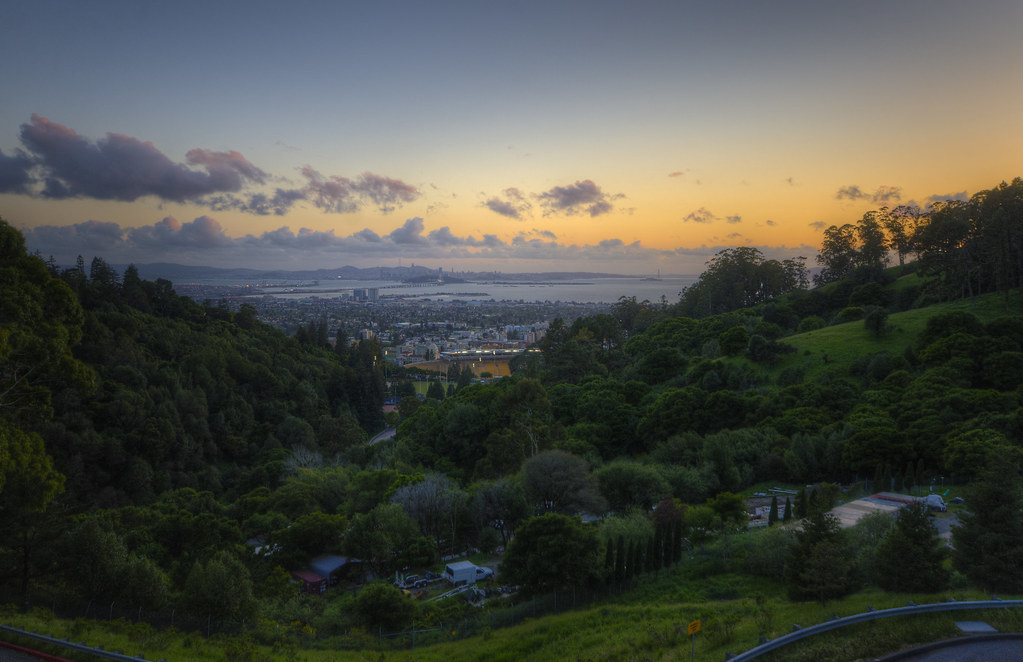
During sabbatical, I posted a lot of views like the one below: A dramatic dusk view of Berkeley and San Francisco from Berkeley Lab’s Building 62, where I spent my days doing renewable energy research. Ending a productive day, I’d step out onto the balcony a 30-second walk down the hall from my office to find these views readily available (when the marine layer didn’t intervene).
The View from the Place

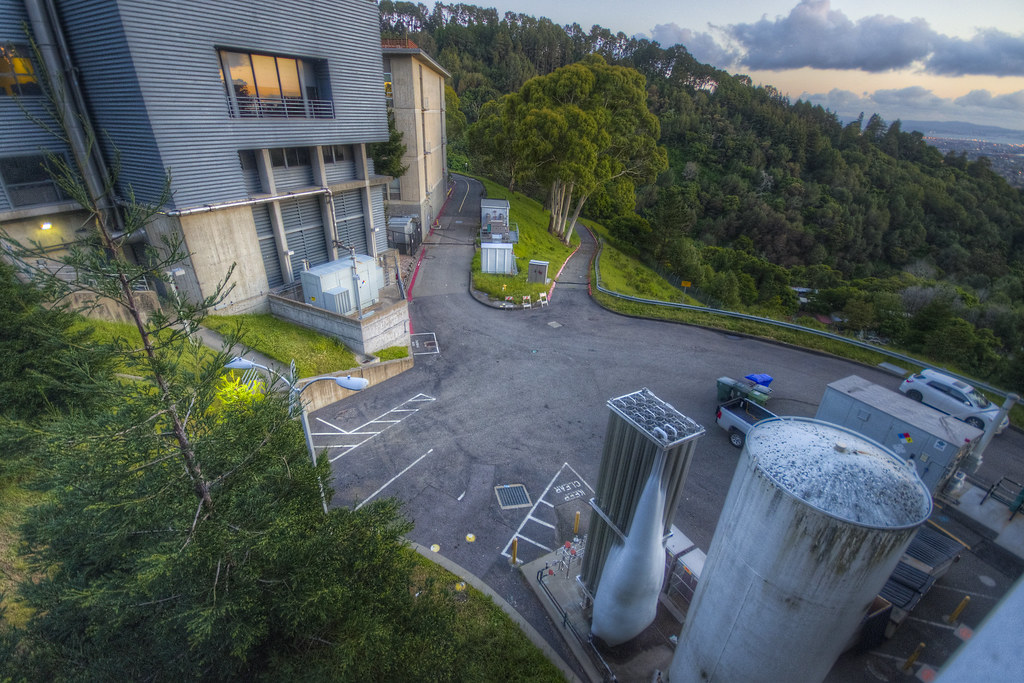
But to my memory, I’ve posted few shots of that balcony that was so integral to the sabbatical experience. Circling around to the adjacent Molecular Foundry, I took this image that (in the top left) shows that small balcony (with sun conveniently reflecting), as well as some of the lab infrastructure around in it. In the foreground is the liquid nitrogen storage tank for the foundry with its radiator covered in ice.

The Place for the View

Frozen Retreat

North Country temperatures abruptly rose from 20ºF to nearly 60ºF before suddenly dropping to -20ºF—all in under 36 hours. The result was rain that completely melted almost all snow, followed by freezing rain that deposited a layer of ice, followed by a new 12″ of snow to replace what came before.

In the midst of that chaos, I visited the Grasse River through the center of Canton to see it rising above its banks and jamming the shores with ice.

Frozen Retreat

Edge of the Orbital

The (distorted) ring of the Bay Area, with “impassable” hills along the edge and “empty” water in the middle, reminds me of the ring-shaped space stations of science fiction. The strangeness of the Bay only adds to the perception of visiting an alien planet.

Edge of the Orbital

Staging Area

Even in one of the most expensive real estate markets in the world, there has to be a place to store the equipment that makes everything run. In the foreground of this view from Berkeley Lab’s Building 62 are the shipping containers and assorted equipment used by the physical plant to keep the lab running. I’ve always found the contradiction—using very expensive land to store mundane objects—to be an engaging one. Of course, if all of the land were employed for its “valuable” use and the practical aspects were neglected, the result would be that the land would cease to be valuable.

Staging Area

This Is the Laser

The laboratories of physical scientists across the planet have pulsed laser systems like this one, and many look quite similar: a collection of squat boxes covering optics, electronics, and beampaths. Above or below the surface of the table are additional boxes of electronics driving the lasers and detectors. This particular system is special to me for two reasons: (1) most modern laser tables don’t have rad wood grain paneling, and (2) this was the instrument I used during my sabbatical at Berkeley Lab last spring. Lots of good data emerged from its photomultiplier tube.

This Is the Laser