Farallones, Golden Gate, Alcatraz, Marina, University, Lab

Grizzly Peak’s high vantage point means that a plethora of Bay Area landmarks can be stacked together in one image: From the faintest shadow of the Farallon Islands beyond the bridge, to the Golden Gate, Alcatraz, the Berkeley Marina, the busy travelers on University Avenue, to the Joint Center of Artificial Photosynthesis atop a hill in Berkeley Lab.

Farallones, Golden Gate, Alcatraz, Marina, University, Lab

The Place and the View

During sabbatical, I posted a lot of views like the one below: A dramatic dusk view of Berkeley and San Francisco from Berkeley Lab’s Building 62, where I spent my days doing renewable energy research. Ending a productive day, I’d step out onto the balcony a 30-second walk down the hall from my office to find these views readily available (when the marine layer didn’t intervene).
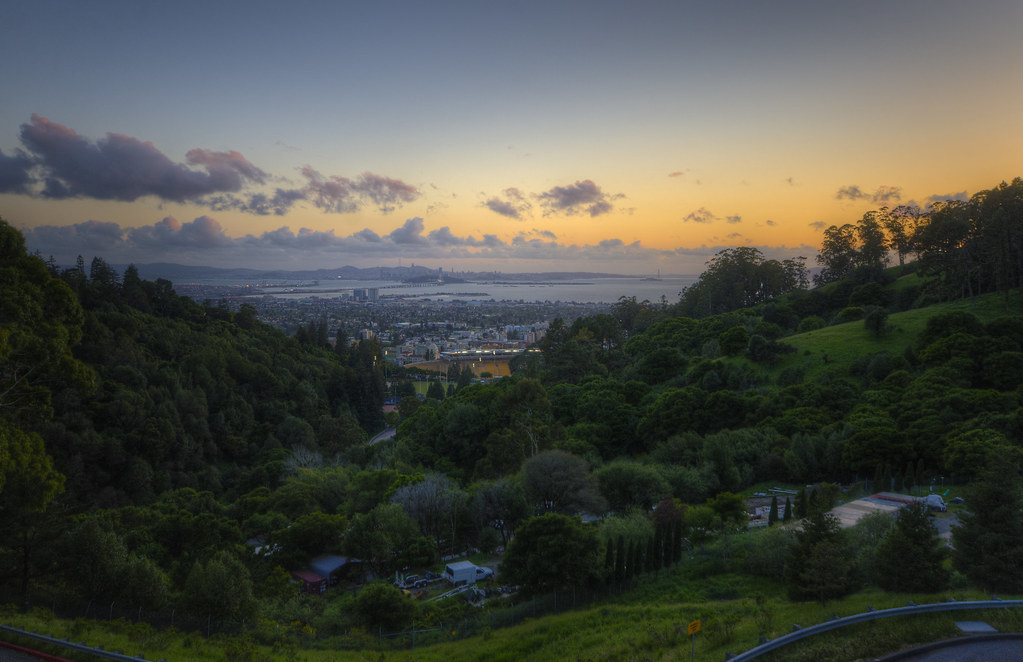
The View from the Place

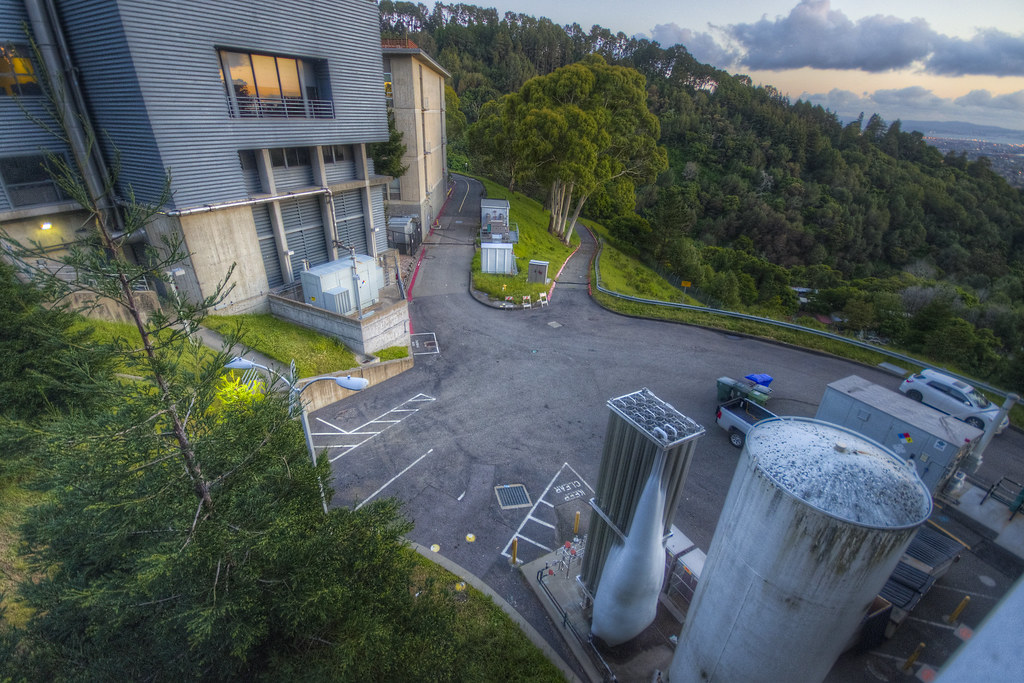
But to my memory, I’ve posted few shots of that balcony that was so integral to the sabbatical experience. Circling around to the adjacent Molecular Foundry, I took this image that (in the top left) shows that small balcony (with sun conveniently reflecting), as well as some of the lab infrastructure around in it. In the foreground is the liquid nitrogen storage tank for the foundry with its radiator covered in ice.

The Place for the View

Edge of the Orbital

The (distorted) ring of the Bay Area, with “impassable” hills along the edge and “empty” water in the middle, reminds me of the ring-shaped space stations of science fiction. The strangeness of the Bay only adds to the perception of visiting an alien planet.

Edge of the Orbital

Staging Area

Even in one of the most expensive real estate markets in the world, there has to be a place to store the equipment that makes everything run. In the foreground of this view from Berkeley Lab’s Building 62 are the shipping containers and assorted equipment used by the physical plant to keep the lab running. I’ve always found the contradiction—using very expensive land to store mundane objects—to be an engaging one. Of course, if all of the land were employed for its “valuable” use and the practical aspects were neglected, the result would be that the land would cease to be valuable.

Staging Area

This Is the Laser

The laboratories of physical scientists across the planet have pulsed laser systems like this one, and many look quite similar: a collection of squat boxes covering optics, electronics, and beampaths. Above or below the surface of the table are additional boxes of electronics driving the lasers and detectors. This particular system is special to me for two reasons: (1) most modern laser tables don’t have rad wood grain paneling, and (2) this was the instrument I used during my sabbatical at Berkeley Lab last spring. Lots of good data emerged from its photomultiplier tube.

This Is the Laser

Marine Layer II: Revenge of Marine Layer

I produce a lot of photographs every year, but there’s still a special feeling when one of those images moves a friend or acquaintance so much that they ask for a print. This particular image, fully cleaned-up and pixel-peeped to optimizing for printing (after starting life on Instagram) is one such example. I have to admit, the sinuous curves of the marine layer snaking through the Golden Gate, and the shadows beneath the clouds providing additional contrast, are a solid image.

Marine Layer II: Revenge of the Marine Layer

Gathering to Watch from the Lab

Students from Berkeley’s campus climb as high up the hill as they can to watch the sunset behind San Francisco and the Golden Gate, but the barbed wire fence of the Department of Energy National Lab makes for a cut-off point. Far on the other side is Grizzly Peak: another great view, but one without the immediacy of this particular spot. Inside the perimeter of the lab, I had the opportunity to experience a set of perspectives both scientific and literal that are beyond the scope of everyday Berkeley life.

Gathering to Watch from the Lab

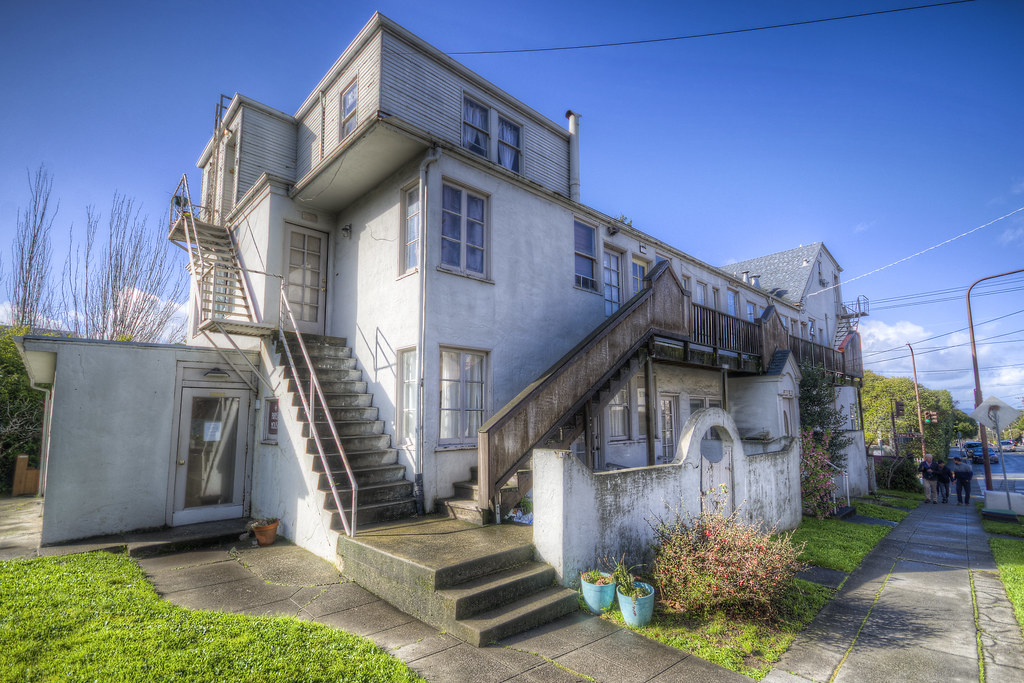
Boxes on Boxes

The first “real” snowfalls of the winter have arrived in the North Country, and I can’t think of a better time to look back on the never-snow geometries of Berkeley. The architectural possibilities expand when structures will never have to bear the load of a late-winter storm and stairs will never have to be scraped free of ice and snow. I think the design is particularly well-expressed in the boxes-on-boxes-on-boxes design of this building. The best detail, to me, is the sunlight passing in one side and out the other of the corner window on the first floor.

Boxes on Boxes

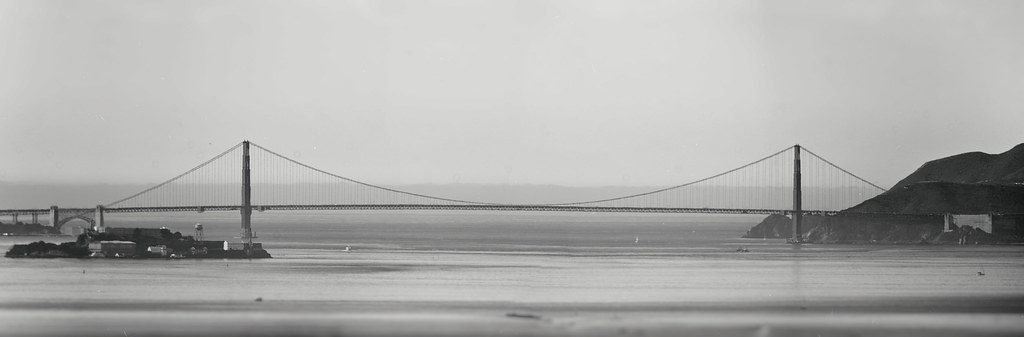
Golden Gate Classic

For the most photographed bridge in the world, I’m always humbled to remember that the Golden Gate Bridge didn’t even exist 100 years ago. Seeing it now, in the bracket of Alcatraz and Marin, I think I understand better why it’s Roman Mars‘s favorite piece of design in the Bay Area.

Golden Gate Classic