Given the extraordinary nature of the Normandy Village, “regular” cars seem oddly out of place. Perhaps that in part because the average car has grown so significantly in size since the little bays of the village were built.

HDR Photography
Given the extraordinary nature of the Normandy Village, “regular” cars seem oddly out of place. Perhaps that in part because the average car has grown so significantly in size since the little bays of the village were built.
Am I trying my hand at some sort of hipster chillwave/yacht rock album cover? No, just displaying my excitement to read Never Use Futura.
After a week doing science on a hilltop, I would sometimes sneak out of work just a minute early* and head across the Bay to Tiburon to watch the Corinthian Yacht Club’s Friday night sailboat racing. The lack of spinnakers implies to me that it’s a pretty friendly race, but it’s nonetheless a great way to end the workweek.
*Though early by my standards is “regular” to most folks, I suspect.
The (distorted) ring of the Bay Area, with “impassable” hills along the edge and “empty” water in the middle, reminds me of the ring-shaped space stations of science fiction. The strangeness of the Bay only adds to the perception of visiting an alien planet.
Even in one of the most expensive real estate markets in the world, there has to be a place to store the equipment that makes everything run. In the foreground of this view from Berkeley Lab’s Building 62 are the shipping containers and assorted equipment used by the physical plant to keep the lab running. I’ve always found the contradiction—using very expensive land to store mundane objects—to be an engaging one. Of course, if all of the land were employed for its “valuable” use and the practical aspects were neglected, the result would be that the land would cease to be valuable.
I still refer to Canada as “our neighbor to the north,” but Toronto (and indeed the majority of Canadians) live south of America’s North Country.
The retrofuturistic shape of the Transamerica Pyramid emerging from the more traditional architecture of San Francisco is one of my favorite photography subjects. When will this Star Destroyer finally lift off from its docking station in the Bay Area?
The first “real” snowfalls of the winter have arrived in the North Country, and I can’t think of a better time to look back on the never-snow geometries of Berkeley. The architectural possibilities expand when structures will never have to bear the load of a late-winter storm and stairs will never have to be scraped free of ice and snow. I think the design is particularly well-expressed in the boxes-on-boxes-on-boxes design of this building. The best detail, to me, is the sunlight passing in one side and out the other of the corner window on the first floor.
The “Beaver Moon” is the last full moon in November—the last time in the season, supposedly, when beaver traps could be set at night. How fitting that my first visit to Toronto, Canada occurred on just such a night. The city has a character that seems to be a mix of Vancouver-style modernism and Chicago-style Old City; it was a great reminder of the kinds of HDR shots that first attracted me to the technique to begin with.
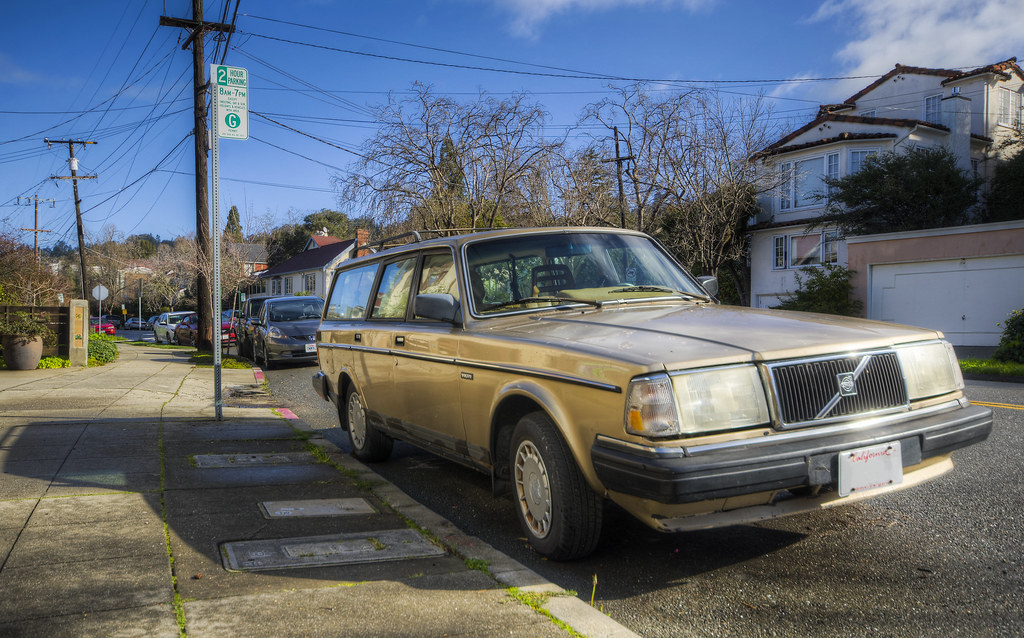
The title of today’s post is somewhat sarcastic: there is such an incredible variety of vehicles and homes visible on any Berkeley street that a “standard” is impossible. This Volvo wagon and turreted home both seemed like prime examples of classic Berkeley engineering.

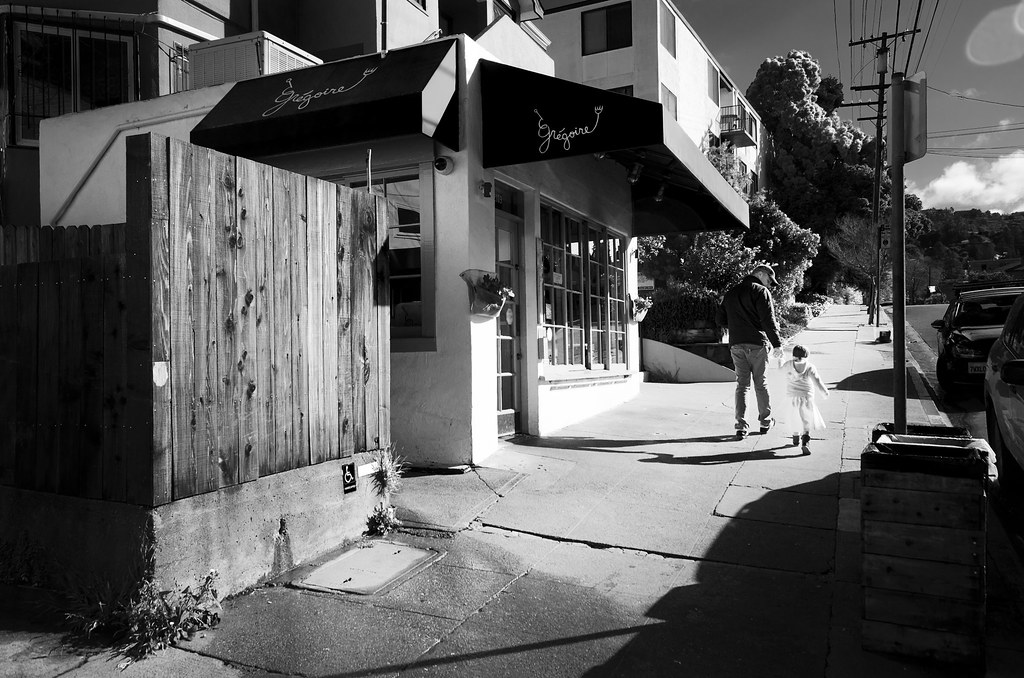
Sunday morning is the perfect time to take the family out for a coffee walk. Berkeley’s busy Gourmet Ghetto is just a little quieter then.
For the stealthy, angular trimaran exterior of the littoral combat ship USS Jackson, peaking inside the ship reveals a more mundane interior (look, a forklift!) that seems oddly pedestrian.

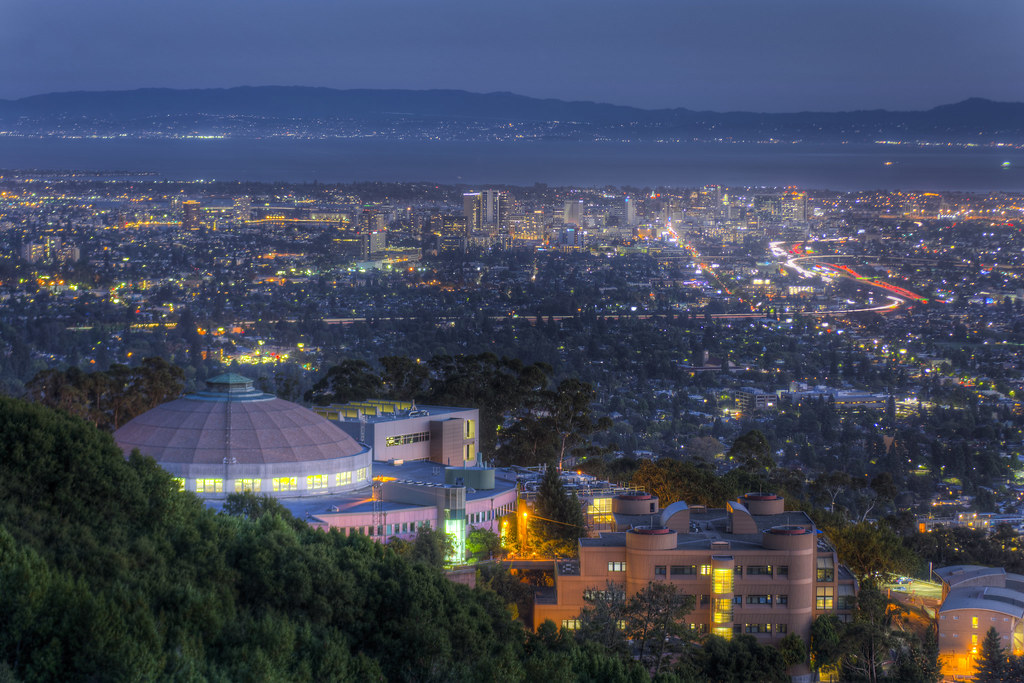
In the Berkeley Hills, above the National Lab’s Advanced Light Source, the view over Oakland’s twinkling night sprawl entrances. Look at all of those light-emitting objects! As LED lights have replaced sodium vapor models, I’m particularly fascinated in the shift as cities glow white, instead of orange.
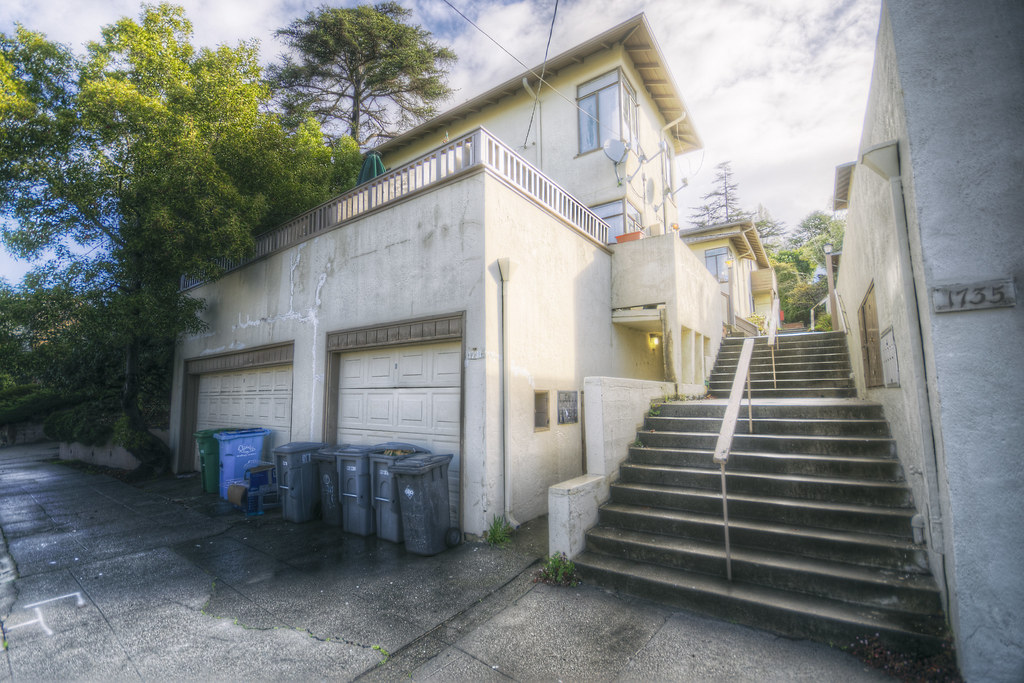
Every corner of Berkeley brings some new quirk. I passed this little stair/alleyway dozens of times during Sunday morning coffee runs. The tall pines and receding buildings struck me as quintessentially West Coast.
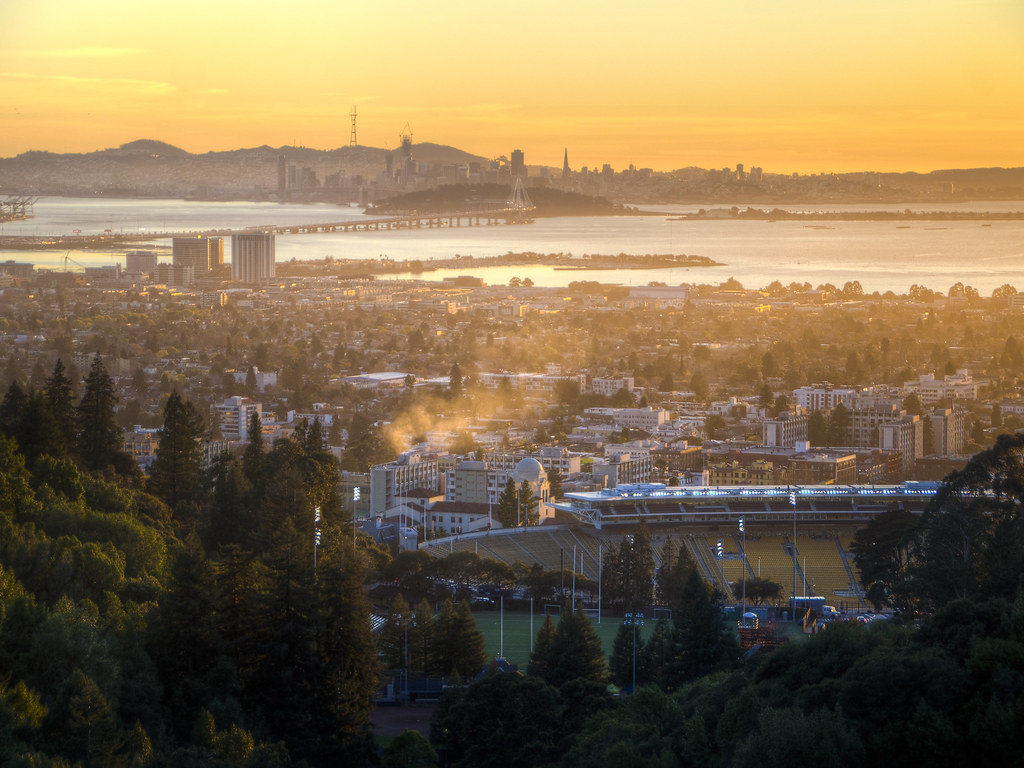
Back in New York, my memories of sabbatical in California have already taken on the golden nostalgia hues of the past. If not for the photographic evidence to the contrary, I might wonder if I’d dreamed the whole thing.

 Decaseconds