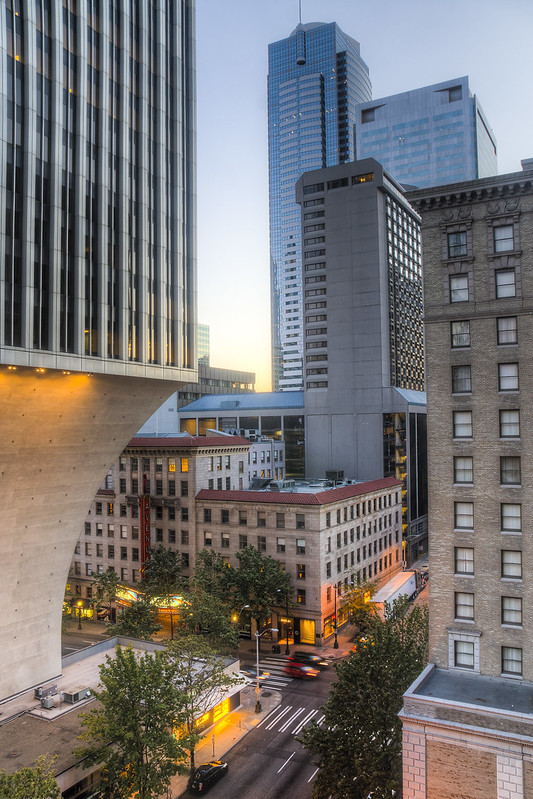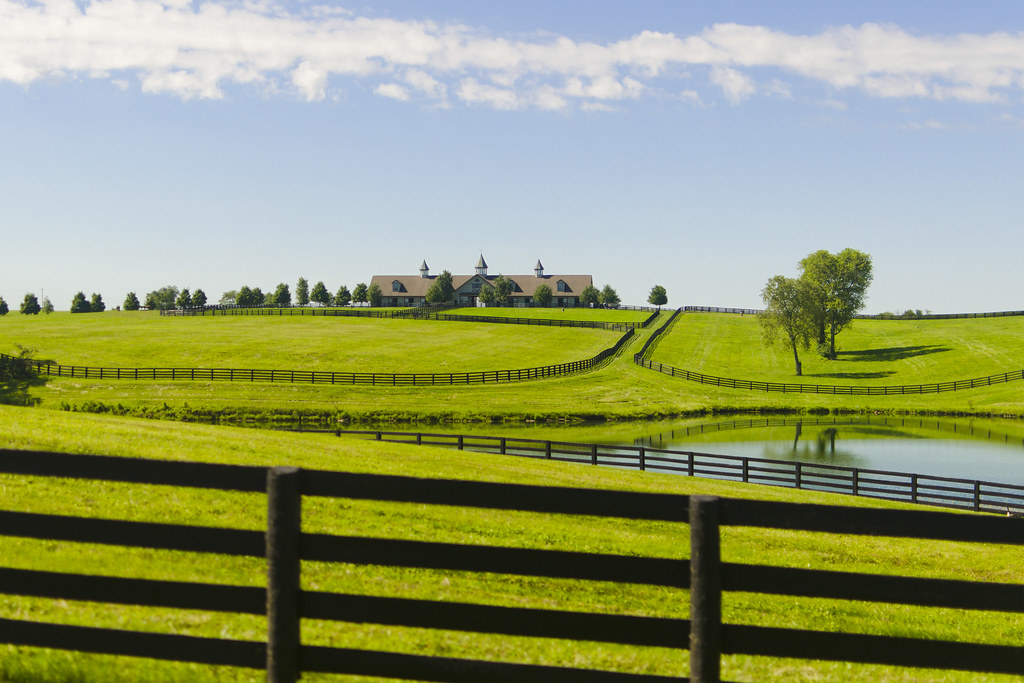
The grassy, rolling, limestone-based Kentucky countryside looks too perfect. Precise fencing geometries and gently rippling ponds are just too much. I’m reminded of the famous Microsoft Windows XP default wallpaper, “Bliss.” The key to making both images work, I think, is an overall very clean image with just enough small details and imperfections at the edges to show you that it must be real.
Tag: Landscape
Flooded Magic Island
When the water level rises in Stone Valley, the landscape gets odd, and impossible islands form where there were once minor changes in the landscape.
The water rushes through ferns and tree-roots and creates barriers in the landscape that redefine hiking for the day.
Contradictory Utopia
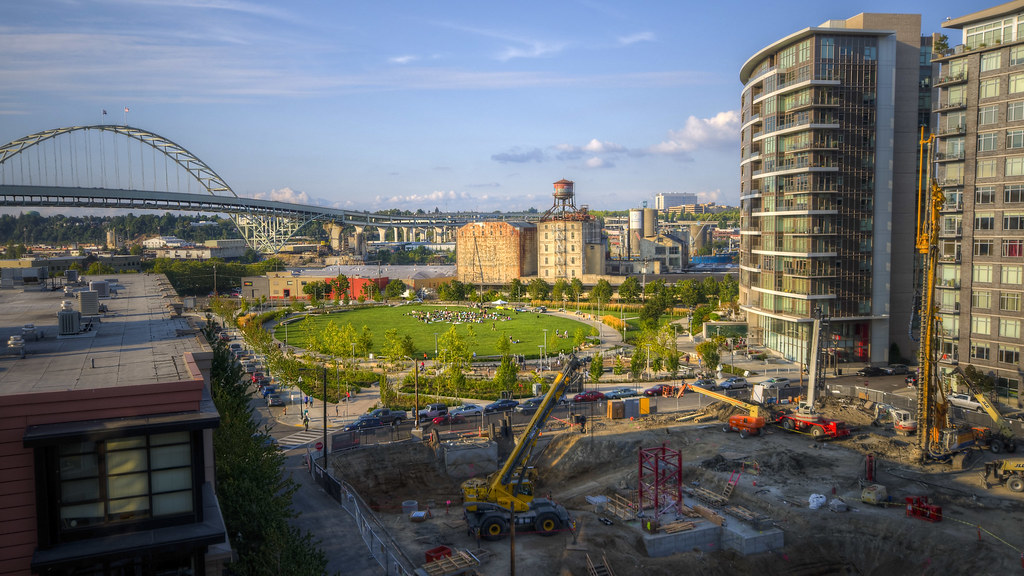
In preparation for my upcoming travels to the West Coast next month, I was looking back at the images of Portland, Oregon’s Pearl District. It seems representative of some of the common features of West Coast cities: newer architecture that incorporates a mixture of scales (human vs. superhuman), modern interpretations of some more traditional forms (like the bridge, which resembles a traditional Japanese zig-zag bridge), and a generally utopian, “city of the future!” vibe.
Perhaps no scene better emphasized the sometimes-contradictory nature of a growing city than this one: a yoga class in a sunny park on a summer afternoon, across the street from a shadowed construction site. Juxtapositions are rarely so literal.
Campus, Bay, and City
The view from atop Berkeley’s Campanile is a nostalgic one, with San Francisco and Oakland popping up in the distance above the sprawl. Walking along those broad, slightly cracked, and sun-baked pathways of Berkeley’s campus never quite felt natural, though. Can a place magnified beyond human scale feel that way?
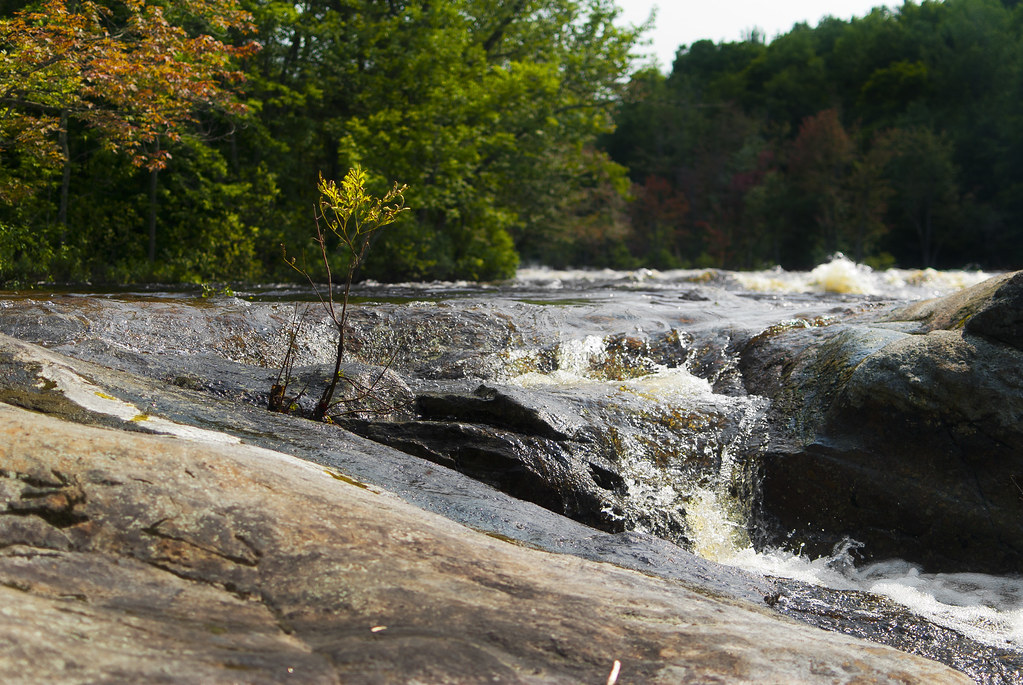
Full River
Water levels in the Raquette River through Stone Valley (site of some excellent rocks) were quite high, leading to normally dry areas (like this one) overflowing with impromptu waterfalls. Surfaces and water levels in various areas didn’t want to match up, and made for a feeling like the whole river had been “assembled” out of order.
Lightning Over Carl Sagan’s House
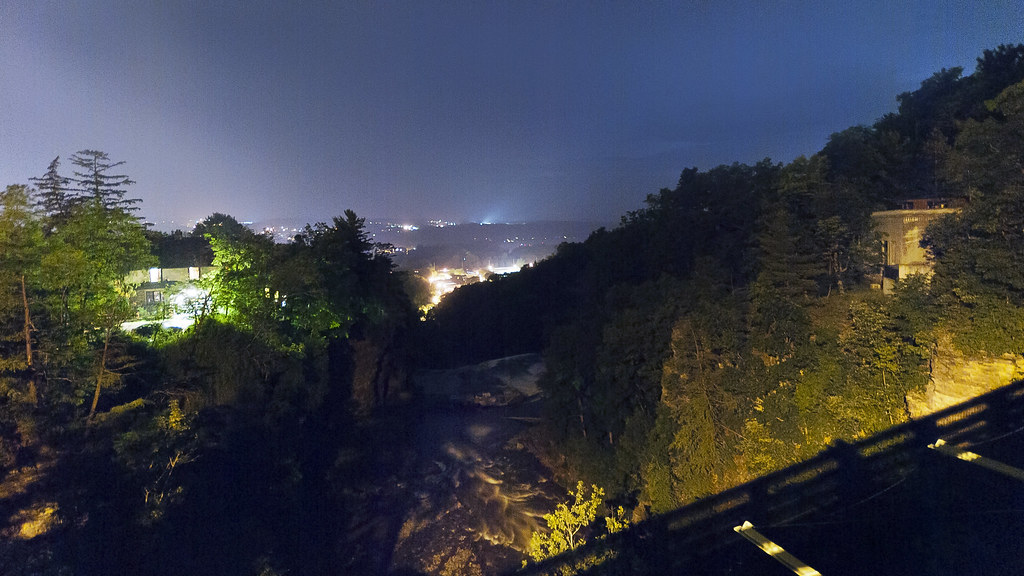
As a scientist and educator in the 21st century, it’s difficult to overstate the role that Carl Sagan played in shaping my worldview. When I traveled to Ithaca, NY for the first time this week (for a chemistry conference, naturally), I wasn’t planning on any kind of specific pilgrimage. Nonetheless, I found myself standing on a tall bridge above a gorge, watching the lights of Ithaca and the flashes of lightning in the distant clouds.
I didn’t have my normal Nikon with me. I didn’t have my tripod with me. I made do. How often do you get to photograph lightning over Carl Sagan’s house?
Stand Before the Falls
The waters of the Racquette River were high and fast when we hiked Stone Valley. There was no clambering around on this day—just standing in the refreshing spray.
Camp Canaras
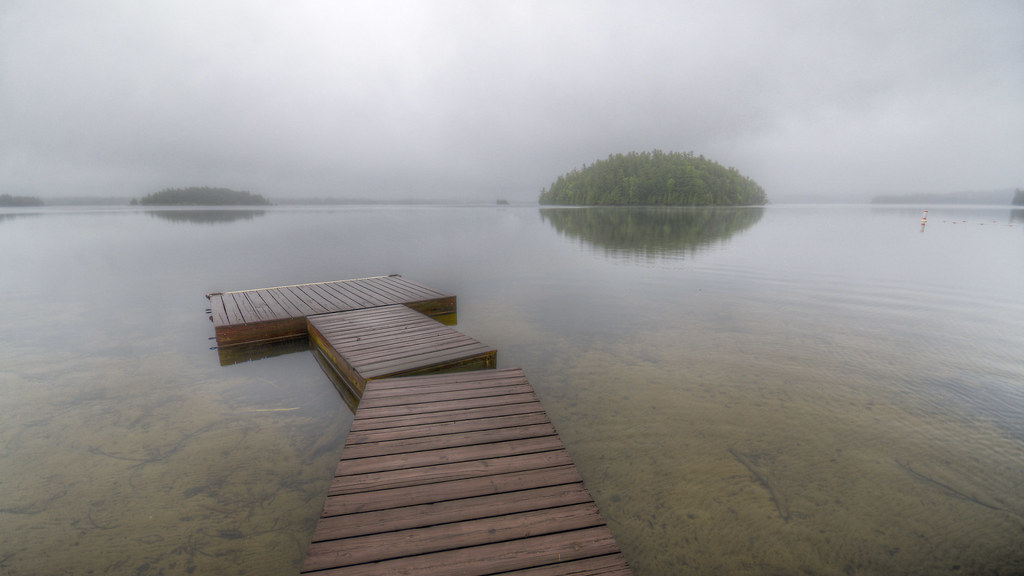
I spent the early part of this week at St. Lawrence University’s Camp Canaras (like Saranac Lake spelled backwards) for a retreat. Cold and rain tamped down expectations of canoeing; instead, I had an early morning hike in the sound-dampened world of fog.
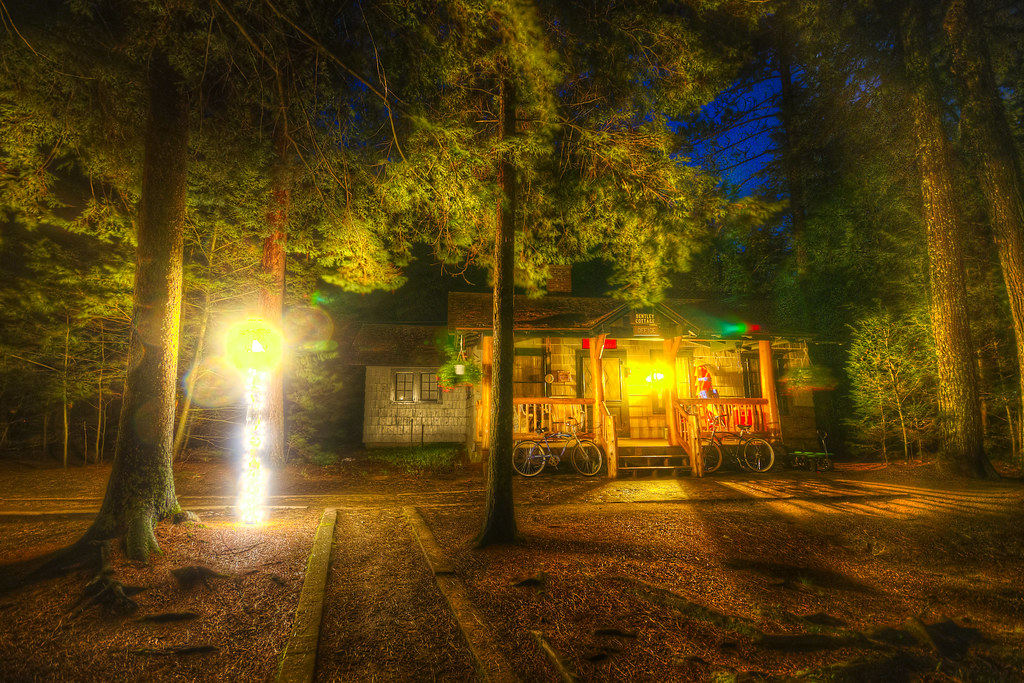
At night, the camp took on the otherworldly quiet of the Adirondacks after dark.
Ending on Little River
Friday marked the end of exams, and students and faculty alike celebrated by checking canoes and kayaks out of this little boat house on St. Lawrence’s campus. (If it’s true that our school resembles a ski resort in the winter, it also resembles a summer camp during the warmer months of the year.) Nothing really says the year is done (and grading with it) like floating along in complete relaxation.
The Quad is an Ocean
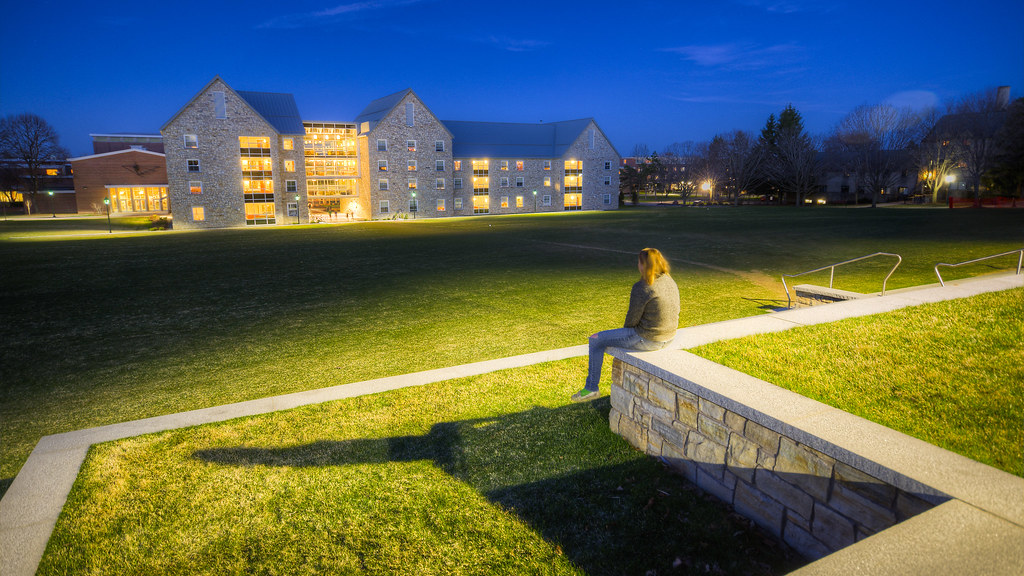
Continuing this week of “end of the school year,” calming-of-the-campus photographs is this landscape over the quad: An ocean of light and shadow (pardon the cliché) divides the new Kirk Douglass Hall (a.k.a. “the new dorm”) from the rememberer.
Edge of the Big Forest
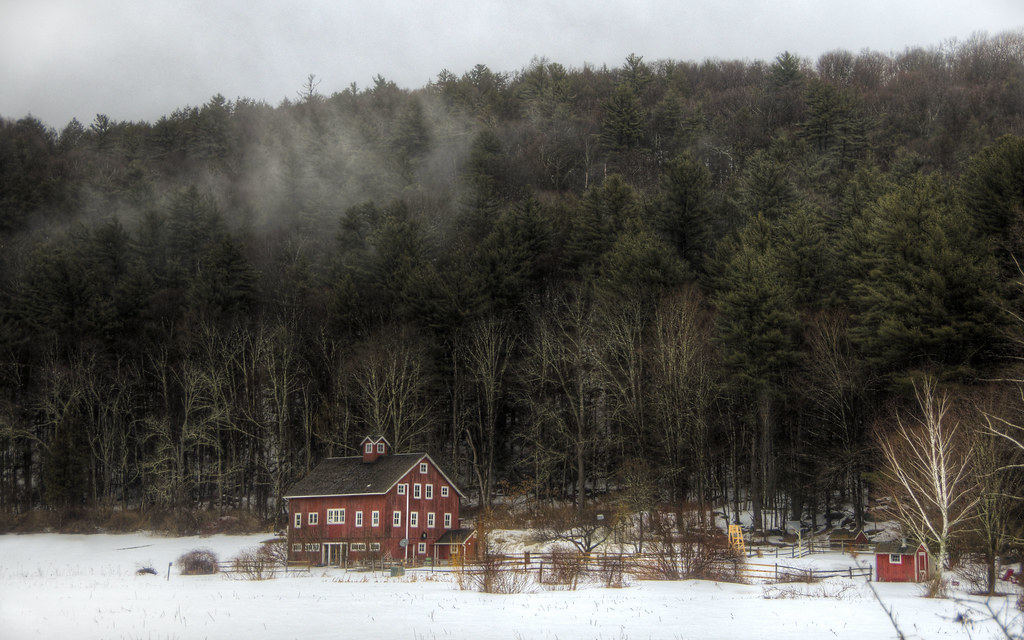
In this particular corner of Connecticut in early spring, the rain and snow combined to make the perfect storybook fog. This image is so quaint and charming, I could swear I’d seen it somewhere before.
But this brings me to another idea: those particular locations in landscape photography so scenic that they are literally ubiquitous. Take the tunnel view in Yosemite, or shots of the Golden Gate Bridge from the Marin Headlands, or downtown Manhattan as seen from the top of Rockafeller Center as examples: is it even possible to make an original composition from such a photographically saturated place? But these places are also photographically saturated for a reason: they’re really, really pretty. Where does that trade-off between originality and beauty fall?
Fire Trail and Fire Sky
Fire trails seem like a friendly, common, down-to-earth feature of many California hillsides. There’s a strange context alongside the blazing sky and the busy city in the distance. When I look farther off and see the Golden Gate Bridge and Angel Island, the juxtaposition feels only more emphasized.
But perhaps I like that vision. We build things both grand and humble.
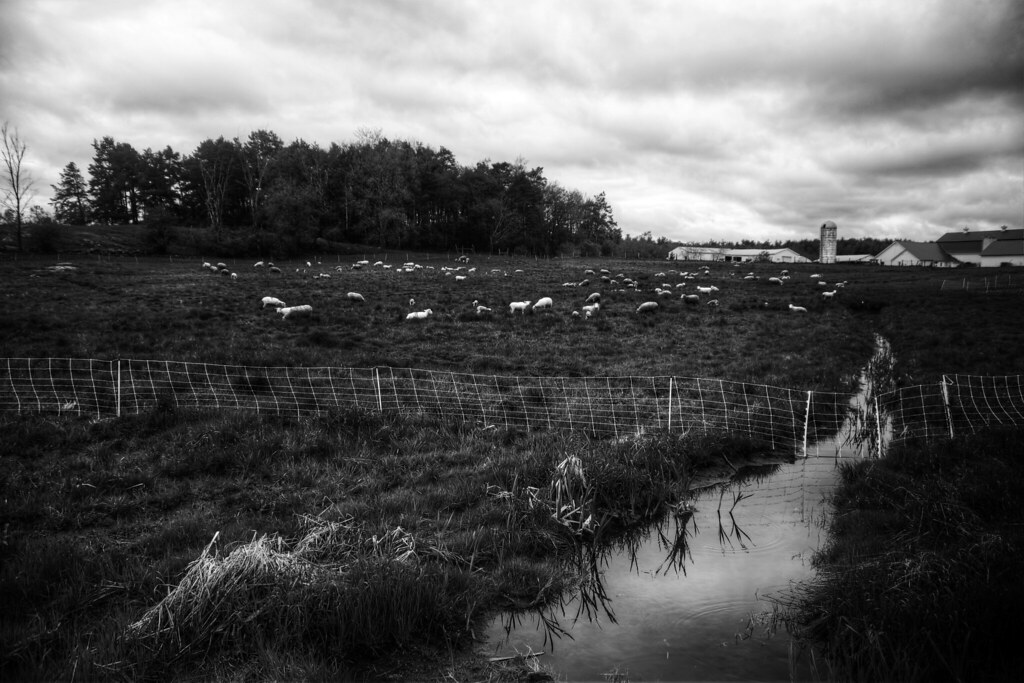
Visit the Sheep
Icicles, or Almost Canada
Dotting the road to Ogdensburg’s bridge to Canada are tiny, abandoned houses like this one. It’s rather charming, and just a bit sad, but mostly it reminds me of Neal Stephenson’s Anathem, and the obversations that a society can retreat from the frontiers and back into the cities over time. Sprawl and civilization are not inevitable.