Bay Area sunsets shift to the north in summer, where they’re best seen from the houses of the Berkeley Hills. There’s something delightfully Californian about a German sports car parked in front of a mid-century modern home on a ridiculously-graded road.
Tag: Berkeley
200,000
Our 11-year-old car just passed the 200,000-mile mark on the odometer. It’s been with us for multiple transcontinental drives and a lot of smaller road-trips in between. This is our unicorn: a combination of manual transmission, smooth straight-six engine, all-wheel drive, and cavernous station wagon that’s simply no longer available from any manufacturer. What will we do when this car is ready for retirement? That’s a tough question.
Dark Island
Much of the Bay Area, packed densely with people, perforates with light-emitting devices after sunset. When a volume avoids that, there’s a story and an active effort by conservationists behind it. At either extreme of this picture, Albany and Marin fall clearly into light-emitting category. In between, however, are special spaces: the Albany Bulb in the foreground and the Brooks Island Regional Preserve (the titular island).
Convertible in the Hills
“All things are transient,” said my scientific collaborator, with just a hint of irony. From up in the hills at Berkeley Lab, where we study the way that light and matter interact, he meant it in three senses:
- We use “transient absorption spectroscopy” to study the changes in a material after it is exposed to light. The new states we create are transient.
- The gentle blue-hour conditions of this picture are transient; the light was completely different ten minutes later.
- Berkeley Lab sits atop the Hayward Fault; a large earthquake could topple the lab at any time.
In the face of all of that transience… Might as well go for a drive.
Watching the Gradient
Do you see the lone person, sitting on the hillside, on the right side of this image? People provide scale, but also something more in this context. In addition to watching the literal gradient of the sky at sunset, this picture is part of a set of images of the “civilization gradient” from wilderness to dense city center. I quite like the added layer of a gradient from the individual in nature to the greater mass of humanity in cities. Traveling between rural New York and the crowded Bay Area has made me more aware than ever of the contrast.
Municipal Dock
Crest in the Bay
I imagine the Bay Area like an elementary-school art project bowl, a bit lump and uneven but mostly ringed with hills. And like a proud child filling their handmade bowl with mounds of cereal and milk, there are lumps and liquid in the middle. If I strain the simile to the limit, both the bowl and the Bay are home of delicious foodstuffs. Rushing to the crest of Berkeley’s Grizzly Peak after a rich dinner, I can see the whole bowl. (And avoid the skunk sneaking up on us in the tall grass.)
Between Berkeley and San Francisco
I spent this week BARTing back and forth from downtown San Francisco to “downtown” Berkeley for the American Chemical Society’s National Meeting. Bouncing between the familiar and the strange, all tinged with a general sense of familiarity, gave me a sense of dislocation, like an atom in slightly the wrong place in a crystal structure. Beyond meeting scientists and seeing old friends, I can think of one exciting new discovery this week: the new seat fabric on the BART is an enormous improvement over the horrifying cloth of yesteryear.
Industrial “Alpine Lodge”
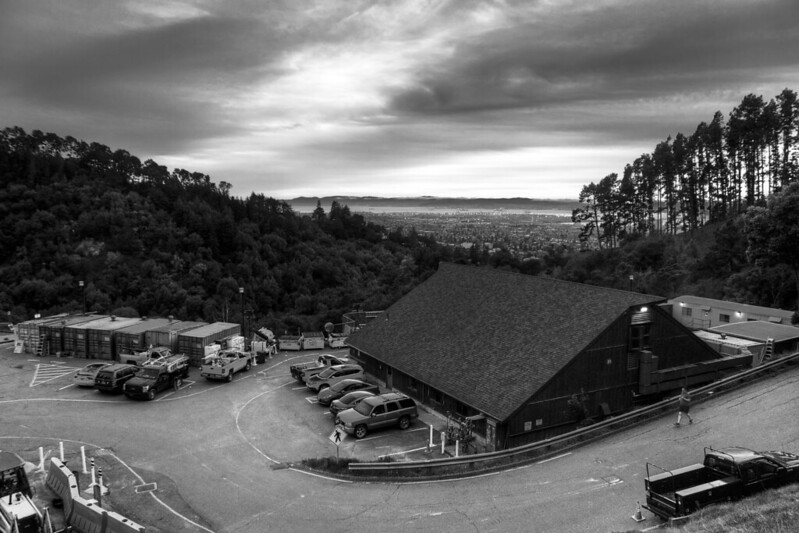
This physical plant building at Berkeley Lab has the broad A-frame structure and charming attic windows of an alpine lodge. It also has an evergreen-encrusted window to Berkeley and the Port of Oakland. In spite of the appearance and the surroundings, this is a highly utilitarian setting. Quite the juxtaposition.
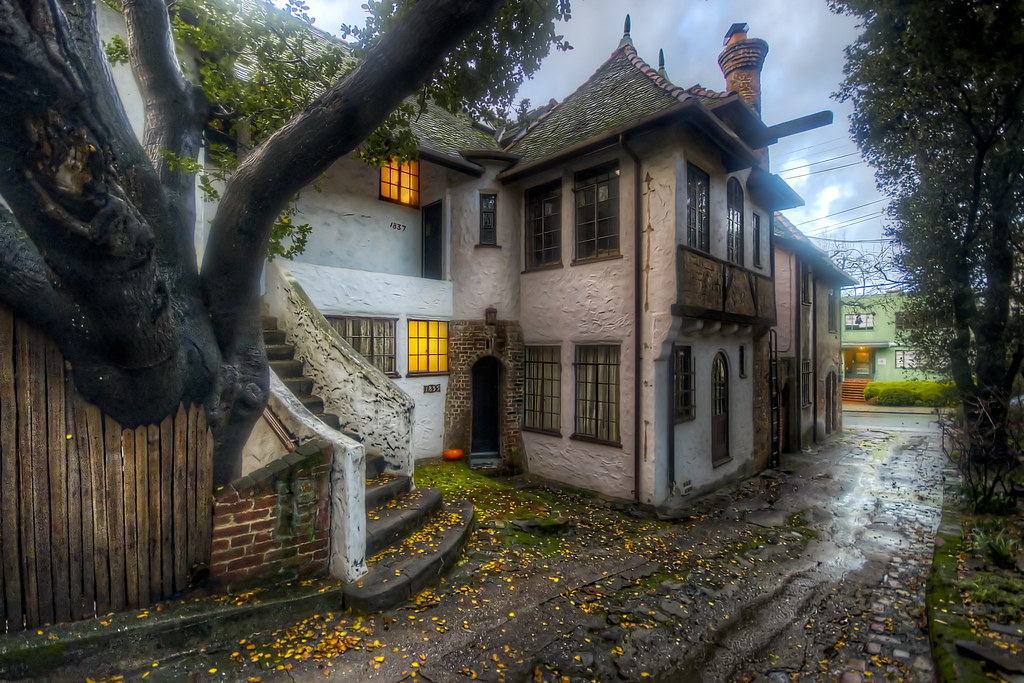
Morning in the Normandy Village
Molecular Foundry
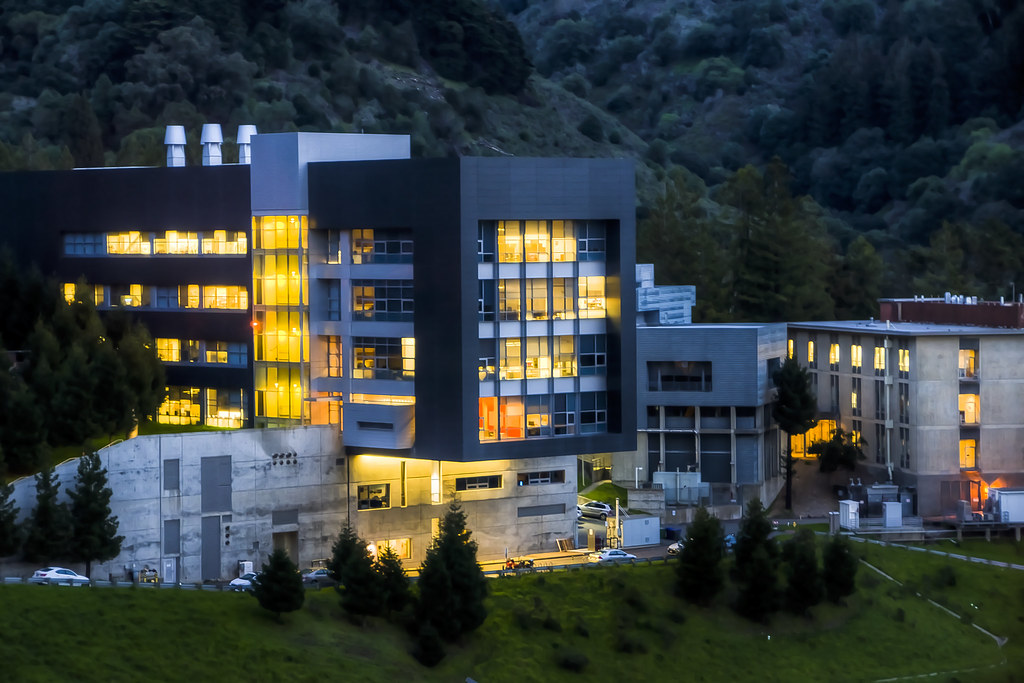
The Molecular Foundry’s enormous overhang looks alien up close, but the scale of the structure is really apparent with the lighting beneath the gravity-challenging bulk.
Rather Be Sailing
Morning sun provides very stark, even lighting across the San Francisco Bay. I know rationally that gravity forces the big body of water to be (basically) flat, but the curves of the shore and the shadows of the clouds have always made the Bay itself seem to have hills and valleys. I can also confirm that the water feels pretty far from level when actually sailing it.
Microbus Foliage
Berkeley’s seasons are a weird, fractured, microcrystalline version of their East Coast equivalents. There’s a nice congruence between the variable season a given tree might be experiencing and the variable model year any street-parked vehicle might be representing. Having autumn foliage gently localized around this classic (if oxidized) VW Microbus makes for a delightful combination.
Leafy Window to Oakland
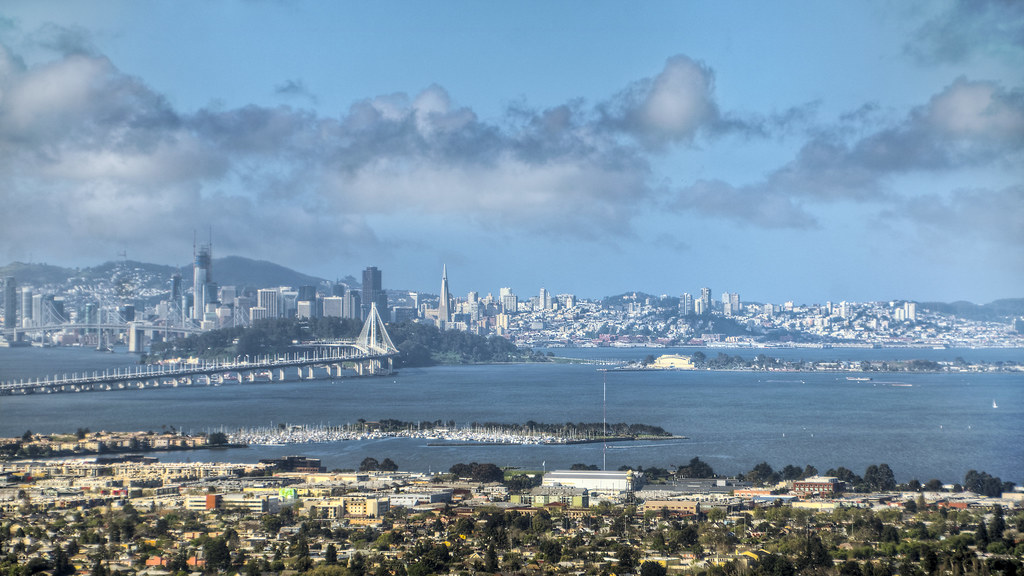
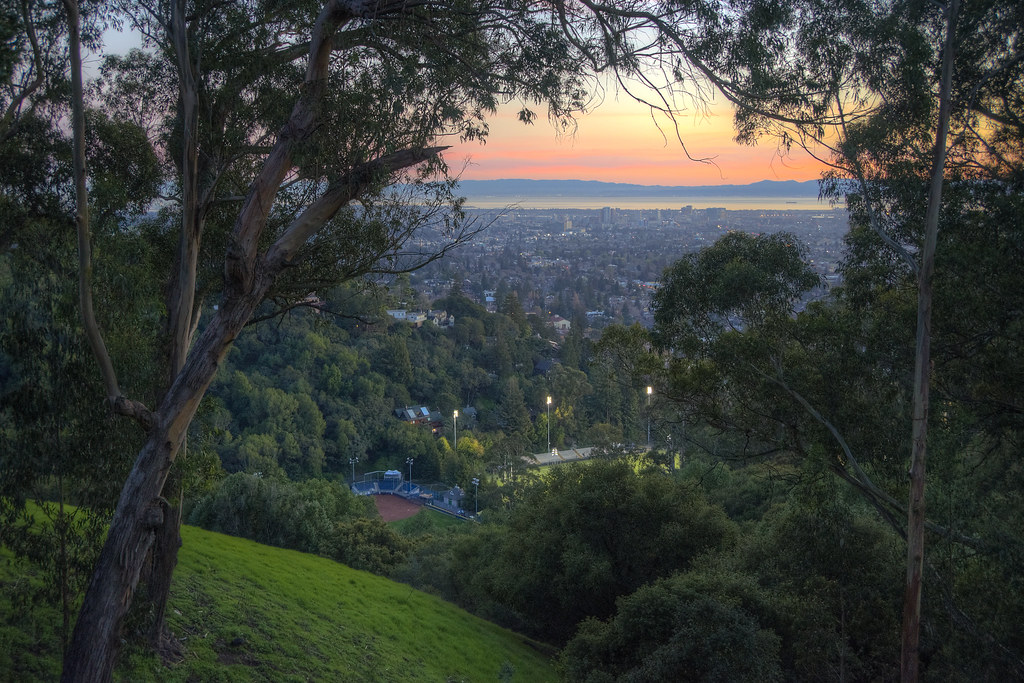
My past couple of posts have been images of San Francisco, foregrounded by nature and suburbs—the style I like to call a “civilization gradient”. This image similarly presents downtown Oakland, California, past the hilltop homes and Cal fields of Strawberry Canyon and through the invasive alien leaves of Berkeley Lab’s eucalyptus trees. The HDR processing techniques that Brendan and I use are perfect for settings like this, with an array of light intensities across a broad landscape.
Dinner Time in Strawberry Canyon
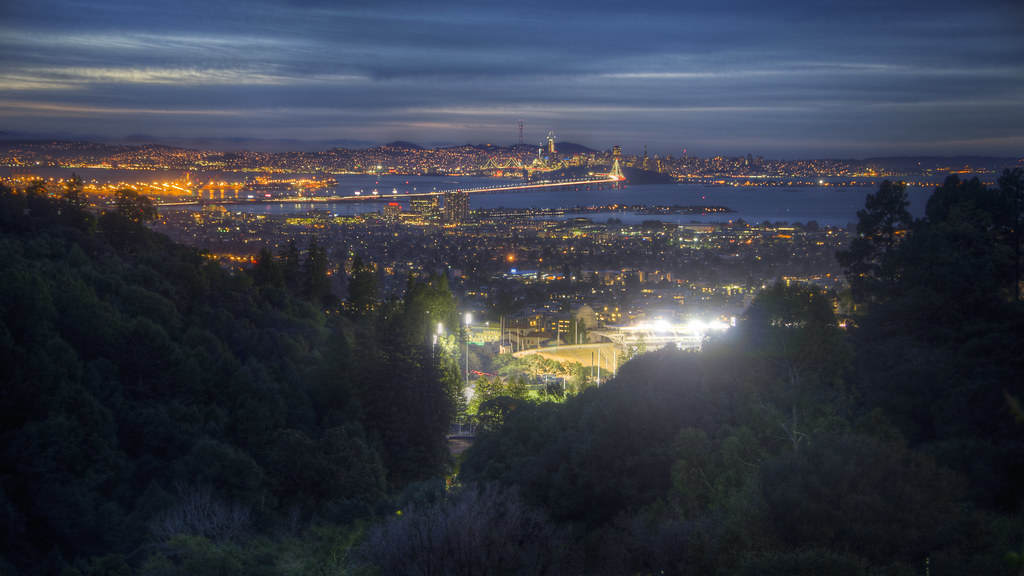
The work day is ending and the eight-to-six employees are returning home. They meet in bars or at rec leagues or around the table or in front of the TV, but the hour is still too early to head out for a night’s adventure. In between work and nightlife is dinner time. We’re not tired enough to go to bed yet; the night is young and full of paths over which to integrate (to borrow Feynman’s view).