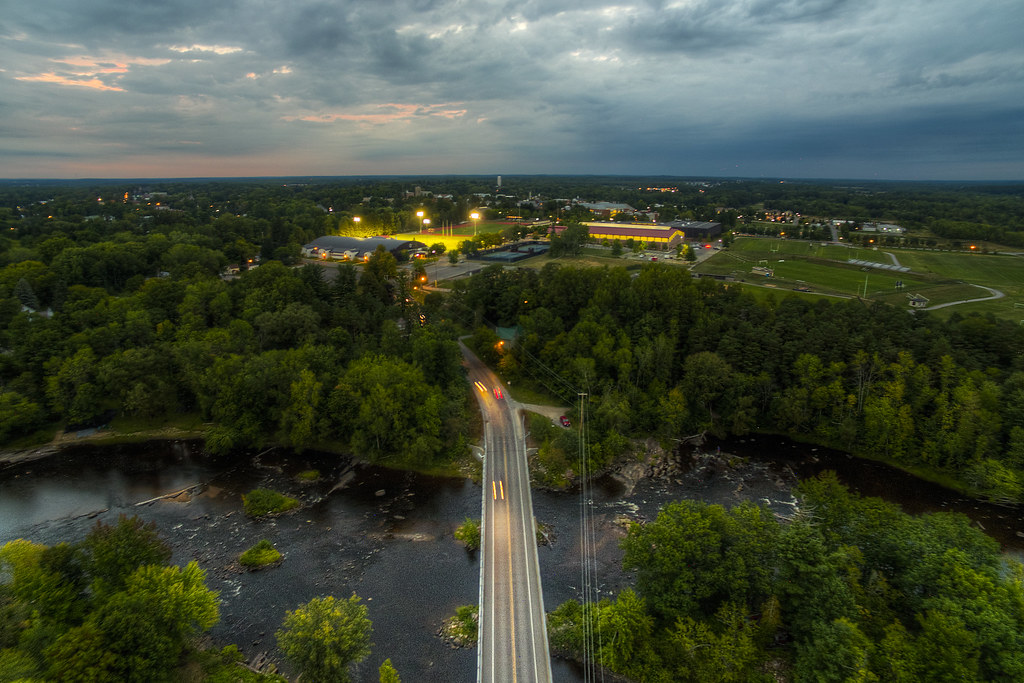
After classes end for the day, there’s still an astonishing amount of activity on St. Lawrence’s campus. My favorite detail about this picture (other than its, “Hey, I can see my house from here!” vibe) is the chapel tower sneaking over the horizon. It’s mirrored on either side by a water tower and a cell tower that are, uh, a bit less dramatic.
Author: adohertyh
Ripples from Rotors
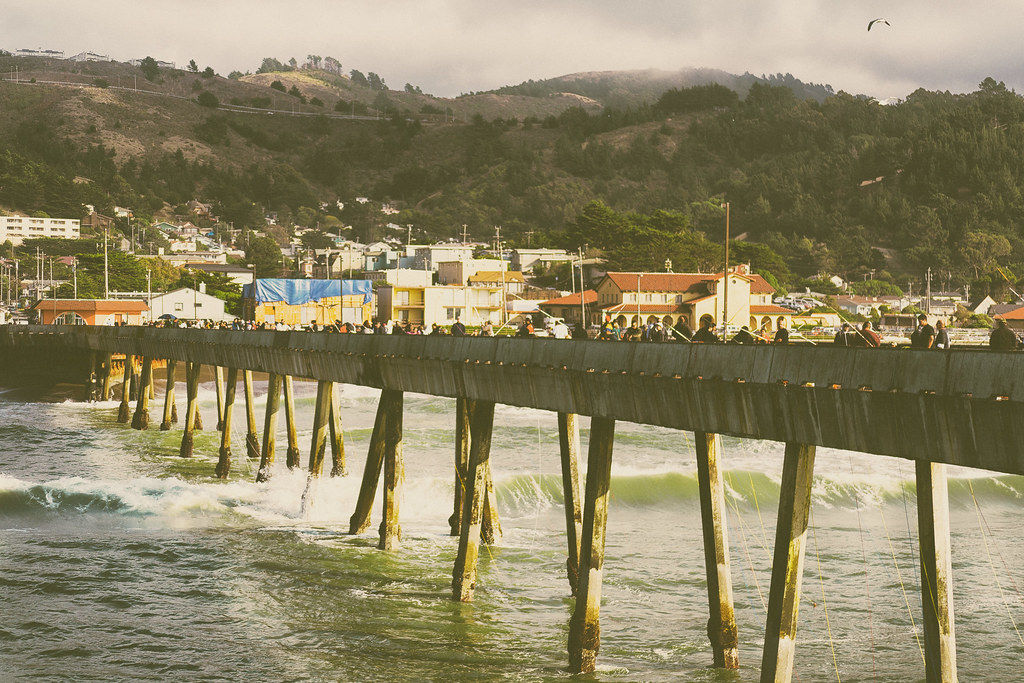
Saturday Afternoon on the Pier
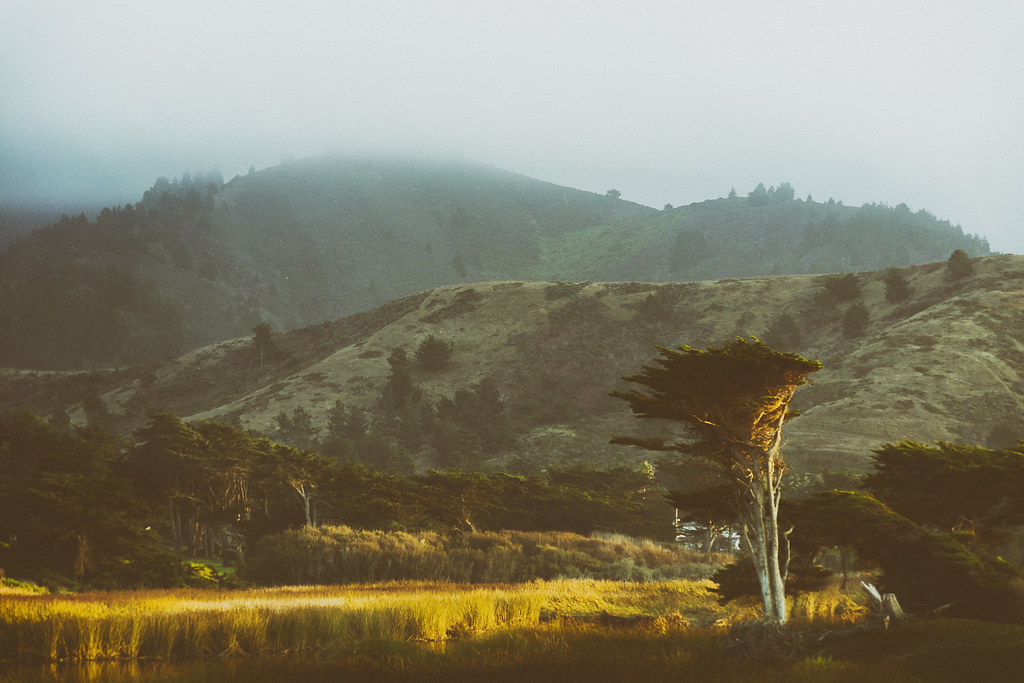
Resilient Tree at Sunset
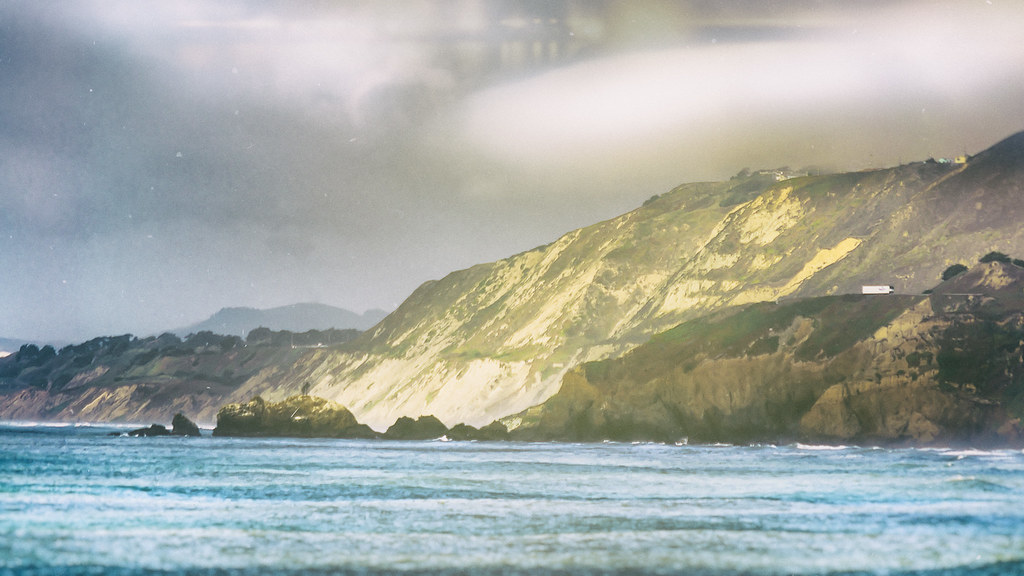
Of all the plant phyla, I’ve always felt a particular affinity for the conifers. Those spiny softwood survivors have a diverse yet particular set of aromatic compounds that accompany them; I can chart a lot of happy memories to pine or cypress groves and their applied organic chemistry. Starting on the east coast, through the midwest, and finding myself in grad school on the west coast meant contact with a lot of different species. These ocean-wind-sculpted examples from Pacifica, California are particularly dramatic.
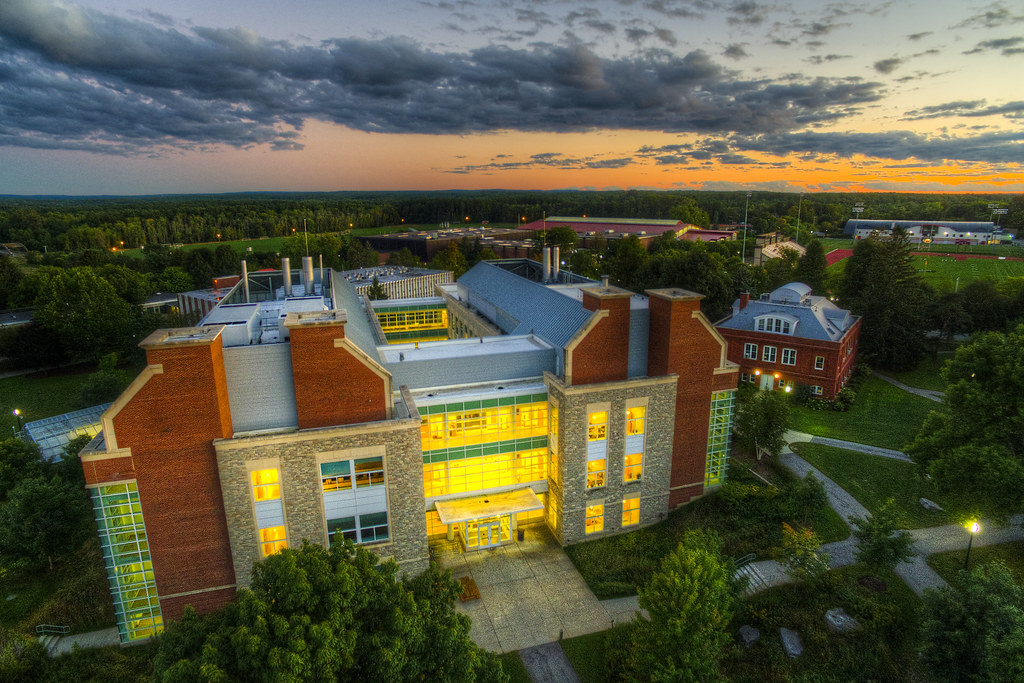
Johnson Hall and Beyond
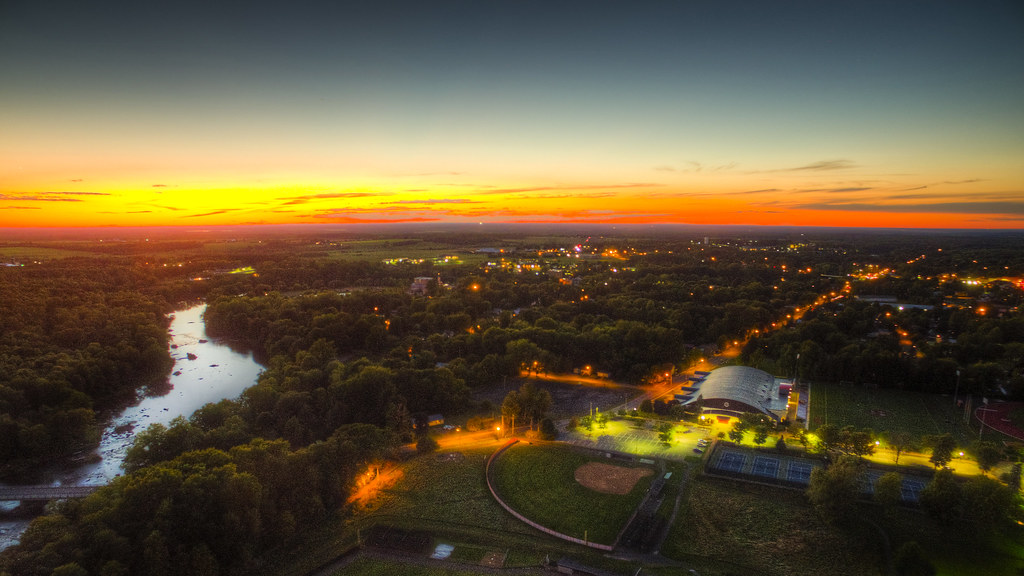
Appleton on the Grasse
The DJI Phantom 3 quadcopter is giving me a new appreciation for Canton’s “small town America” landmarks, like the Appleton Arena. The way oblique solar rays reflect from its arcing roof puts the ice rink and the Grasse River in a reflective class of their own; nothing else in town is reflecting the sunset in the same way. Perhaps it’s appropriate that the ice rink and the flowing river, both full of water (though covered, in Appleton’s case) are the most reflective moieties.
Gracelynd in California
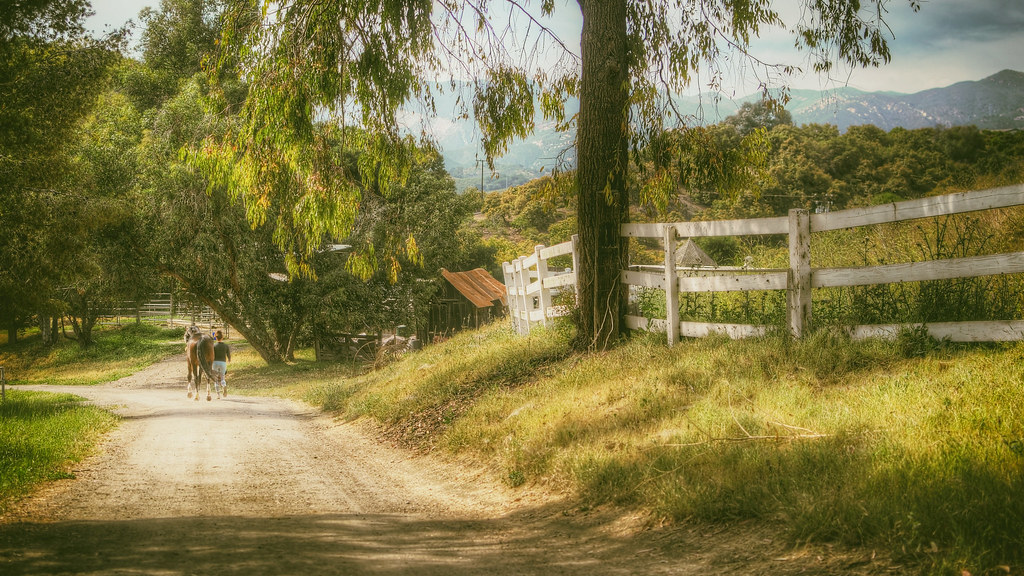
The shapes of the hills of California are odd and impossible by the standards of the Northeast. In spite of my time spent there, my brain has still not adjusted to the angles—either in the distance or under my own feet when I’m there. On a charming horse farm that might be at home in the early twentieth century, the sunbaked scene is too real to be real.
Forest Border
The lights mark the border between forest and manicured athletic fields. In real life, crossing the border means risking ticks and perhaps a run-in with a deer; in the realm of science fiction, I can imagine much more terrifying consequences from crossing the border from light into darkness as the sun sets.
Mysterious Containers
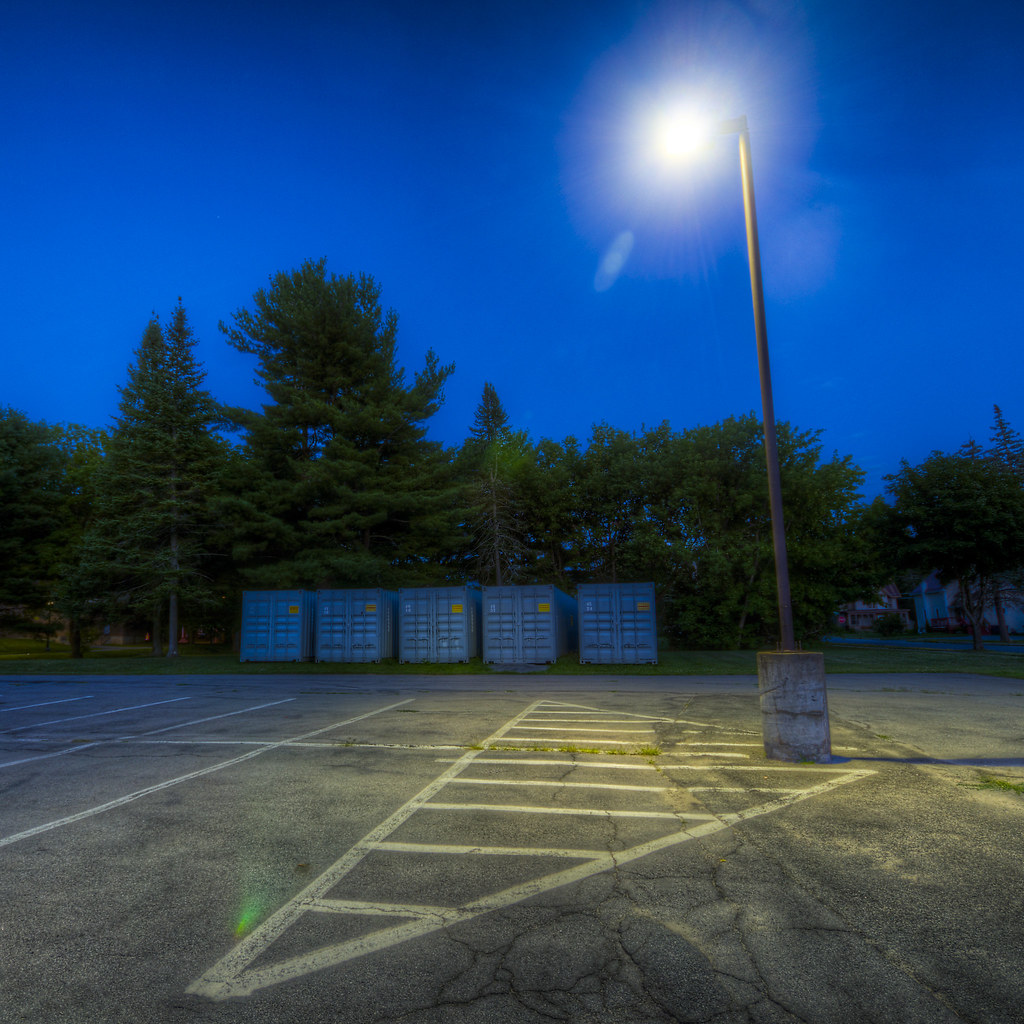
Shipping containers are ubiquitous yet mysterious. Because they’re used to transport almost everything, they could contain almost anything—and that has been used to great effect by a variety of my favorite authors. There’s little doubt over what these particular containers are holding—mostly supplies left in dorm rooms by St. Lawrence students at the end of the year—but there’s still a healthy dose of mystery in their juxtaposition with the regular structures of a college campus.
Wachtmeister in the Wilderness
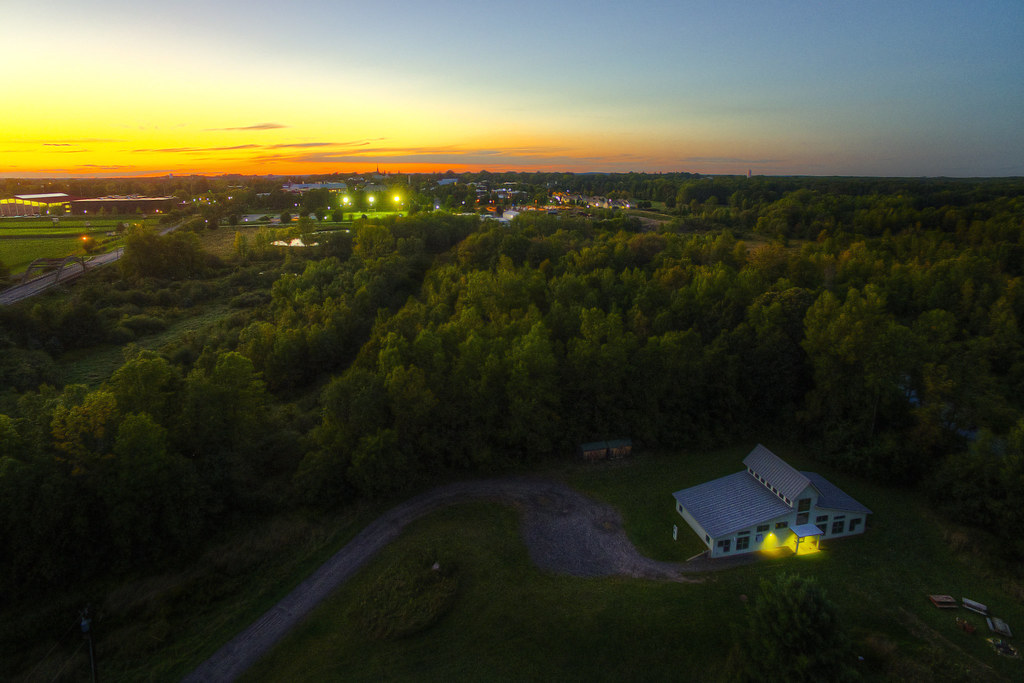
St. Lawrence’s campus includes far more natural settings (and transitions far more quickly to them) than any place I’ve previously experienced. The Wachtmeister Field Station is a field laboratory that feels like a “candle in the wilderness,” despite being within (drone) sight of campus.
Clear Sky Zen
North to College
Coming to St. Lawrence, I was not prepared for the amount of forest space on the school’s 1000-acre campus. Flying above the Grasse River, campus looks wild and vaguely Nordic. I’ve never run into a frost giant on the way to work, but now I’m sort of wondering whether I need to prepare for that, too.
California Coast II
Friday Night Lights in the North Country
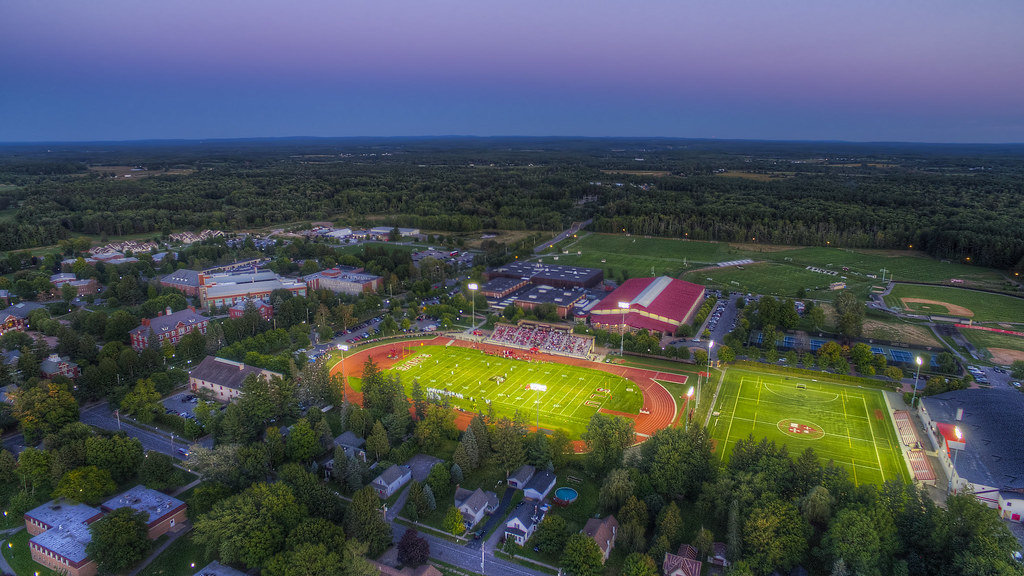
The roars and gasps of the crowd could be heard all over town: Friday night football in the North Country of New York. St. Lawrence’s Saints dominated Morrisville to the tune of 28–0. From quadcopter, the action on the field is just a bit out of range. One of the recurring themes of my work is the civilization gradient between densely human areas and wilderness; I view this picture as another interpretation of that theme. There’s perhaps no urban center in Canton, but there are quaint homes and university buildings giving way to farmland and, eventually, the foothills of the Adirondacks in the distance where the Earth begins to curve.
Two Views of the Hudson
Structures along the Hudson River mark eras of American practicality and industrial life. There’s a great combination of aesthetics and practicality.
The mid-century (1955) Tappan Zee Bridge is from a different era from the lighthouse above, but it also represents this aesthetic/industrial impact on the Hudson River.