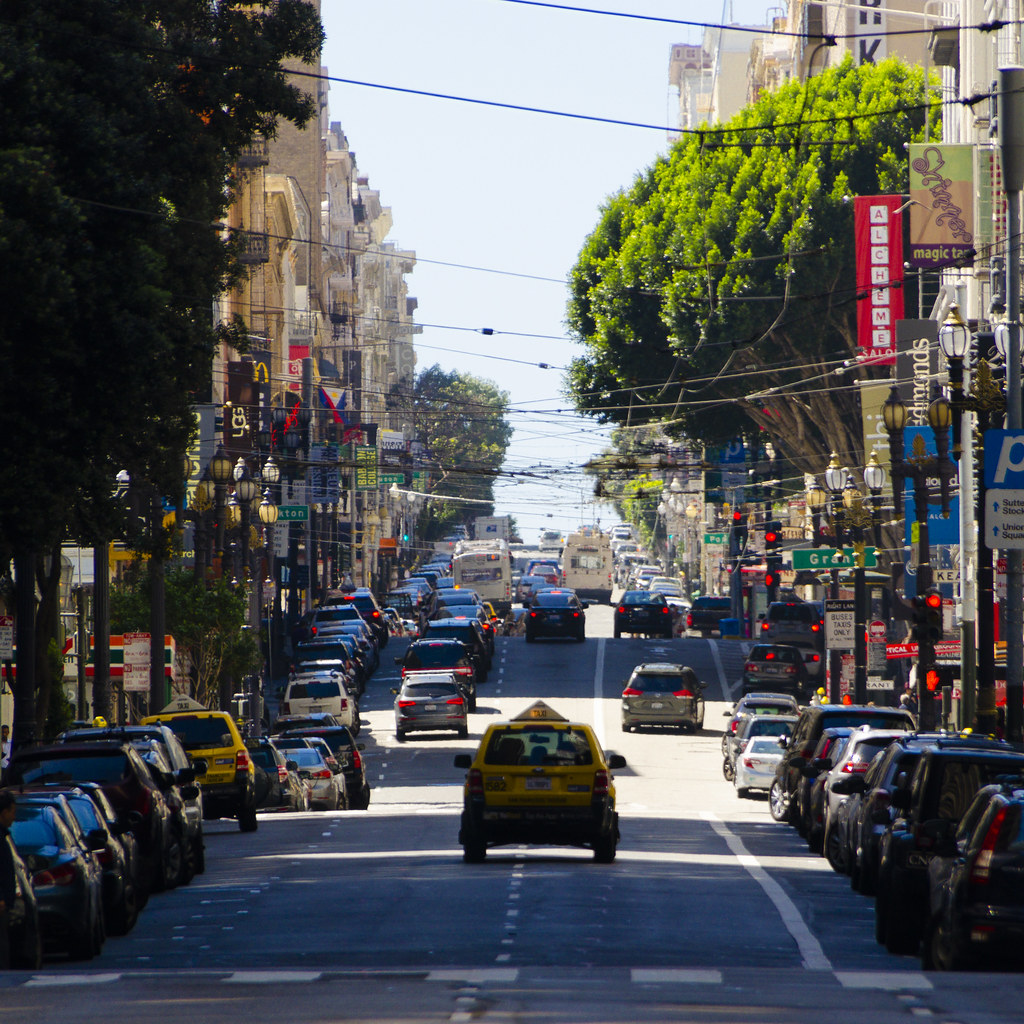
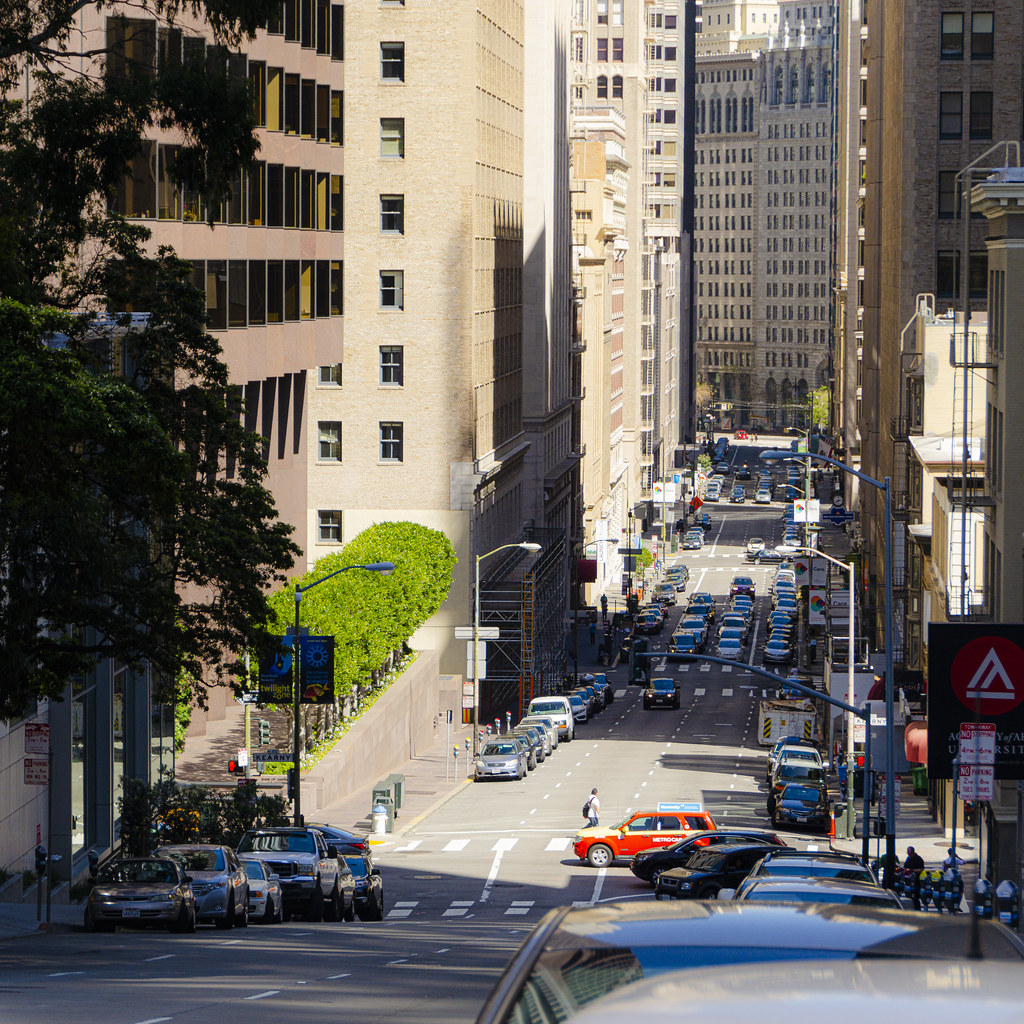
Describing city streets as canyons is, at this point, a cliché, but that doesn’t mean that an image of San Francisco can’t be perfectly canyon-evoking.

HDR Photography
Describing city streets as canyons is, at this point, a cliché, but that doesn’t mean that an image of San Francisco can’t be perfectly canyon-evoking.
A moment in time, glowing through the fog: lights from the old (now dismantled) and new (still under construction, at the time) eastern spans of the San Francisco—Oakland Bay Bridge.
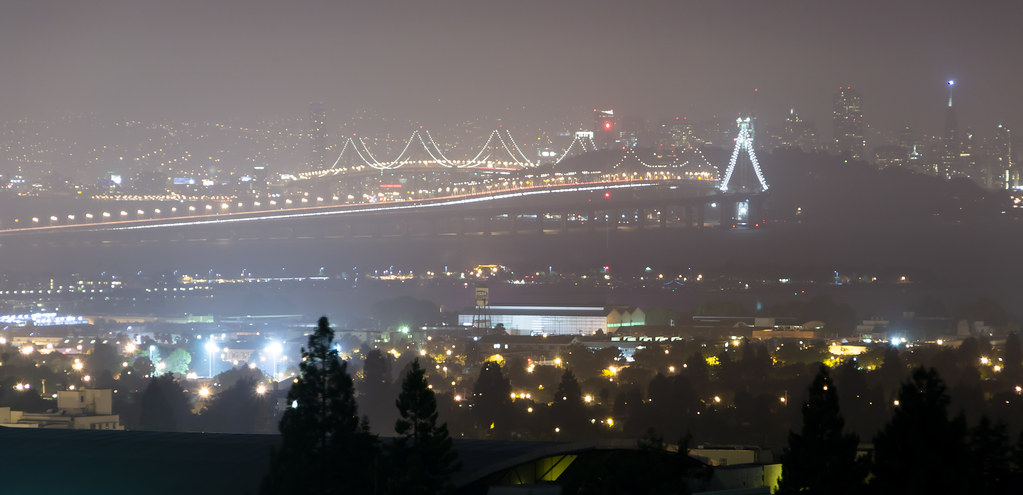
My favorite view, run through my new favorite tool: Photoshop’s Super Resolution algorithm. My six-year-old laptop chugs a bit when running it, but the results are worth it; I recommend clicking through to see the detail in Berkeley’s South Campus.

What better way to capture San Francisco than looking down California Street?

While my normal images capturing the “civilization gradient” tend to be more focused on space (traversing from nature to dense urban areas), I sort of like the way this image reminds me of a traversal through time, from the Stone Age to the Information Age. As William Gibson says, “The future has already arrived—it’s just not very evenly distributed.”
Or perhaps it really just reminds me of the vantage point from Caspar David Friedrich’s “Wanderer above the Sea of Fog“.

This image is another in a series of my re-processings of less-than-new RAW files with Photoshop’s “Super Resolution” machine learning algorithm. As in those other cases, the added impression of detail is particularly astonishing when viewed at full size after clicking through to the original image on Flickr.

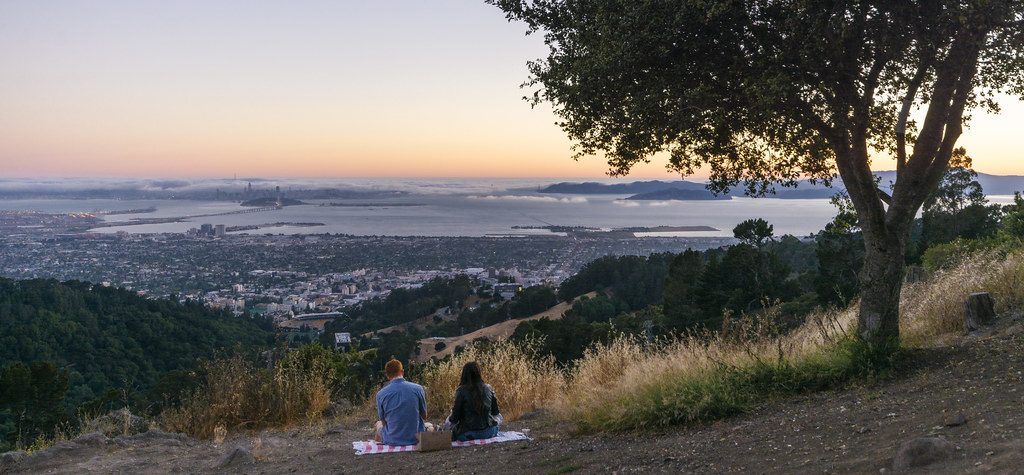
When the Bay Area feels so dense and overwhelming with information, people, and ideas, a drive up to Grizzly Peak is an escape.
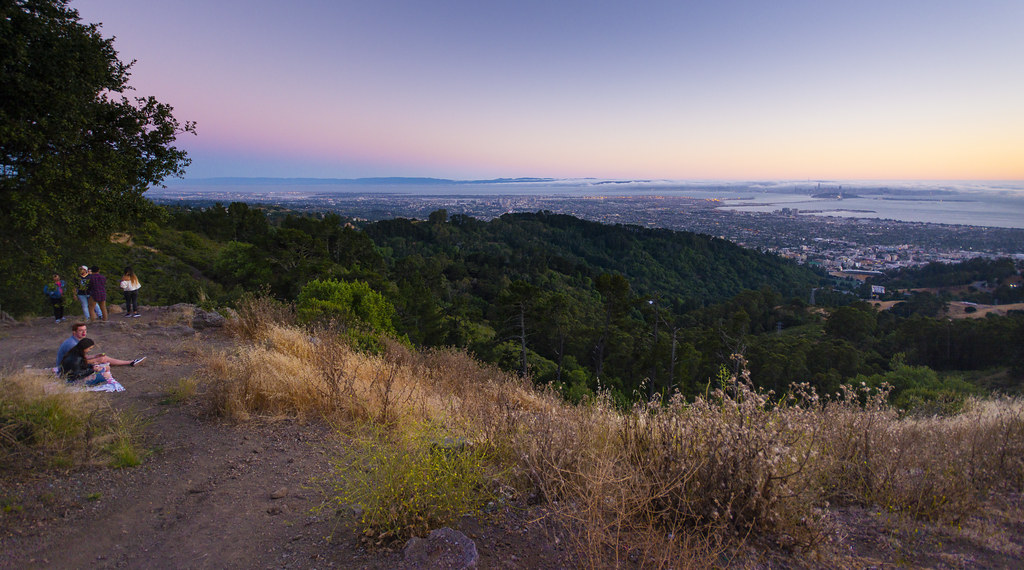
Shooting summer landscapes in the Bay Area typically means swaths of gold, blue, and red. Bright pinks and magentas are much less common, but the jackets and graffiti of Grizzly Peak on this particular evening brought those novel hues.
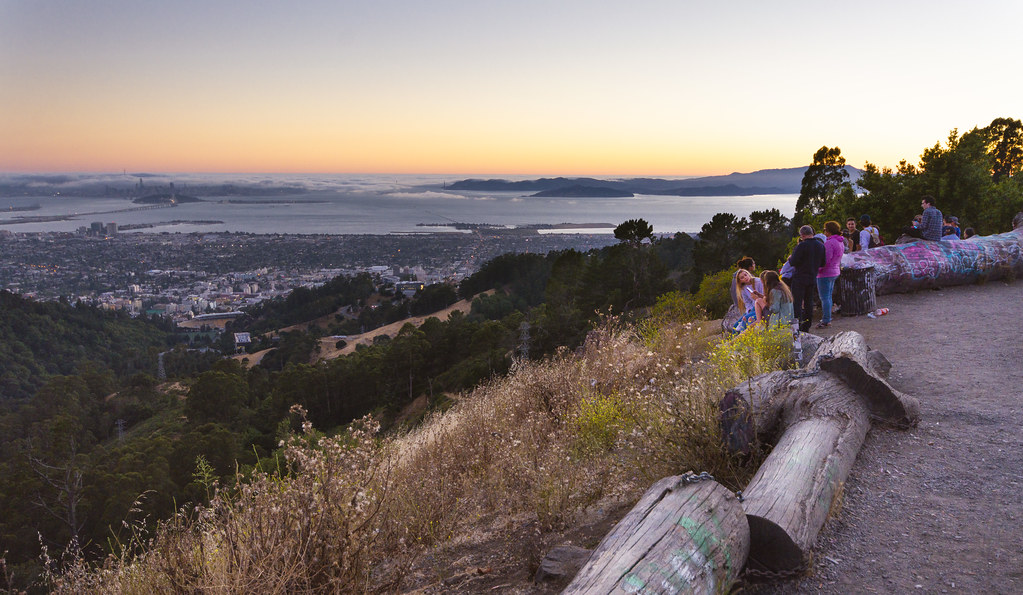
“Escaping from it all” may be difficult in the Bay Area, but an evening picnic in the Berkeley Hills gets pretty close.
The East Bay’s tree-lined streets make for a calming juxtaposition with “cloud city” wall of buildings and marine layer across the water.

An Independence Day special: Fireworks in San Francisco, seen from across the Bay in Berkeley.
Something about the iconic combination of the Golden Gate Bridge, the marine layer, and Berkeley Marina, all bathed in sunset colors, makes me think of before-dinner drinks and cool summer breezes.

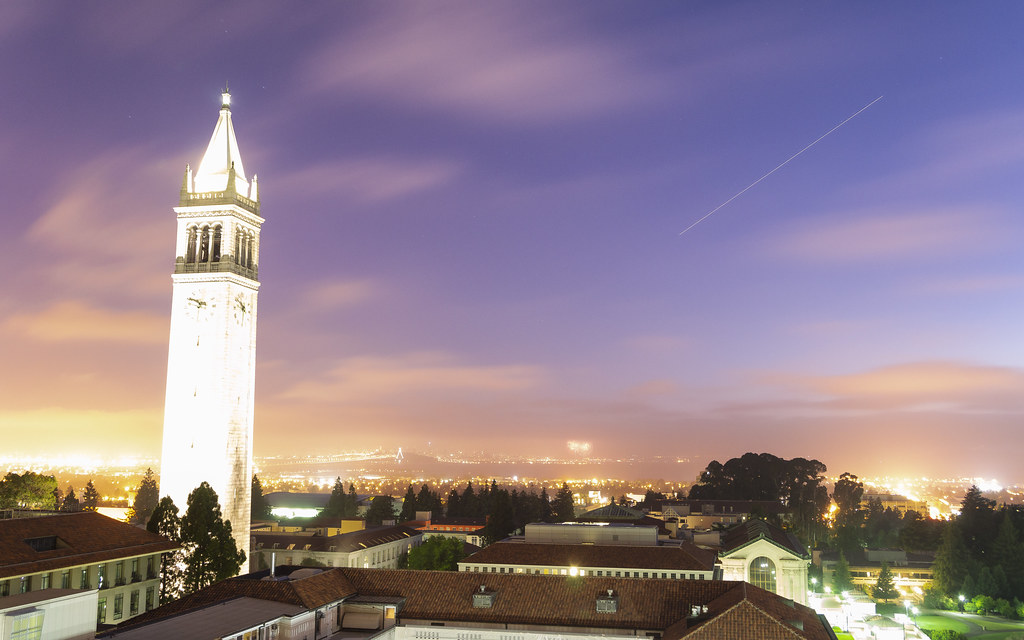
In the United States, the ubiquitous Neo-Gothic architecture of college campuses is an intentional throwback to far more ancient campuses in Europe. From a present-day perspective, of course, the “new” campuses of the east coast have existed for long enough that the anachronistic campuses now blur into a single time period called “old”. On the west coast, however, structures like Berkeley’s Sather Tower (a.k.a. the Campanile) are clearly artificial additions in the otherwise-contemporary landscape.

Going back over some of my favorite images with “Super Resolution,” there’s no way I was going to skip a second shot at my image that first captured the “civilization gradient” from nature through suburbs to dense urbanity.