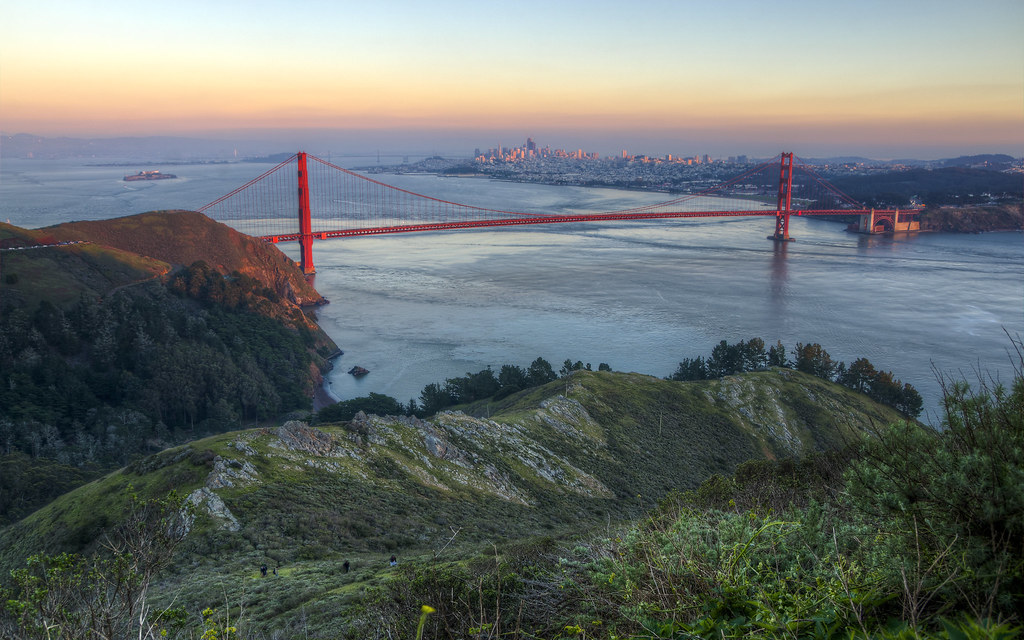
The Golden Gate Bridge is so often depicted either in strong primary colors or in classic black and white that a hazy, pastel-hued summer version is a mellow contrast.


HDR Photography
The Golden Gate Bridge is so often depicted either in strong primary colors or in classic black and white that a hazy, pastel-hued summer version is a mellow contrast.
On this year’s Martin Luther King Jr. Day this year, the coastal roads through the Marin Headlands were completely packed with people searching for the perfect view of San Francisco and the Golden Gate.
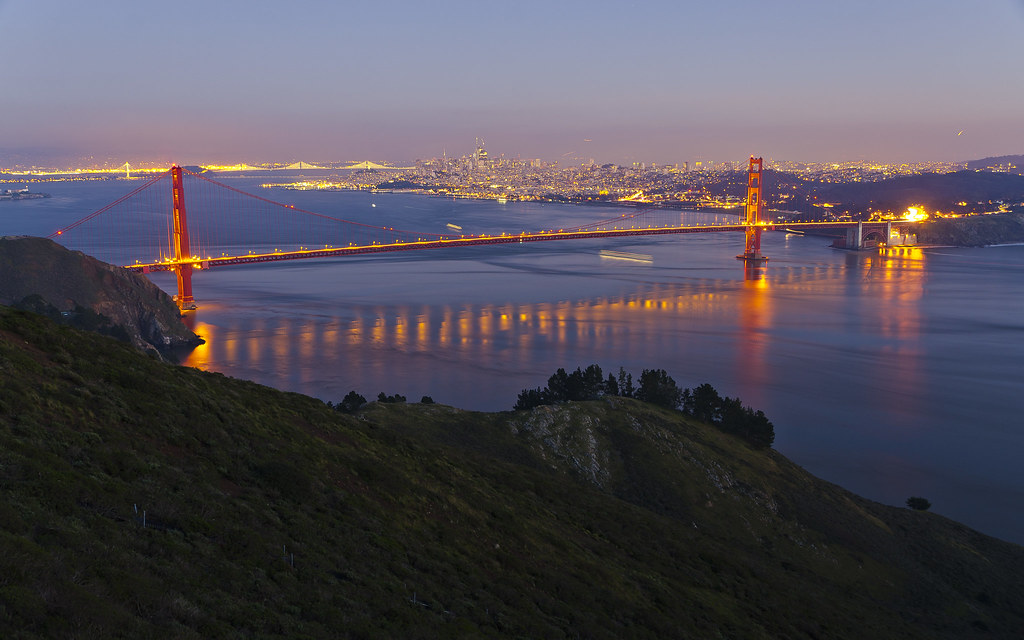
A history of design and engineering is visible from the Marin Headlands in the Golden Gate Bridge and San Francisco beyond it. That’s visible at every hour of the day, so I must conclude that the people jamming the roads earlier on the evening of this image were mostly there for the combination effect with the sunset. As the crowds decamped for dinner elsewhere, the blue hour brought my favorite views of the city.

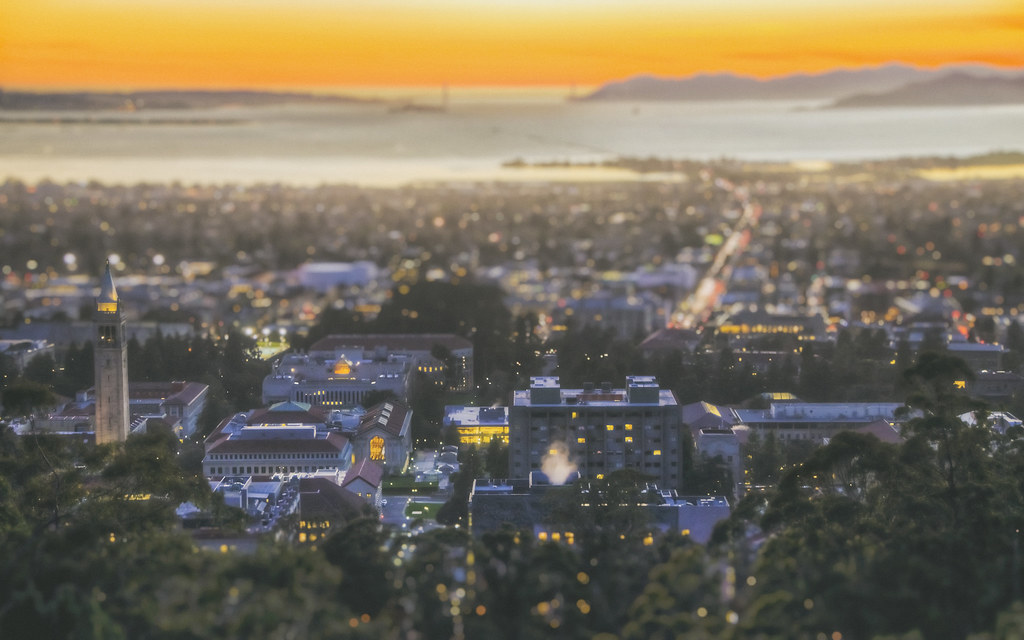
Cityscapes function best with depth: layers of structures and pathways for the eye. The Bay Area view from Grizzly Peak was one of the earliest cityscapes I experimented with photographing. In those early times, it was Berkeley and San Francisco in the distance that most interested me; after my sabbatical at Berkeley Lab, the winding roads where I rode the bus to work and the bright shapes of the Molecular Foundry and JCAP in the foreground hold my interest far more. I enjoy the way in which subsequent experiences can retroactively shift the meaning in an image.
The (distorted) ring of the Bay Area, with “impassable” hills along the edge and “empty” water in the middle, reminds me of the ring-shaped space stations of science fiction. The strangeness of the Bay only adds to the perception of visiting an alien planet.
I produce a lot of photographs every year, but there’s still a special feeling when one of those images moves a friend or acquaintance so much that they ask for a print. This particular image, fully cleaned-up and pixel-peeped to optimizing for printing (after starting life on Instagram) is one such example. I have to admit, the sinuous curves of the marine layer snaking through the Golden Gate, and the shadows beneath the clouds providing additional contrast, are a solid image.
I love finding the little details in epic landscapes that provide the sense of human scale and presence. (It’s a bit like a photographic “Where’s Waldo?”) In the lower center of this image, at the left edge of the Berkeley Marina, you can see light tiny lights of the restaurant where diners look out over the Bay and the sunset.
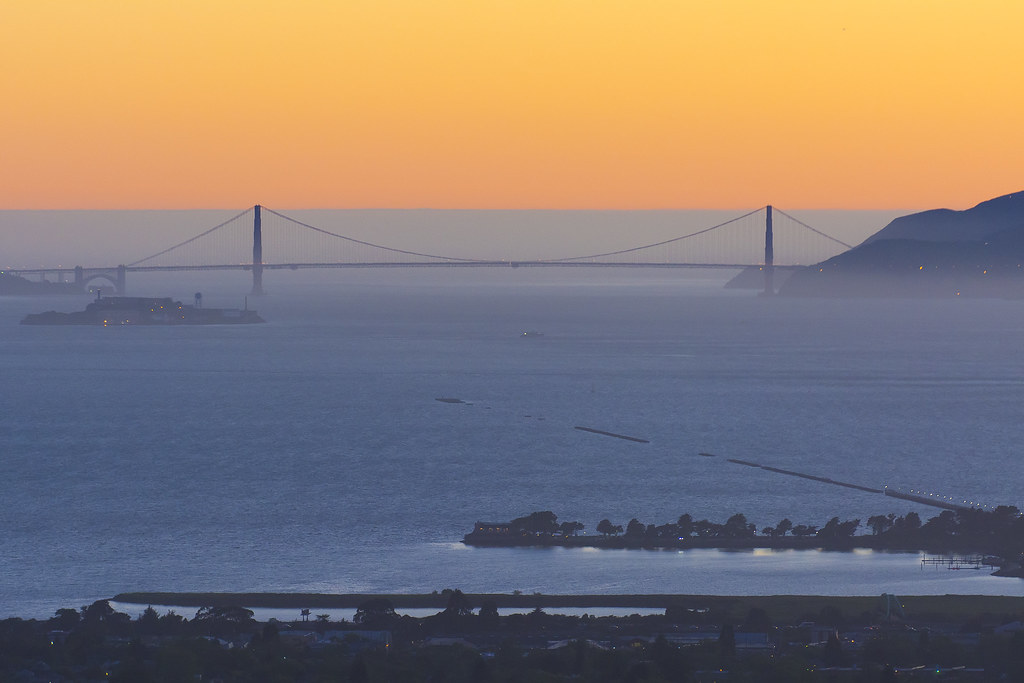
For the most photographed bridge in the world, I’m always humbled to remember that the Golden Gate Bridge didn’t even exist 100 years ago. Seeing it now, in the bracket of Alcatraz and Marin, I think I understand better why it’s Roman Mars‘s favorite piece of design in the Bay Area.
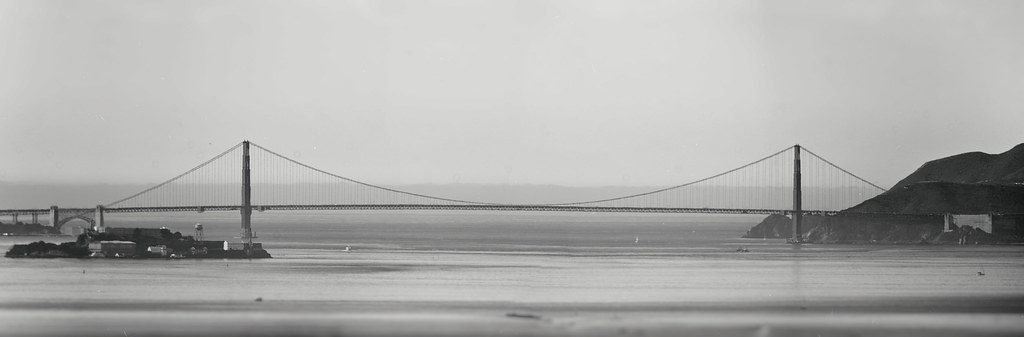
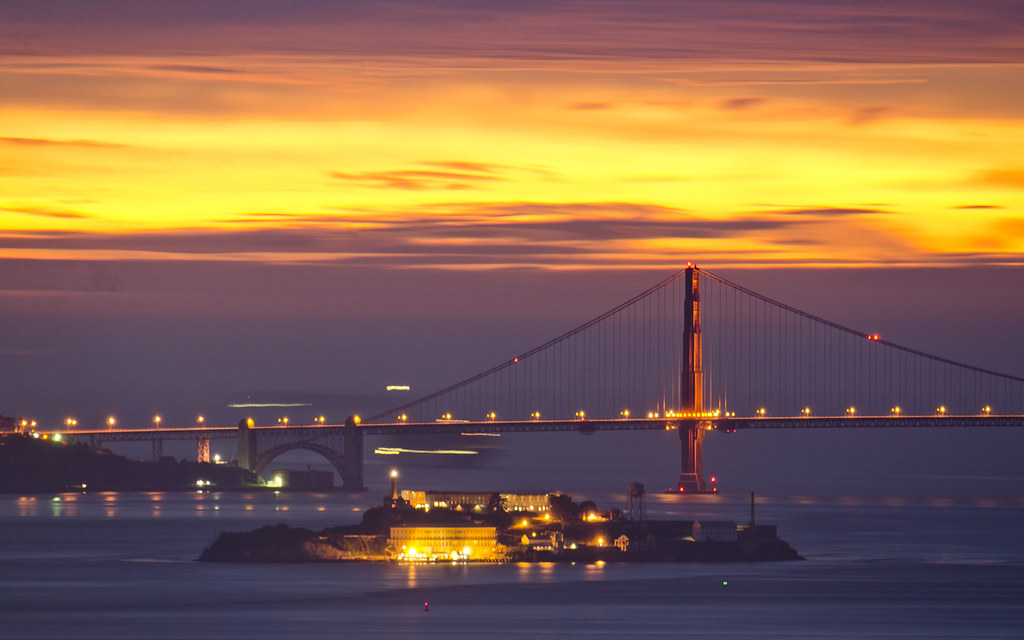
Alcatraz remains an icon of twentieth-century America. With a 500 mm lens and a view from Berkeley Lab, I was able to arrange the island with Golden Gate Bridge behind it (but not overlapping).
This is also part of my ongoing experiments, of late, trying postprocessing techniques that produce dramatic (if a bit less photorealistic) results.
This is the blue hour; sunset is over. That soft, rosy hue in the far-off sky? The product of 100% anthropogenic light.
A throwback to my time in Berkeley. I definitely miss this view.

In the sprawl of the greater Bay Area, with its networks of highway, rail, and water connecting major nodes, UC Berkeley remains a special location. The campus represents its own phase with boundaries where order parameters shift.
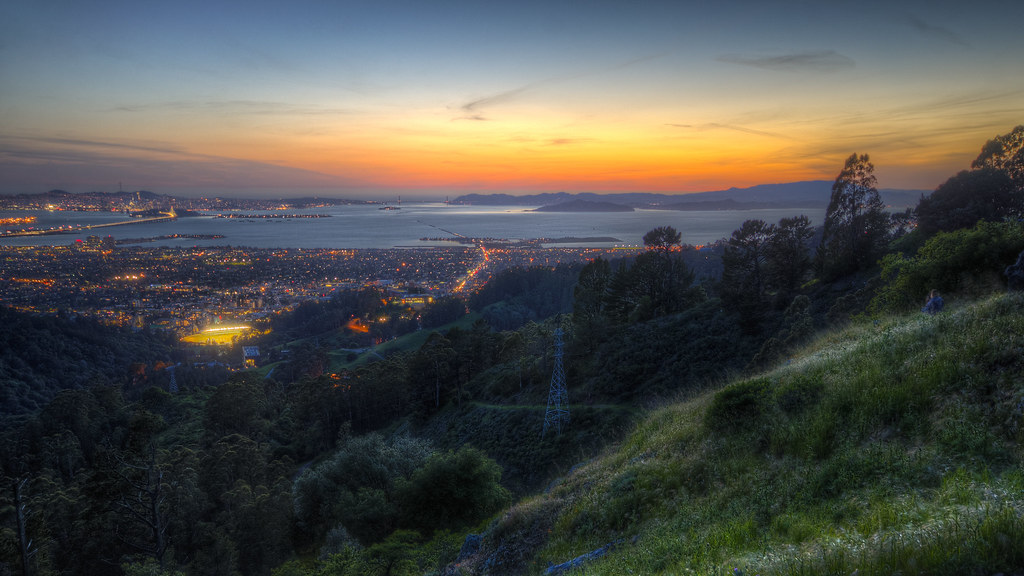
Do you see the lone person, sitting on the hillside, on the right side of this image? People provide scale, but also something more in this context. In addition to watching the literal gradient of the sky at sunset, this picture is part of a set of images of the “civilization gradient” from wilderness to dense city center. I quite like the added layer of a gradient from the individual in nature to the greater mass of humanity in cities. Traveling between rural New York and the crowded Bay Area has made me more aware than ever of the contrast.
Red sunset light hit the hilltops of Marin and the span of the Golden Gate Bridge and just a bit of San Francisco, but the little hikers in the foreground are sheltered from it. So too, I assume, are the people on the streets between San Francisco’s skyscrapers. Many of my favorite photographs are those that show the gradient from nature to dense urbanity, and I think this one fits that bill.
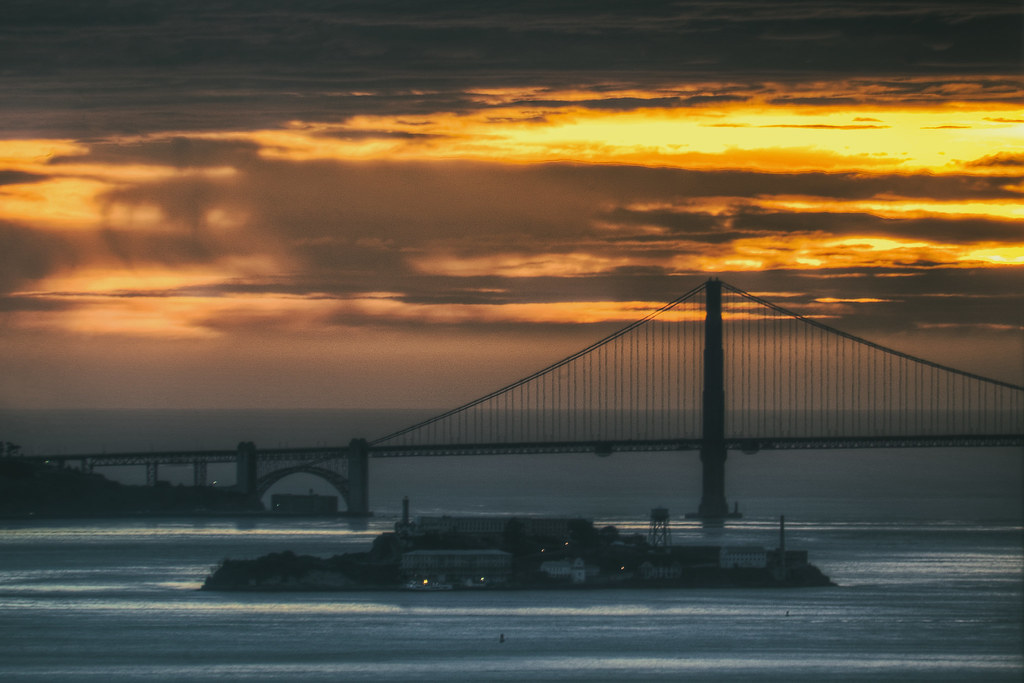
The lights of Alcatraz matched the color of the sunset for just a moment.
 Decaseconds