Maximum Effort 2024

I recently moved into a new office with a huge, boring, blank wall totally ready for a huge, interesting, dramatic landscape. That naturally meant returning to one of my favorite land/cityscapes, this view of Oakland, Berkeley, San Francisco, and Marin from sabbatical in 2017. For an image I expect to stare at for years to come, I really pulled out the stops in terms of producing the best possible image. Click through to Flickr to zoom in and get all of the details!

Maximum Effort 2024

Relaxing with the Bay Area

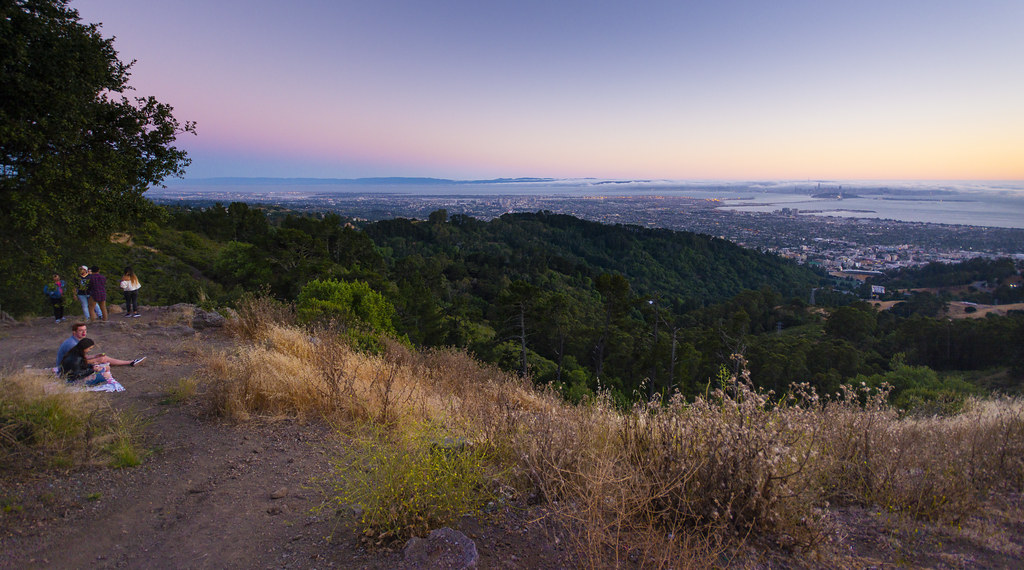
Conserved spaces above the noisy East Bay grid make for this incredible reprieve. Though the street lights may shine up here, the sounds are damped over the distance. Lawrence Hall of Science is a popular spot to experience this; I like the contrast in this image between the humans and the city.

Relaxing with the Bay Area

How Did I Miss These?

A post came on social media from more than 11 years ago reminded me of trips around the Bay Area; comparing my RAW files with the images I ultimately posted to Decaseconds originally left me asking, “How did I miss these?”

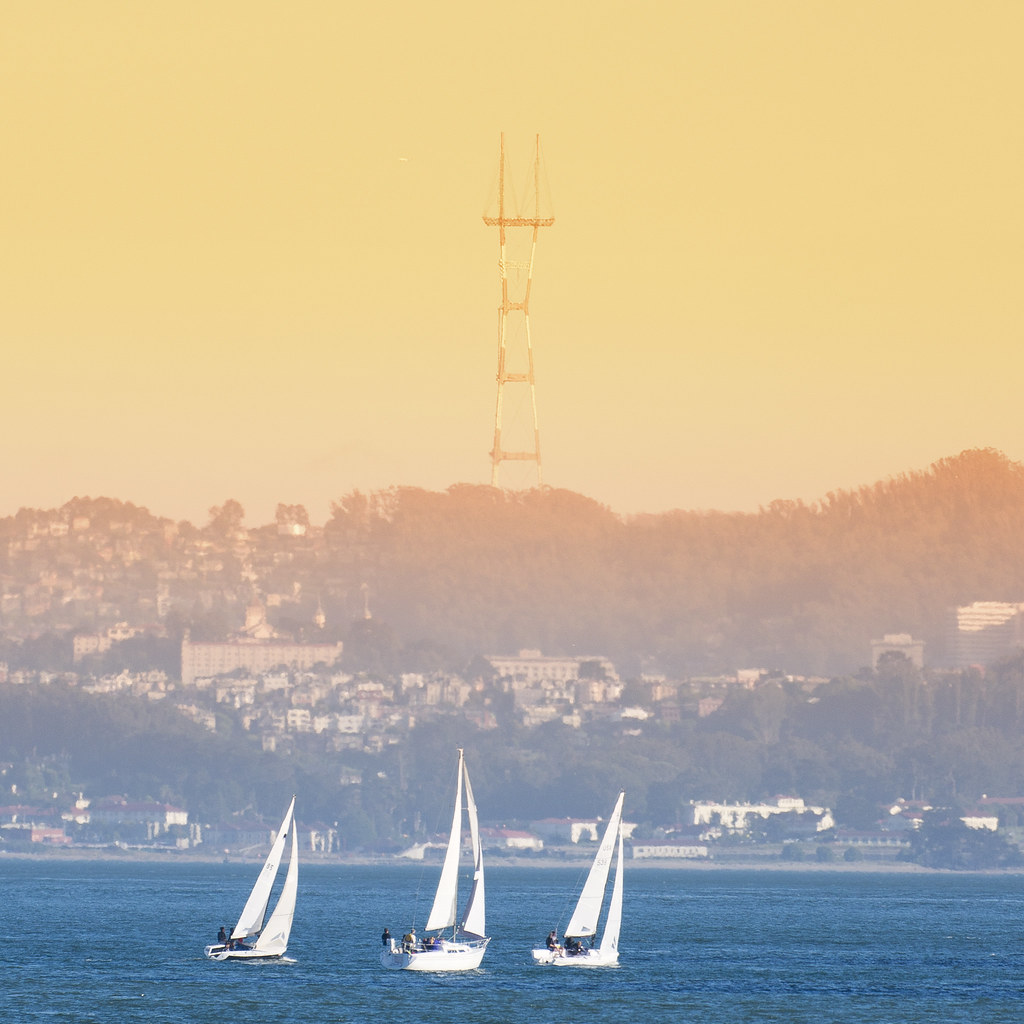
In past cases of reprocessing pictures, I took another approach to images I already knew were solid. This first image today, boat sailing near Point Bonita lighthouse north of San Francisco, is in a whole different category: I hadn’t remember that I’d taken the image at all.

Two Sailboats and Point Bonita

The occasion was a trip to the Legion of Honor and Lincoln Park. Back then, not a single picture made it to Decaseconds. Many of the images from that day suffered from issues that I know how to correct now, but didn’t yet have the tools to conquer in early 2012.

New Year's Day in Lincoln Park

These pictures from a trip to Treasure Island to shoot the San Francisco skyline are likewise mystifying. I posted only a single picture from that trip.

Skyline as It Was

The old and new spans of the Bay Bridge, side-by-side, is a literally now-unseeable image.

When There Were Two

Though a lot of posts came of our trip to the Marin Headlands to shoot the Golden Gate Bridge, this more natural shot of the rocky coastline (those little black dots are sea birds) has its own kind of large-scale glory.

Pacific Hits the Headlands

Of course, a trip back through my photography in the Bay Area wouldn’t be complete without a shot of the Golden Gate Bridge that I previously ignored.


Untitled: Golden Gate Bridge

Eucalyptus Trails

Why save RAW camera outputs from (in this case) six years ago? Digital photography is a rapidly advancing field, and the advent of machine-learning-based noise reduction techniques has completely changed what sorts of images are salvageable. This lovely shot of Berkeley’s fire trails and tall (but invasive) eucalyptus trees stayed in the “unusable” pile for half a decade because I took it freehand, just after sunset, before I deployed my tripod—resulting in an ISO 4500 image from my old D7000 that was just too noisy. Topaz’s latest filters solved that and now this photo can take me back to my California sabbatical.

Eucalyptus Trails

Waiting for the Yacht Race to Begin

I posit that, from a certain point of view, life gets no better than hanging out on a sailboat on a Friday afternoon in the June sunshine. Not in reality, of course—there are lots of ways to enjoy life—but the version of the experience in my mind is just unbeatable.

Waiting for the Yacht Race to Begin

Rogue AI Sunset

I’ve been excited about the possibilities of advanced algorithms in processing pictures, both to increase resolution and reduce noise. When used in combination on an initially noisy image, however, the results can be… unpredictable. Though this image looks fairly reasonable on the web page, clicking through to the full-resolution version on Flickr shows some exciting rogue AI strangeness—like odd places of varying noise reduction.

Rogue AI Sunset

The Future Wasn’t Already There, But Now It’s Evenly Distributed

My favorite William Gibson quote is, “The future is already here—it’s just not very evenly distributed.” How we gauge futurity—or how we identify the traits we associate with future-ness—means that some places will have more “future” to them than others. A mountaintop in the Adirondacks might be pretty similar to its condition 100 years ago, while downtown Berkeley would be unrecognizable.

This image is a picture of the past, from the “future”: I wanted to print a tall, vertical image of Berkeley and the Bay but had (it turns out) never quite taken the one I wanted. I had taken the two pictures that went into making this image as part of a larger panorama in 2013 that never quite came out. Here in the present, I pulled in every technique in my arsenal—Adobe’s super resolution, Topaz AI noise reduction, frequency separation—to assemble two images from a circa-2010 16 MP Nikon D7000 into the 76 MP monster you see below. This one is definitely worth clicking through to full resolution.

The Future Wasn't Already There, But Now It's Evenly Distributed

Stone to City

While my normal images capturing the “civilization gradient” tend to be more focused on space (traversing from nature to dense urban areas), I sort of like the way this image reminds me of a traversal through time, from the Stone Age to the Information Age. As William Gibson says, “The future has already arrived—it’s just not very evenly distributed.”

Or perhaps it really just reminds me of the vantage point from Caspar David Friedrich’s “Wanderer above the Sea of Fog“.

Stone to City

Every Detail of the Bay, Redux

This image is another in a series of my re-processings of less-than-new RAW files with Photoshop’s “Super Resolution” machine learning algorithm. As in those other cases, the added impression of detail is particularly astonishing when viewed at full size after clicking through to the original image on Flickr.

Every Detail of the Bay Redux