A pony farm nestled in the hills of northern Vermont: with a ring and a pond by the house, what more can a young American dream of?
(At the moment I took this picture, the answer was, “snow.”)


HDR Photography
A pony farm nestled in the hills of northern Vermont: with a ring and a pond by the house, what more can a young American dream of?
(At the moment I took this picture, the answer was, “snow.”)
When I’m in the first row, inches from the action of St. Lawrence’s DIV I women’s hockey, there’s no better lens than my 35 mm prime. That lens let me capture this Last-Supper-esque shot of six players all chasing the puck; they’re all roughly equidistant from me, making the shot slightly flat and surreal, like a splash page in a comic book.
This picture comes with added good new: the women’s team won their first playoff game this weekend!

Glaze ice entombs the branches of trees in the courtyard of St. Lawrence University’s Johnson Hall of Science in the aftermath of last weeks. The view out my office window is much improved.

The regular ice hockey season has ended (and the playoffs are ahead!), but it went out on a great note: St. Lawrence crushed Brown 3–0. The very similar nature of the school colors helped the aesthetics. Then there was the actual play: the three Brown players against one St. Lawrence player about measured the balance of power. It made for some odd and dynamic hockey.

Ice and snow and real winter have locked down the countryside, but I still have the photographic evidence of our ultra-mild, el-Niño-powered January.
An ice storm has transformed campus; I’ve never seen it this beautiful. For the folks in admissions (like the tour guide and family in this photograph), that must be a boon!

St. Lawrence’s campus becomes extra strange and ski-resort-esque when a fresh layer of snow is cleared by night. When morning arrives, paths are “magically” clear.

Real winter arrived with a horrible stillness. When the temperature is -25ºF, nothing moves and nothing melts and every bit of solid water stays just where you leave it. Even the tiny twigs and branches were stuck in its embrace.
I wanted to look back briefly on the structures of St. Lawrence University’s campus under lockdown from heavy snow. The oldest buildings, like Herring-Cole Hall, are naturals.

This little shed is in odd scale with the buildings around it, but its little puddle of light fits perfectly with the evening.

I’ve always grown to love the mid-twentieth-century buildings like the ODY Library. The lights, snow, and scaffolding among the trees put me in mind of Soviet science fiction.

Here is another example from around the same time period, Bewkes Science Hall. In my mind, authors of speculative fiction must be hiding behind the drawn blinds and imagining snowy, cyberpunk futures of the late 1990s.

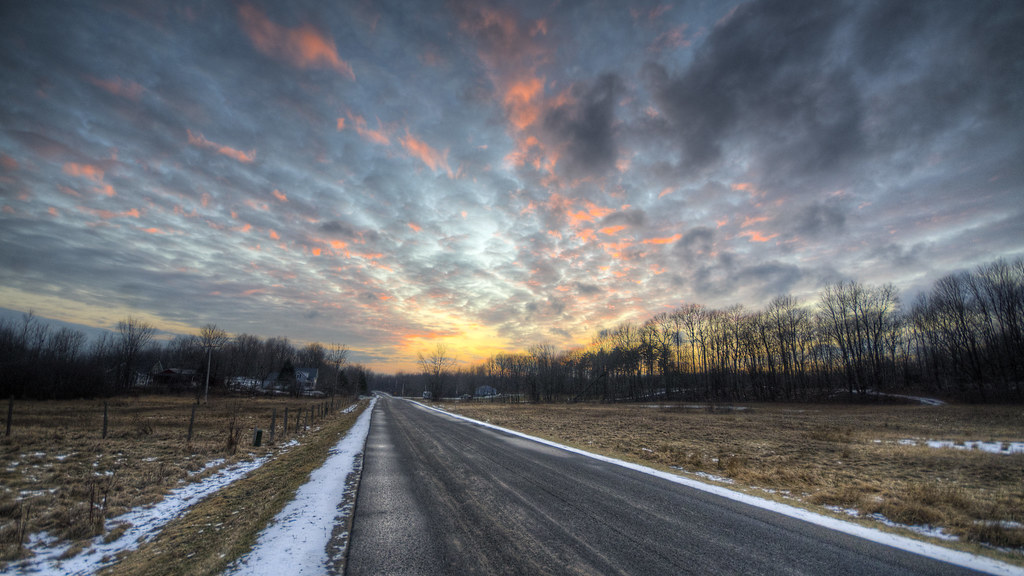
Away from the village centers, the North Country is frozen at an odd point in development. The original farms of early settlers haven’t been completely removed, but not much development has continued past that point. Trailers were installed by the sides of hot-mix roads and everything stopped there. I’m fascinated to think what this area must have been like during the late 1940s—population returning as the nation demobilized, and those people changing things in the North Country. Things don’t seem to change as much now.

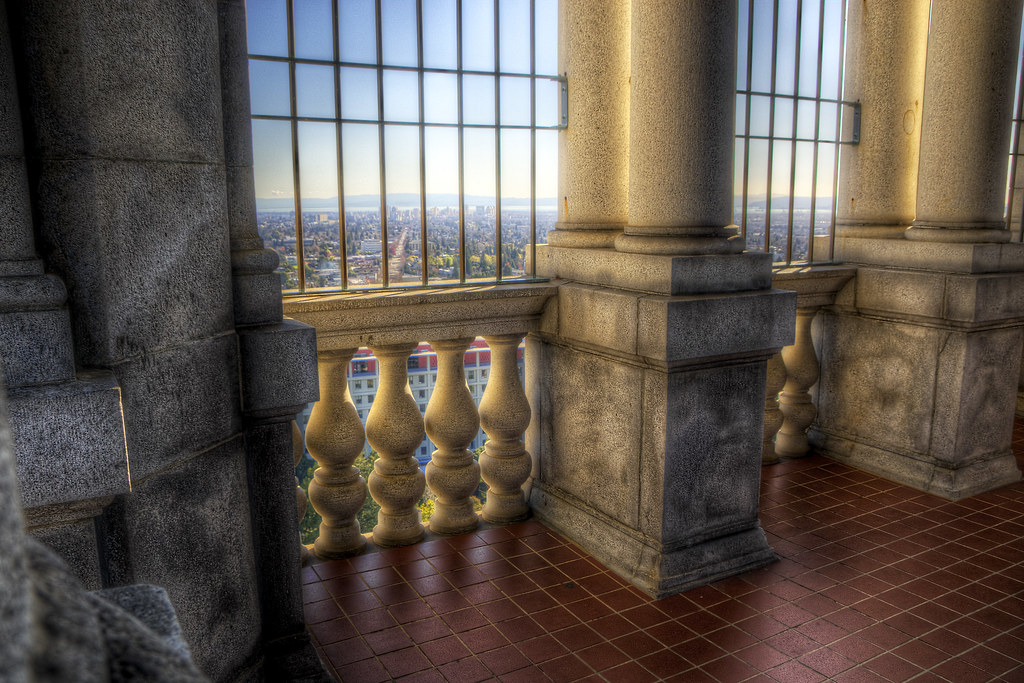
Beyond Sather Tower’s bars and columns is Telegraph Ave. and the city of Oakland. I never forget that view, but I do somehow always forget the red tiles at the top of the campanile. I guess my brain abstracts away the details, even when they’re a major part of the scene.
Livestock of the North Country are, well, lively, even in winter. The shaggy coat and the bright sky must help. On a night with a sunset like this one, I share the llama’s need to go out and investigate.

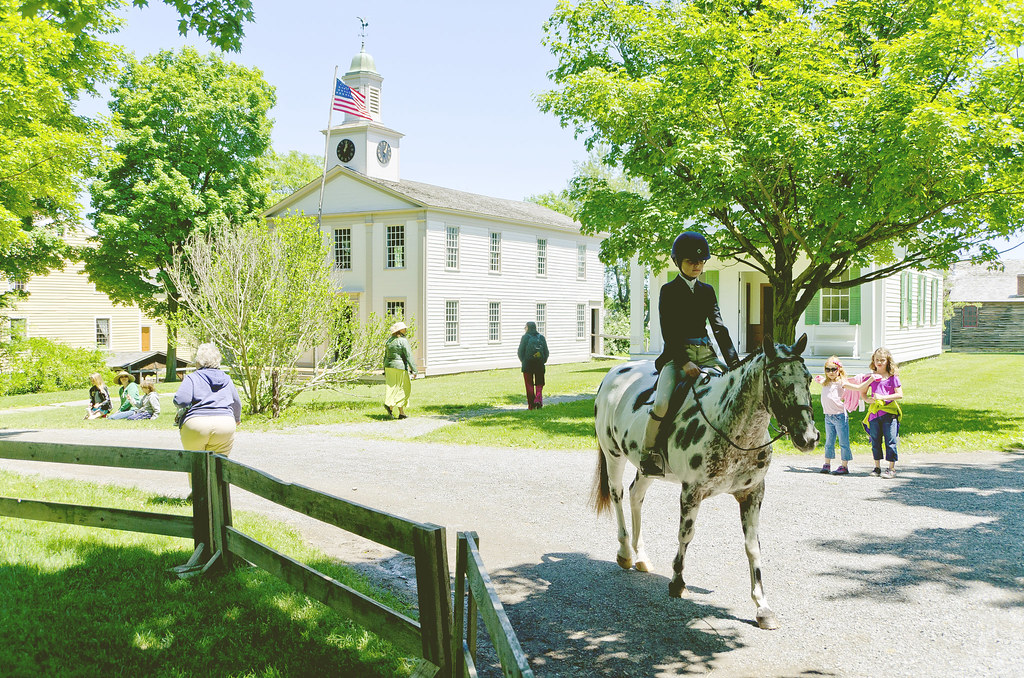
Warm weather and buzzing insects on a June afternoon are perhaps a distant memory come February; they feel as alien now as this pony and rider walking down the street of Genessee Country Village did. There’s an almost-juxtaposition there.
Sunlight of late summer maneuvers through the Seattle skyline, and I can’t help but enjoy the way reflections and the impossible geometry (one of my favorite clichés) of Rainier Tower’s slender base stand out among the more “traditional” shapes of the surroundings buildings.

In this image, my entire walk to work during graduate school is captured and arrayed. The go-to-work route of my co-editor is also hidden in the farther reaches of this picture (with the far-off Albany Hill marking its start). That hill is interesting in part because it used to have several similar siblings in the area that ere dynamited down to make room for more housing. Being a primarily landscape photographer, I’ve always liked the relationship between physical spaces and memories—and the ways the two can shift together over time. The connection of photography and memory, and the effect of going back to old photos, has been a growing interest of mine. (I articulated my general feelings in this post from 2014.)

This cowboy of the sky is complete with mustache, wide-brimmed hat, and rugged gloves. This sunny September afternoon was the perfect time for aeronautics; today, not so much.


