Campus, Bay, and City

The view from atop Berkeley’s Campanile is a nostalgic one, with San Francisco and Oakland popping up in the distance above the sprawl. Walking along those broad, slightly cracked, and sun-baked pathways of Berkeley’s campus never quite felt natural, though. Can a place magnified beyond human scale feel that way?

Campus, Bay, and City

Fire Trail and Fire Sky

Fire trails seem like a friendly, common, down-to-earth feature of many California hillsides. There’s a strange context alongside the blazing sky and the busy city in the distance. When I look farther off and see the Golden Gate Bridge and Angel Island, the juxtaposition feels only more emphasized.

But perhaps I like that vision. We build things both grand and humble.

Fire Trail and Fire Sky

Come On, Street!

Having been outside the crazy-sphere of city life for a year now, I like looking back on the outrageous geometries that San Francisco calls reasonable. (I’m guessing the number of patches are repairs to that very steep street is a testament that road crews are just as uninterested in climbing it as the average pedestrian.) It’s really not surprising that so many classic movies take place in San Francisco: drama and strangeness is built right into its structure.

Come On, Street!

Span Aside

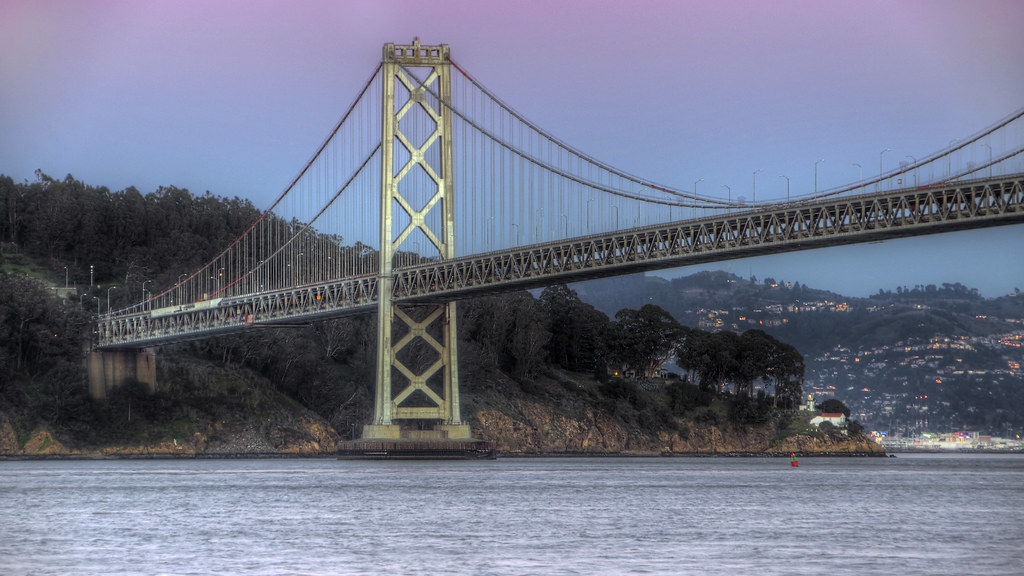
This photograph is a double-case of finding interesting details by looking away from the obvious. On one hand, this subtler image was captured opposite an intense sunset over San Francisco. The color palette is heavy with pastels, but accented with a few harsh reds from Oakland in the distance. In the image itself, there’s a tiny building under the right-hand span of the bridge. Seeing something so (let’s say) adorably sized next to something so dominant and enormous makes for a charming contrast.

Span Aside

San Francisco Looming

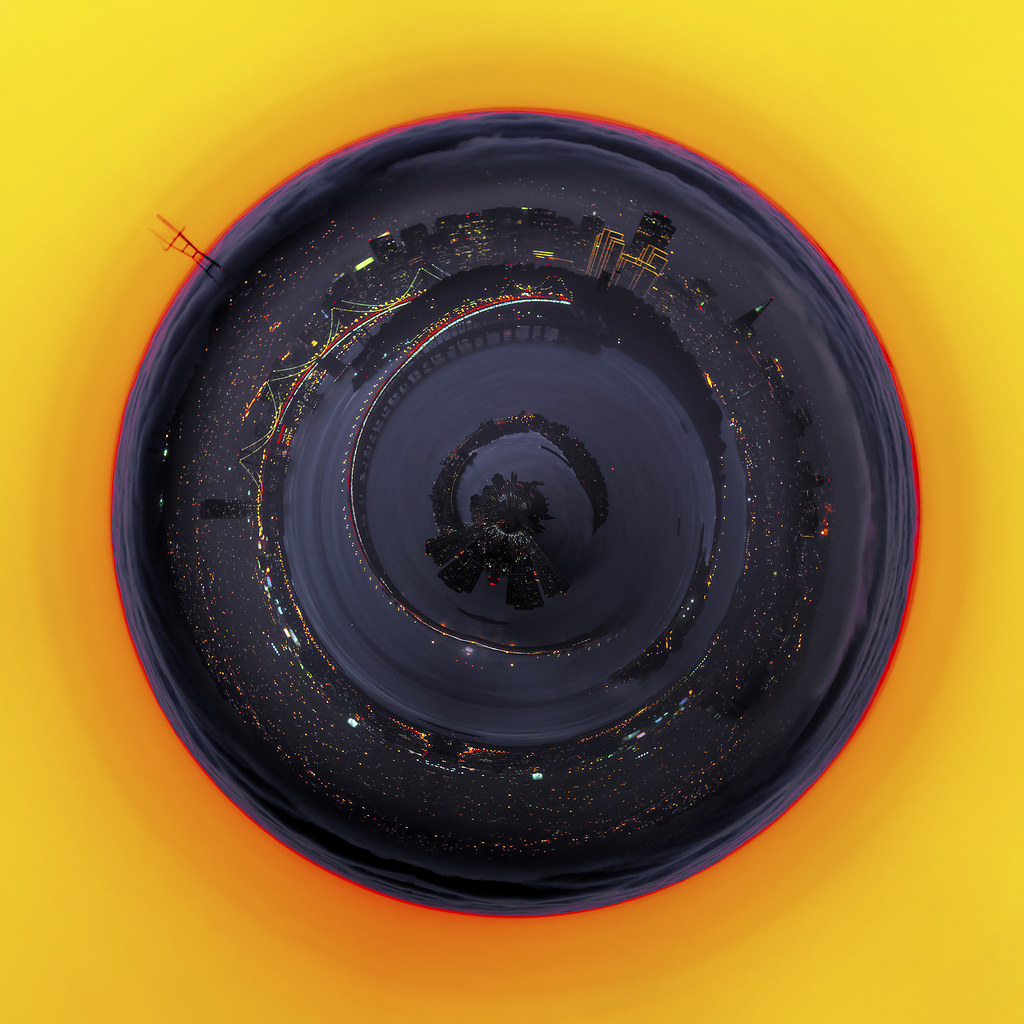
There’s too much unsettling photography out there to limit my Halloween to just a single photograph! The image of a completely dark San Francisco (in the moment between the sun beginning to set and all of the headlights and streetlights turning on), with its specific skyline rising from the mist of the marine layer, just screams “post-apocalyptic cityscape.” Or do I detect a hint of Blade-Runner-esque “California of the Future” in the angles and orange colors? While I’m on the topic of future and past, I have a question:

Do you George Lucas your work?

This photography is one of the first that I ever took with a “real” camera, in the late fall of 2011. The RAW file was sitting quietly on my external storage drive, fallow and ready to live again. In comparing this image with the original approach I took to processing, I see enormous differences and enormous improvements—or at least an evolving artistic sensibility. I’d call this approach “George Lucasing:” going back to old work and updating or improving as my skills improve. And I’m not sure I like that it’s something I should do. Photography captures a moment, and needs a sense of finality. On the other hand, if I am spatially removed from a place (be it San Francisco or South Africa), without the immediate opportunity to return, can this creation be a healthier expression of nostalgia?


San Francisco Looming

Golden Gate and Bay in the Rain

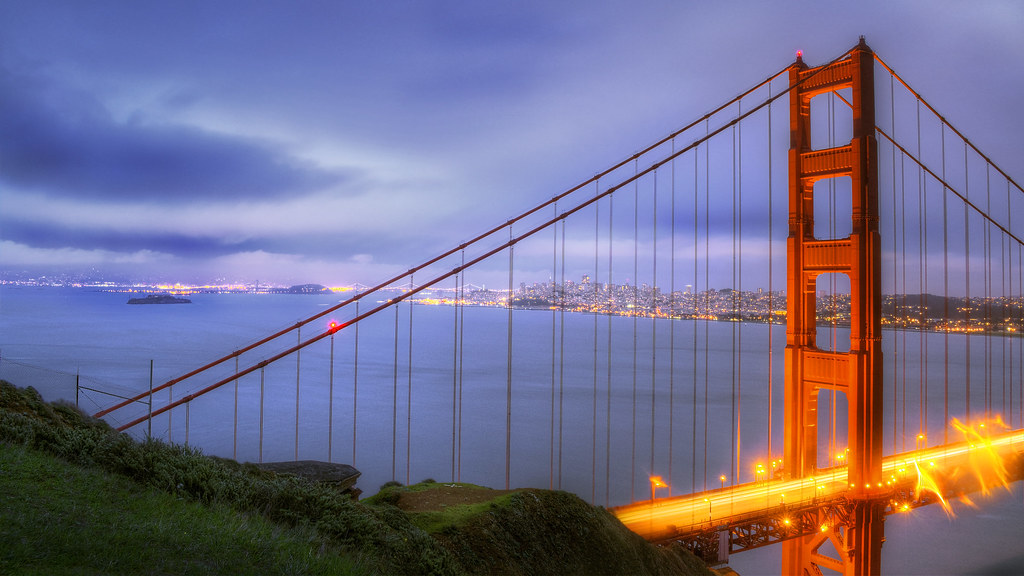
I sometimes sift through the RAW files I took long in the past, searching for meaning in images I captured long ago. In the case of this particular photograph, there’s more to the image than just my favorite Bay Area gradient of differing environments (e.g. Oakland and San Francisco and Alcatraz and two different enormous bridges and so on): there’s also a feeling of place and moment. The dramatic clouds and the grasses and the hint of the Golden Gate’s span are all spectacular, but the optics of a raindrop spattered across the lens add just as much to the image. You can practically smell the petrichor in the air.

Golden Gate and Bay in the Rain

Old Modern Shapes

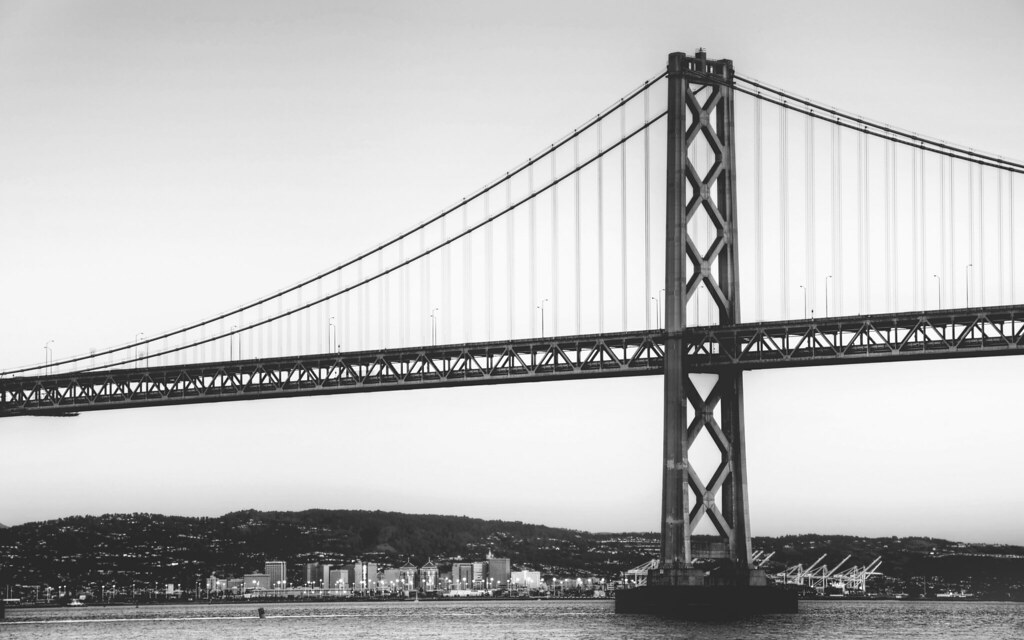
At the dawn of the twentieth century, all was hopeful and “excellent.” When the Bay Bridge opened in 1936, human ingenuity could solve any problem, bridges replaced ferries, cars replaced horses, aircraft would soon replace trains. Now we’re orphans of the future, living in a world when “modernity” is in the past, and epic symbols of the era and its architecture are quickly becoming relics. Though I have no nostalgia for much of the social/cultural mores of the time period, I do find it fascinating to look upon the structures built “for the future” from the standpoint of that future. Perhaps it makes me wonder, just a bit, what we build for our own future now.

Old Modern Shapes

Secret Francisco Path

That the hills of San Francisco are so steep that sidewalks become stairs is fantastic. (In literal sense of being fantastical.) Traversing the city feels less like plotting out positions on a grid than navigating a mountain labyrinth. Climbing Telegraph Hill to Coit Tower in the light of the setting sun only serves to amplify the sense of strange magic that San Francisco offers.

Secret Francisco Path

Transamerica Gradient

San Francisco at the end of Saturday: to paraphrase the Hold Steady, the lines of the city are awash in hot, soft light. I’ve rambled in the past on the gradient between nature and dense urbanization, and the special anomaly that the San Francisco Bay Area represents in its gentle juxtaposition of wood and concrete (buildings). This particular photograph from Telegraph Hill tells the story: the towering, mythical shape of the Transamerica Pyramid and a hill of grasses, with less than a half-a-mile walk separating them.

Transamerica Gradient

Across Russian Hill

Like Manhattan, San Francisco is largely trapped by water. Like Manhattan, the city has preserved large swaths of “natural” space (e.g. Central Park, Golden Gate Park) in that hyperdense urban mass. The Mediterranean climate, youth, and topographical preposterousness of San Francisco give it a unique (pardon the neologism) architexture. Looking west from the trees of Telegraph Hill, over Russian Hill and on to the Presidio and the Golden Gate Bridge, the cross-section of environments complement each other. My mind still struggles to see the towers of Russian Hill in the same image as the inhospitable rocks of Marin.

Across Russian Hill