Spectroscopy Lab

Approaching the summer solstice, the start of fall-semester classes and their attendant labs seems far away, but a new class of St. Lawrence first-year students will be here before I know it.
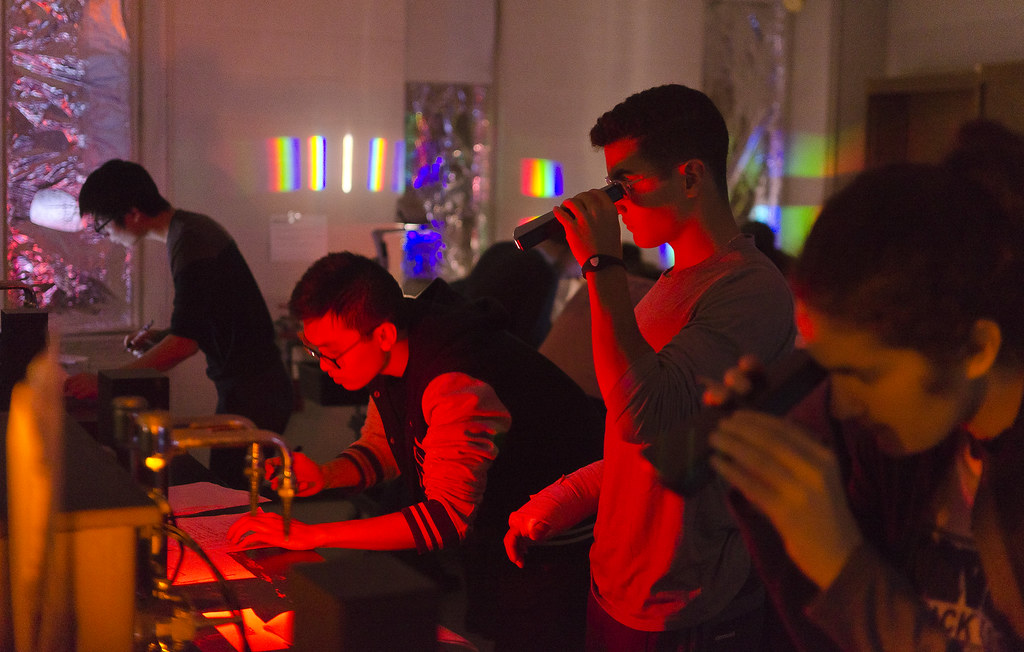
Spectroscopy Lab I

This was one of the light sources students were interrogating: a sodium lamp, like the ones used in street lights (at least in the twentieth century—LED street lamps are becoming increasingly dominant now.)
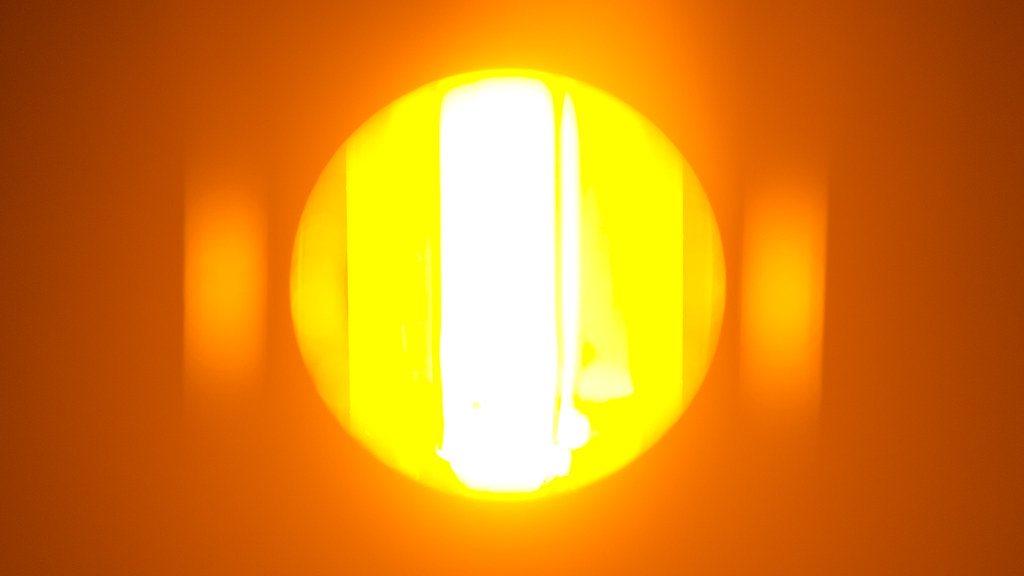
Spectroscopy Lab II

Lush Campus

The long winter seems long behind us and campus is lush with flowering trees and grass carpets. Brush Quad, situated between St. Lawrence University’s oldest building (Richardson Hall) and its newest (Kirk Douglas Hall), looks particularly welcoming.

Lush Campus

Stone Valley: Rapid Stairs

The rapids of Stone Valley in Colton, New York have a certain stair-like repeating quality to them (at least for the 363-ish days/year during which the dam above keeps its spillway gates closed).

Stone Valley: Rapid Stairs I

Farther along the river, the effect again repeats: stone ledges turn the rushing water into less-metallic slinky.

Stone Valley: Rapid Stairs II

This isn’t a mere trompe-l’œil where a particular angle makes stair-like shapes appear in the stones and moving water. A view shifted by 90º confirms the structure.

Stone Valley: Rapid Stairs III

Exploring

The end of St. Lawrence’s school year means that the hikes through areas like nearby Colton’s Stone Valley will be coming to an end for many graduating seniors.

Exploring I

Living in this Adirondack-ish reality of the region presents opportunities to stand face-to-face with nature.

Exploring II

Quiet contemplation of the future is at the end of the trail.

Exploring III

Pestle Stone Sunset

Summer hiking in nearby Colton’s Stone Valley is rapidly approaching, and with it, opportunities to see some of our odd (to me) local geology. Those enormous hollows are created by the movement of trapped pestle stones in the rapids water; the scattered evening light reveals their depths.

Pestle Stone Sunset

532 nm

In St. Lawrence’s Raman spectroscopy and microscopy lab, the most potent laser illumination source comes from a neodymium-doped yttrium aluminum garnet. This is a pretty ubiquitous laser source, but I happen to like it because it also demonstrates the value of nonlinear optics: though this laser is emitting light at 1064 nanometers (in the infrared), a suitable doubling crystal can combine two of those 1064 photons together to make a shiny new 532 nm photon.

532 nm

Skytop and the Hotel

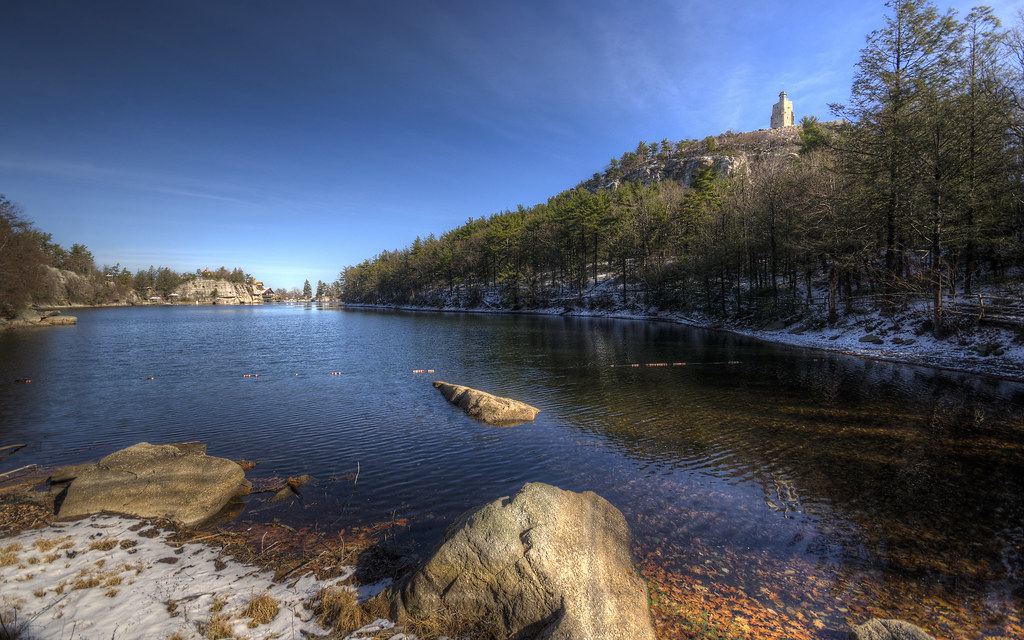
Mohonk’s Skytop appears as a small castle atop the hills near the hotel, but its reality is a bit more mundane: it was constructed as a watchtower for forest fires in the early twentieth century. Though no longer in use, it adds an extra hint of magic to the whole setting. The hotel (off to the left) sits on the water, and the tower touches the sky.

Skytop and the Hotel

No More Canoes

There are many ways to define the seasons, with varying degrees of usefulness. (Solstices and equinoxes seem to have only the thinnest connection with the weather.) Perhaps the most valuable differentiation between times of the year is when one can reasonably be out on the water: “Spring” is that first moment when an afternoon in a canoe doesn’t sound miserable.

No More Canoes

Hotel Services

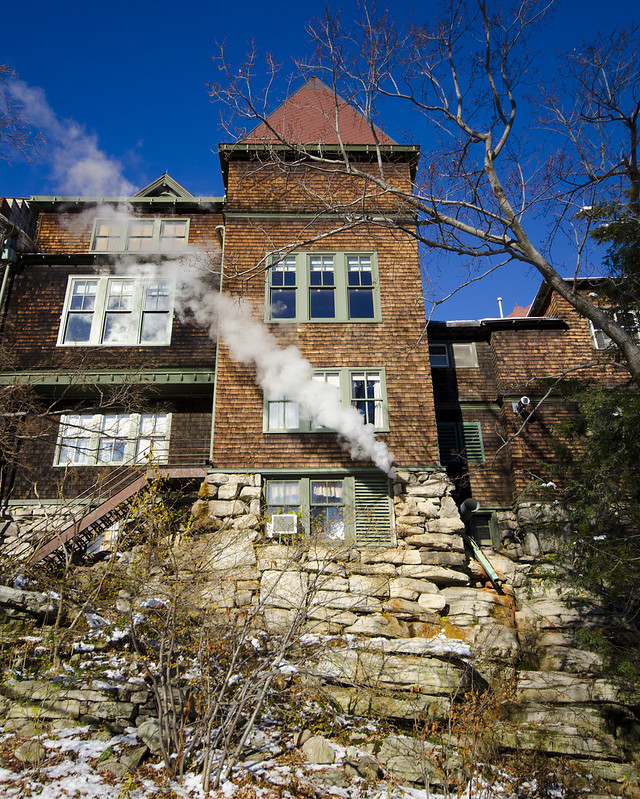
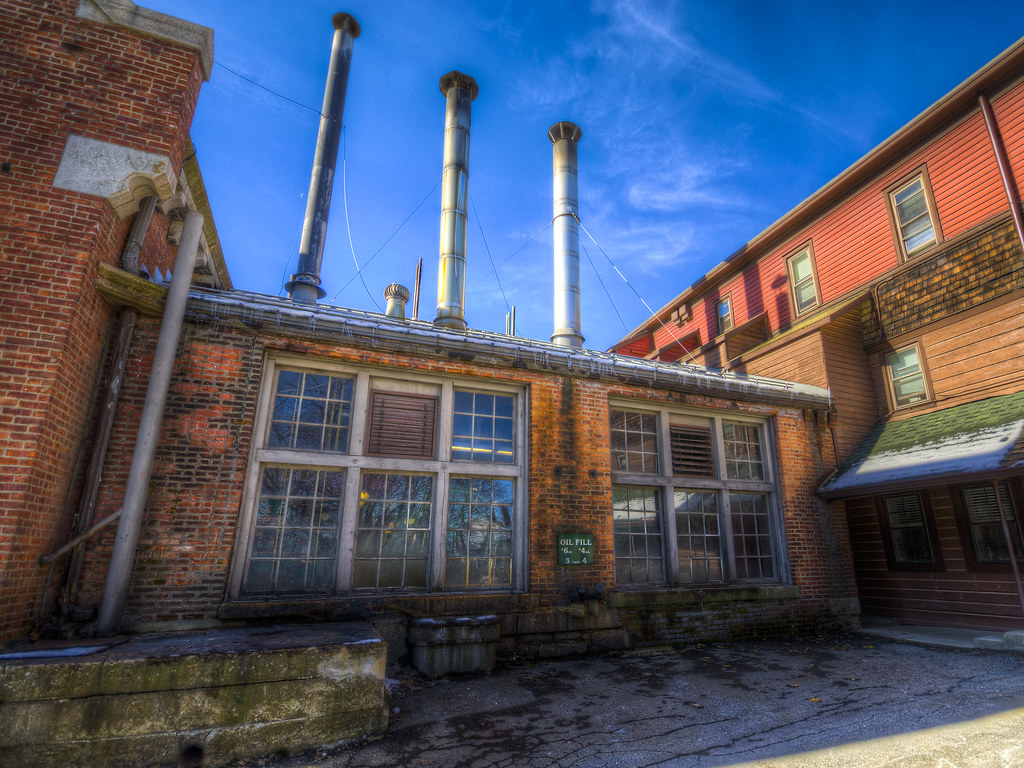
Even the grandest of hotels have infrastructure that supports the guest experience. For a grand old hotel like Mohonk Mountain House, that infrastructure is charming enough to be interesting in its own right.

Hotel Services I

Those early-twentieth-century structures—boilers and exhaust stacks and hand-painted signs noting the protocols for refilling the massive fuel oil tanks.

Hotel Services II