Jamaica Bay to Manhattan

Departing JFK International Airport over Jamaica Bay, with the Manhattan skyline glittering in the sunrise, brings to mind my favorite topic: the gradient between dense urbanization and “wilderness.” If there’s a consistent theme to my photography, it’s the desire to capture this gradient in a single image (as I sometimes have in other settings.) Even my wide angle lens couldn’t capture the whole scene, but here’s One World Trade Center and the Empire State Building alongside the wetlands of Jamaica Bay, with New Jersey and Brooklyn buffering and smoothing the divide to a gradient.

Jamaica Bay to Manhattan

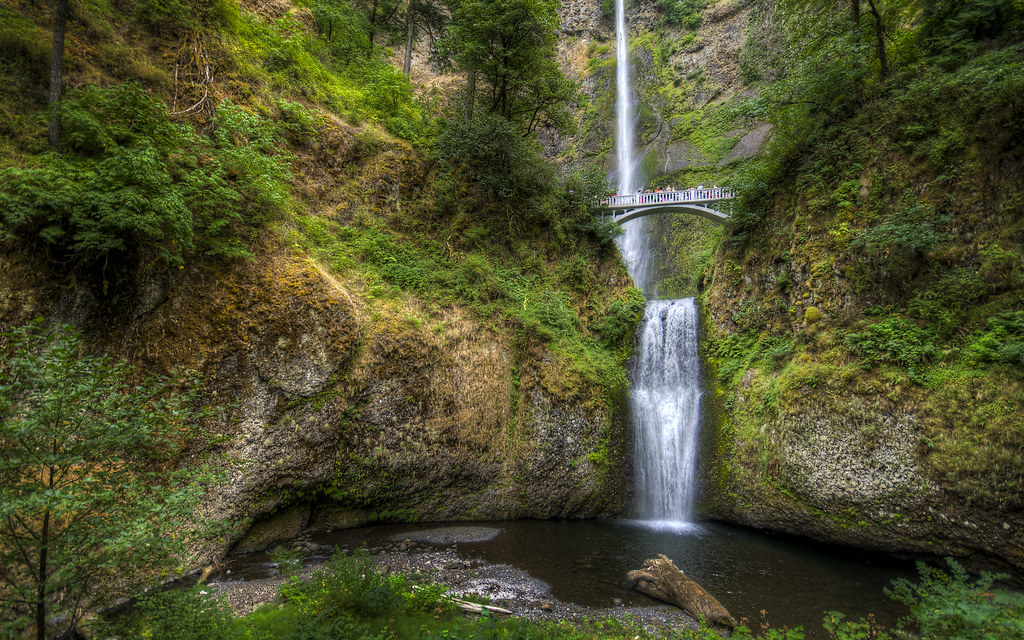
Multnomah Bridge

Traveling across America, I can’t help but be astonished by the difference in scale between the East and West Coasts. The Northeast has waterfalls, sure—but nothing like Multnomah falls. (Well, not many.) The majesty must become almost pedestrian after a while when living adjacent to such a place. I particularly like this image two two reasons: the tiny hikers clustered on the bridge add a sense of impossible scale, and cropping out the top of the falls lends the setting a feeling that the falls must continue on forever. In my own tiny way, as well, I really love the tiny insertion of man-made concrete into the otherwise natural scene.

Multnomah Bridge

Oregon and Washington

Aerial photography presents a magical, avian view of the world around us, but until I (someday) get a quadcopter drone, commercial air travel is my best friend. (Other than the fact that pretty much all other aspects of commercial air travel are pretty miserable.)

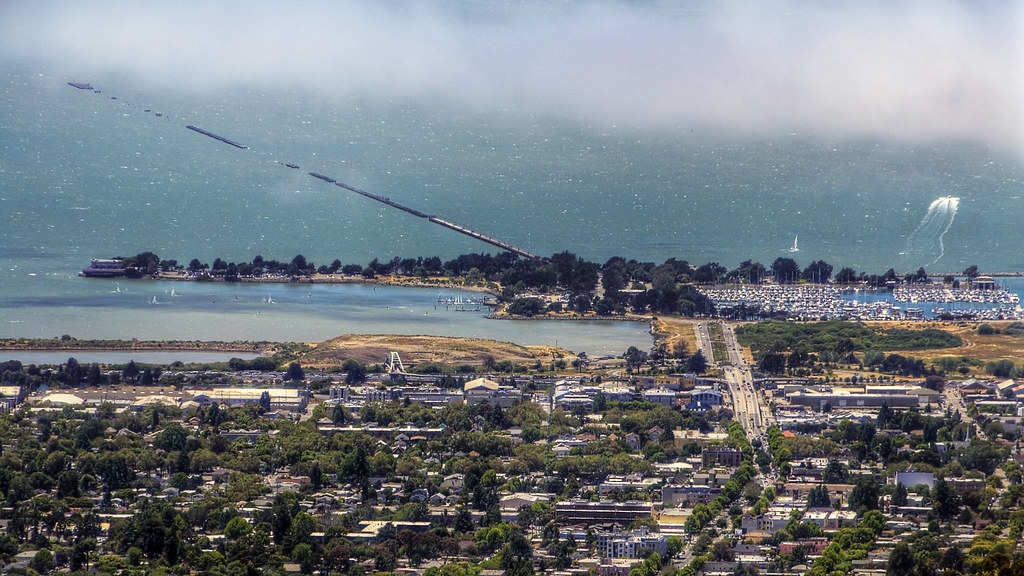
In any case, this photograph of the Columbia River, with Oregon on the right of the image and Washington on the upper-left, does a good job of capturing the strange mish-mash of agriculture, residences, and industry in the Pacific Northwest.

Oregon and Washington

Lonely in Tupper Lake

This tiny island sits in Tupper Lake’s appropriately named Rock Island Bay, amid this quintessentially Adirondack-y landscape of rolling hills and coniferous trees. This particular island has always been notable to me because of the degree to which it aligns with my boyhood ideal of “where to hide out.” Swimmable, but just barely for a 10-year-old, from the shore. A tree for the barest shelter and a twig, now and then, from which to craft a fishing hook. When the day of adventures is over, a little island like this one would be just big enough for a boy-sized lean-to for my childhood self. Wouldn’t that be paradise?

Lonely in Tupper Lake

Snow Is Gone

Spring is late to the North Country, and though the snow is gone and the homes have (mostly) survived, plant life hasn’t yet surpassed the “first hints of green grass” level. There’s nonetheless a certain crunchy, dusty beauty to the sunset now—one that is nicely offset by the glossy reflections from window panes.

Snow Is Gone

Muir Woods Has Wood Pathways

I may continue to bemoan the theme-park-like atmosphere of Muir Woods by midday on Saturday, but in the very early morning, with dawnlight scattering through the marine layer, it’s easy to forget about all that. There are no words to describe the place without resorting to cliché. Even so, the echoes of “Six Flags: Muir Woods” still exist, like these wood pathways designed to lessen the destruction that would be caused by enormous numbers of visitors on dirt paths.

Muir Woods Has Wood Pathways