Two Views of Western Nevada

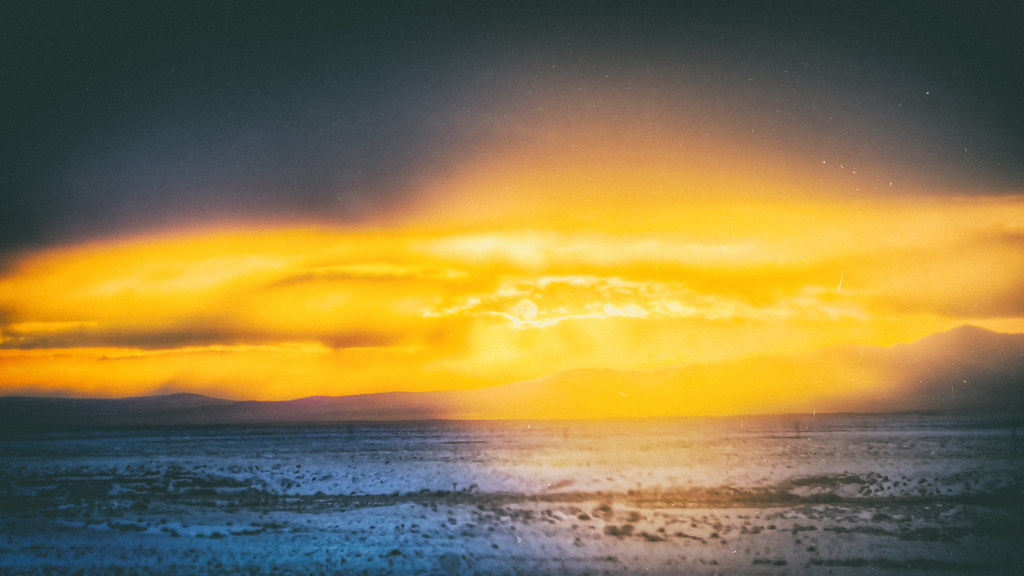
Transcontinental driving in the dead of winter is all about dodging storms—but no one’s perfect. In the emptiness of Western Nevada, with only an occasional RV/farm combo to keep us company, the edge of a major storm ran into the setting sun.

Western Nevada Pastoral

“Post-apocalyptic” was the general vibe. The landscape was so large as to be without scale; I couldn’t tell you the actual height of the hills in the distance.

Somewhere in the American West

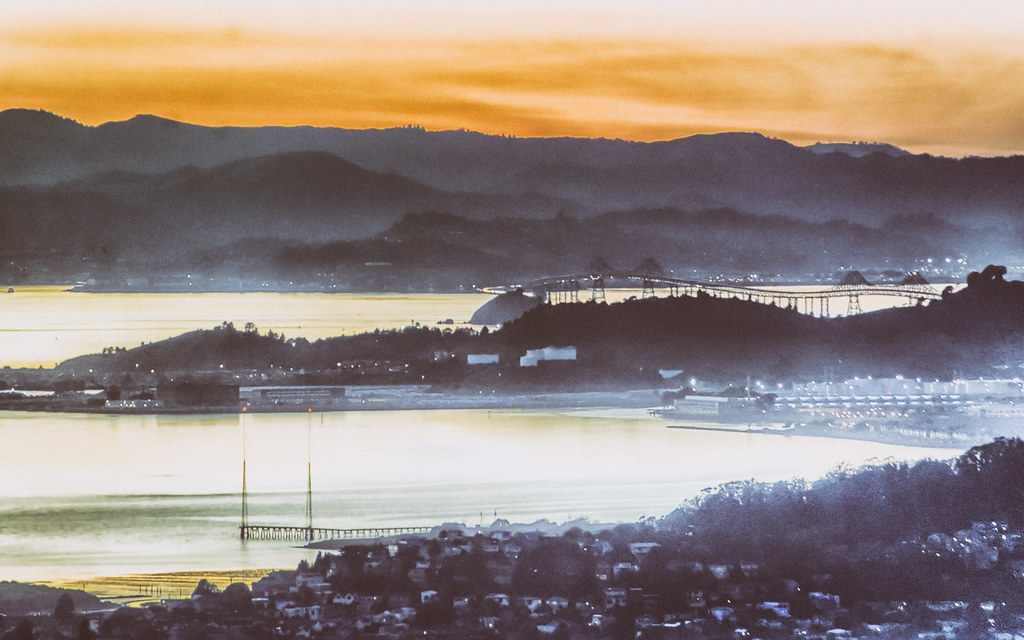
Industrial Harbor

The orange hue and misty hills remind me of the poster for Apocalypse Now, but this is just the northern end of San Francisco Bay. In this age of upward-climbing property values and Silicon Valley rags-to-riches stories, I’m continually amazed that there’s room for industry. If these facilities had to be started today, I can’t imagine that they’d wind up in the same position.

Industrial Harbor

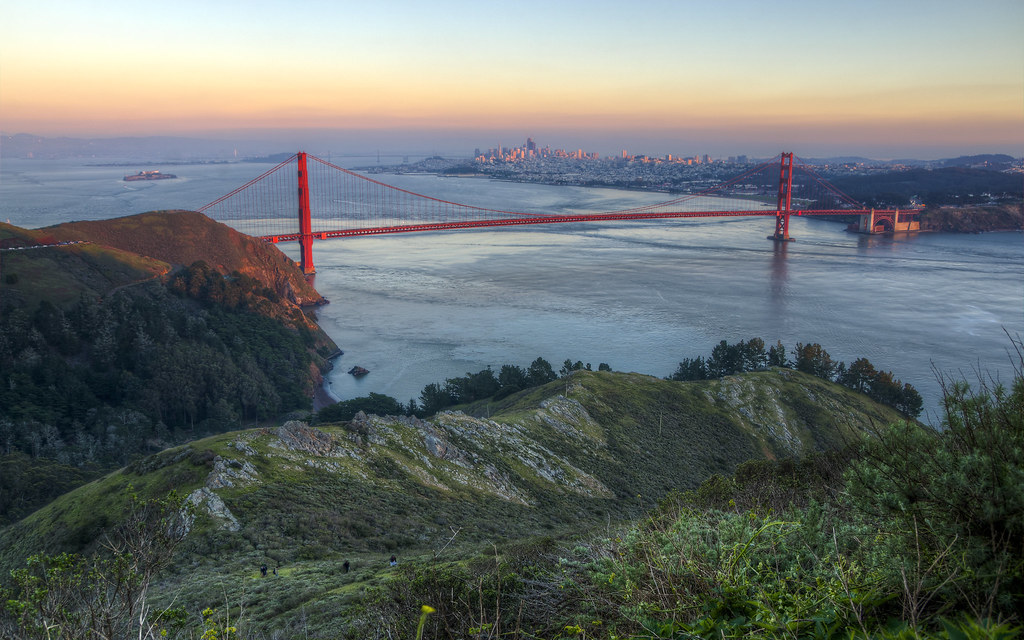
Shelter from the Red Sun

Red sunset light hit the hilltops of Marin and the span of the Golden Gate Bridge and just a bit of San Francisco, but the little hikers in the foreground are sheltered from it. So too, I assume, are the people on the streets between San Francisco’s skyscrapers. Many of my favorite photographs are those that show the gradient from nature to dense urbanity, and I think this one fits that bill.

Shelter from the Red Sun

Fire Trail and Fire Sky

Fire trails seem like a friendly, common, down-to-earth feature of many California hillsides. There’s a strange context alongside the blazing sky and the busy city in the distance. When I look farther off and see the Golden Gate Bridge and Angel Island, the juxtaposition feels only more emphasized.

But perhaps I like that vision. We build things both grand and humble.

Fire Trail and Fire Sky

San Francisco Looming

There’s too much unsettling photography out there to limit my Halloween to just a single photograph! The image of a completely dark San Francisco (in the moment between the sun beginning to set and all of the headlights and streetlights turning on), with its specific skyline rising from the mist of the marine layer, just screams “post-apocalyptic cityscape.” Or do I detect a hint of Blade-Runner-esque “California of the Future” in the angles and orange colors? While I’m on the topic of future and past, I have a question:

Do you George Lucas your work?

This photography is one of the first that I ever took with a “real” camera, in the late fall of 2011. The RAW file was sitting quietly on my external storage drive, fallow and ready to live again. In comparing this image with the original approach I took to processing, I see enormous differences and enormous improvements—or at least an evolving artistic sensibility. I’d call this approach “George Lucasing:” going back to old work and updating or improving as my skills improve. And I’m not sure I like that it’s something I should do. Photography captures a moment, and needs a sense of finality. On the other hand, if I am spatially removed from a place (be it San Francisco or South Africa), without the immediate opportunity to return, can this creation be a healthier expression of nostalgia?


San Francisco Looming

Road by the Fever Tree

African savannah isn’t the homogenous, steady monotony that it appears on the Discovery Channel. (Well, back when the discovery channel showed nature documentaries, anyway.) Dirt roads and hills criss-cross it, and fever trees like this one grow where more water is available. The yellow-green bark comes from photosynthetically active cells. The name comes from an interesting illustration of the post hoc ergo propter hoc fallacy: when early European settlers went near water, they tended to contract malaria (thus the fever). They incorrectly attributed this to the trees, rather than the mosquitos breeding in the water.

Road by the Fever Tree

Oregon Surfaces

The topology of central Oregon at sunset is really very special: the land somehow has that “falling away beneath you” feeling of standing on a hilltop, that “in the hollow” feeling of standing in a valley, and that “goes on forever” feeling of standing on a plain all at the same time. Combine this with the variety of surfaces and textures to experience (gravel, grass, tarmac, wood, lake, sky, woods), and the experience becomes some hyperdimensional superposition of places and moments in time. With just the right car for the particular evening, you have a recipe for perfection.

Oregon Surfaces

Hills of British Columbia

Outside Vancouver (the city) are the hillsides, dotted with homes and apartment buildings and, farther north, massive rocks. (That’s a pretty rare combination.) The difference between the soft, welcoming pink hues of the sunset and those massive hillsides (with some lovely evergreens in the foreground) is stranger, the more I think about it.

This picture also illustrates the biggest difference I’ve encountered since moving from the west coast to the east: the environments are less staggering and overwhelming, but the skies (and the buildings) are much more so. I’ve had to reorient the way I shoot to account for it.

Hills of British Columbia