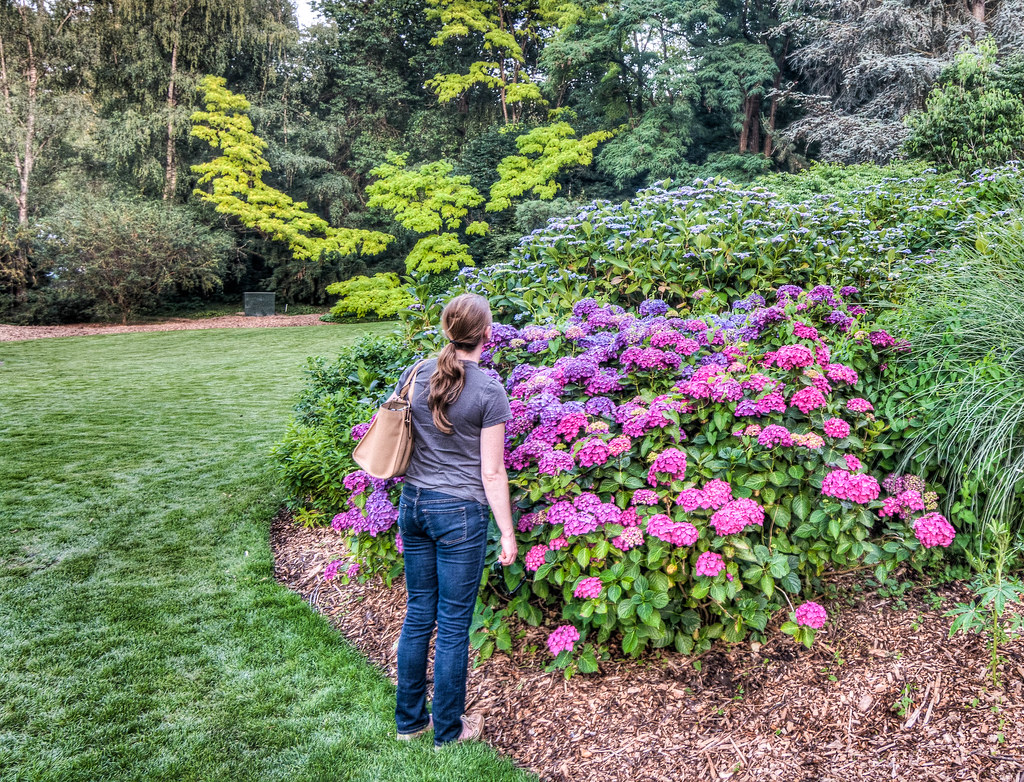
I visited Seattle’s Kubota Garden for the first time during a recent trip and I was pleasantly surprised. It is quite a pretty public park.
Scattered throughout the park were these vibrant hydrangeas.

HDR Photography
I visited Seattle’s Kubota Garden for the first time during a recent trip and I was pleasantly surprised. It is quite a pretty public park.
Scattered throughout the park were these vibrant hydrangeas.
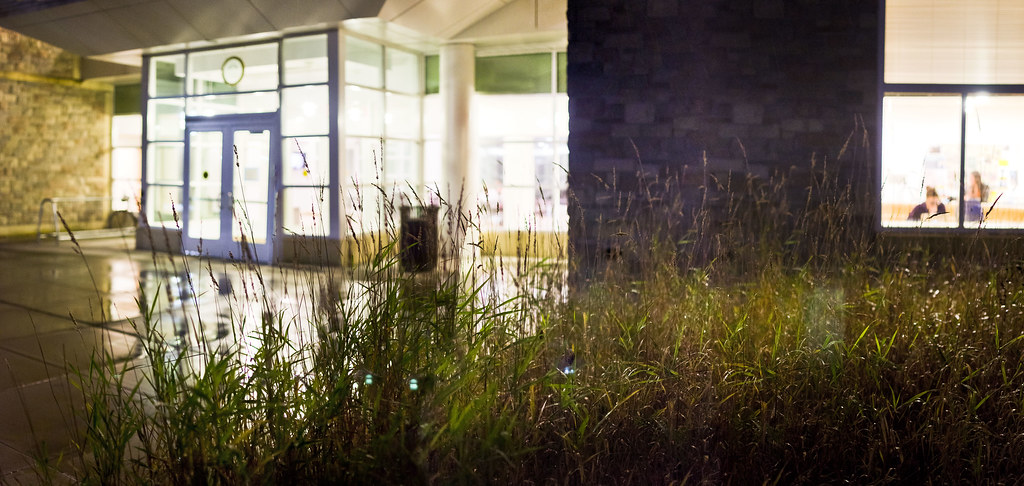
Having read about the Brenzier Method of producing wide-angle photos with intense bokeh, I thought I’d give it a try. I’m not totally happy with this image of the grass shifting in the rain outside my building, but it’s exciting to try new things and aim towards new possibilities. In the mean time, I think this image nicely captures the strange, silhouetted glow of being outside a busy building at night.
When red leaves are backlit, they seem to glow so unbelievably. HDR photography can turn this setting from charming to almost overwhelming.

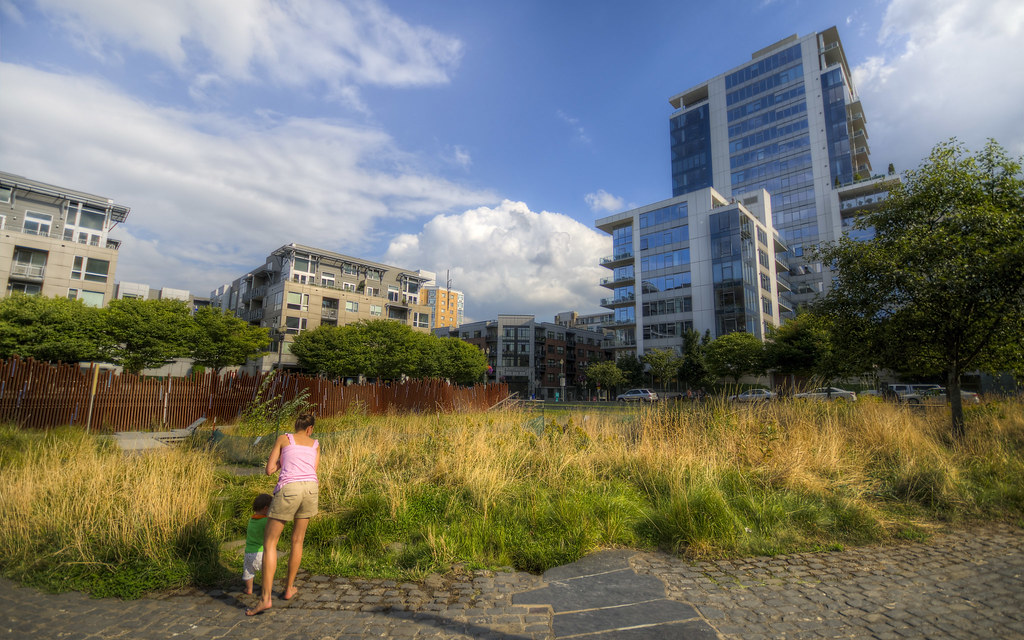
In the distance land of Portland, Oregon, urban renewal has transformed the rail yards of the Pearl District into galleries and shops and condos in towering new buildings. Doesn’t this scene look like a futuristic utopia? (Hopefully it’s not moments away from the shattering realization that it’s all built on some “Soylent Green”/”The Giver”/”Equilibrium”-esque lie.)
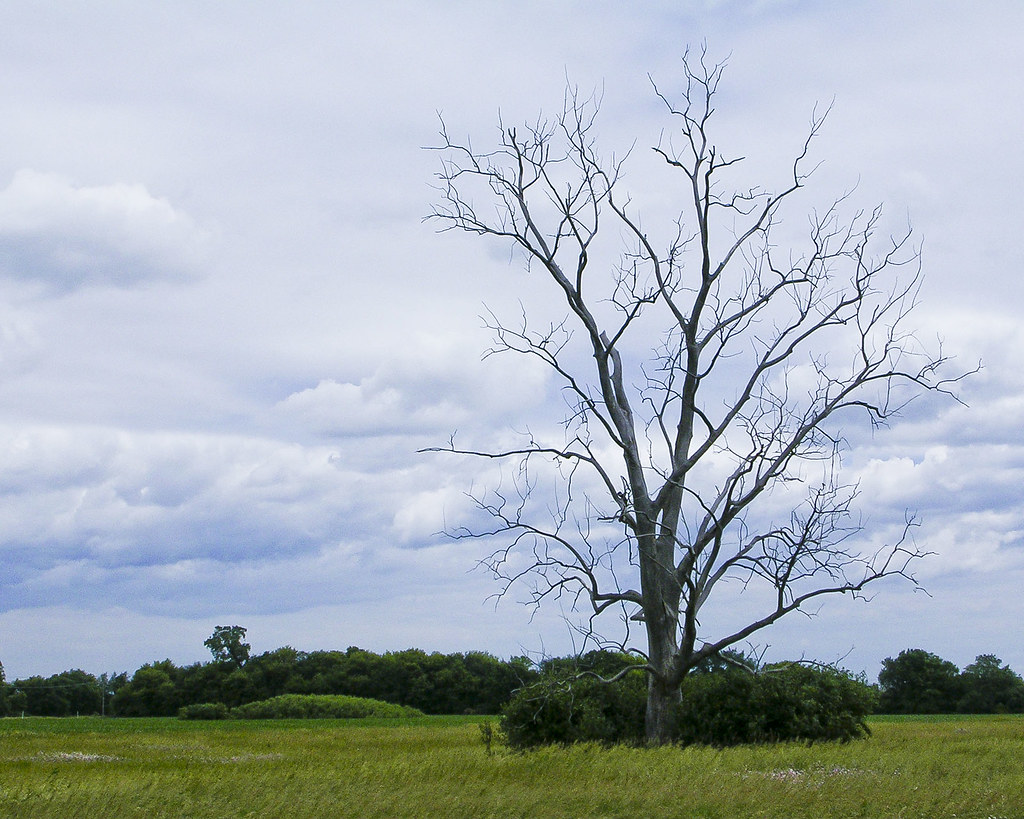
For 28 years, the Fermi National Accelerator Laboratory in Batavia, Illinois was the site of the now-dormant Tevatron particle accelerator. For three summers during high school and college, I worked in the archives there, helping to catalogue, maintain, and restore the physical history of the place. (Given the time frame of today’s pictures—the early 2000’s—you’ll forgive the poor image quality.) I wanted to share a few images of the place (in particular, its enormous swaths of restored prairie) and try to convey to you the everyday feel of the place.
Perhaps the most salient feature of the lab is the prairie itself. Other than a berm over the accelerator, a few tangential buildings, and the main complex, the vast majority of the 6,800-acre site is natural midwestern landscape, dotted with disused farms and watched over by birds of prey.

The reason for the old farms and strange buildings is linked to the provenance of Fermilab: in the early 1960s, towns competed to be the site of the latest and greatest national lab. The town of Weston, Illinois won the honor, and in doing so, ceased to exist. The residents were bought out (by the choice of their village board) and the remnants of the village still exist on site as ancillary buildings (including the archives, where I worked.)
The farmland was largely restored to prairie, and the unique buildings of the lab were assembled. Among the fascinating sights at the lab are these Shinto-influenced power lines, designed by the lab’s first director, R.R. Wilson. (He was also responsible for the lab being finished on-time and under-budget.)
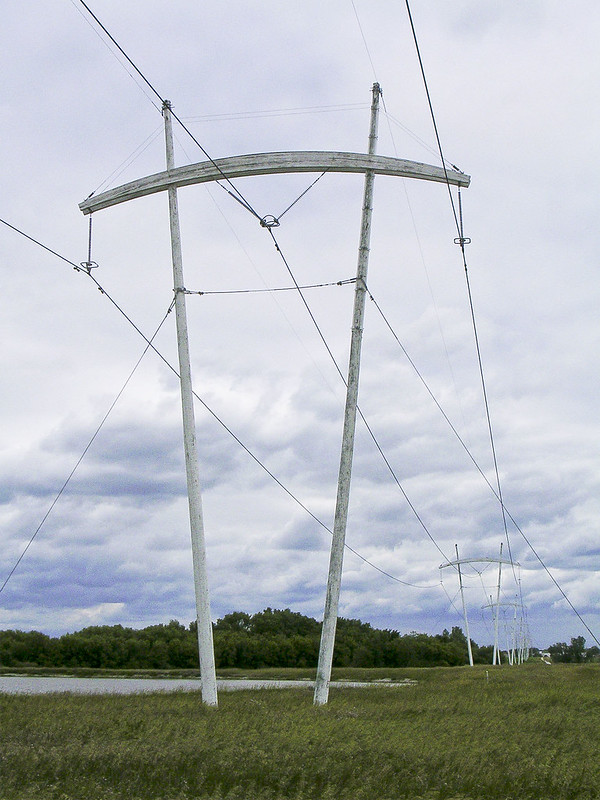
Wilson Hall, seen in the distance of this landscape, was named in his honor. Here you can see some of the lab facilities proper, including a beamline on the left of the image.

On my way back from my conference in Connecticut, I drove through the Adirondacks, where winter is arriving fast. The hills were dusted with snow and all but the most tenacious leaves were carpeting the forest floor. I pulled off the road for this shot in Tupper Lake, where the grasses, placid waters, and stubbly hills matched perfectly with the dense clouds and the random distribution of sunlight. The moment felt chaotic, strange—just a bit primeval. I had a chance to do landscape photography that truly excluded any human intrusion (save the eye of the photographer himself.)

Down the road (and an hour later) from here, the grass harvest was continuing into the pastel-hued evening. The particulates kicked up by their work made this sort of localized haze that refracted the last sunlight to these incredible colors.

St. Lawrence University’s Johnson Hall of Science is a lovely, brand-new science building (particularly appreciated by chemists who prefer not to work in the miasma of their predecessors’ experiments.) The aesthetic benefits are supplemented by olfactory ones: in addition to excellent ventilation inside, the exterior of the building is surrounded by wild grasses and flowers that energize me the moment I step outside.
When viewed at night, the luminous quality of the glass facade lends the place a storybook look that I think HDR captures perfectly.

The topology of central Oregon at sunset is really very special: the land somehow has that “falling away beneath you” feeling of standing on a hilltop, that “in the hollow” feeling of standing in a valley, and that “goes on forever” feeling of standing on a plain all at the same time. Combine this with the variety of surfaces and textures to experience (gravel, grass, tarmac, wood, lake, sky, woods), and the experience becomes some hyperdimensional superposition of places and moments in time. With just the right car for the particular evening, you have a recipe for perfection.

On the western edge of Cal’s campus (which is full of trees to begin with) sits this little grove of trees and benches commemorating the forestry club. The density of trees and the regularity of their positions creates this interesting corridor effect (even if there isn’t much to see on the other side).

At Gracelynd Hill, outside Santa Barbara, the late afternoon sun tickles the long grass in horse paddocks. If I were a horse, I suspect that an afternoon in the warm sun with an hillside’s worth of food would be a pretty paradisiacal place.

Back to lovely, bucolic central Oregon. Something about an active field, with the pines and the farmhouse in the distance, mixes with the moon above to convey a sense of “a hard day’s work.” If it were a painting, I’d call it “Western Art.”

Out in rural Vermont, down the road from where I took this photo, is the farm of Vermont Ponies. Though they have a bit of barn space, the majority of the farm is paddocks on grassy hillsides like the one you see here. When a storm is brewing (as it was on this muggy June afternoon) or snow is fall (as it definitely wasn’t), the ponies have run-in sheds like the one on the left side of the picture, where they can find some shelter from the weather. (And of course, some food, too.)

UBC’s Green College (shown here from another angle) is almost 100 years old, but when you’re inside it, the passage of time seems to stop. The heavy, wooden columns and beams seem to have been there forever. The trees are enormous, and enigmatic towers and cottages dot the interior, like the buildings of some alternate-reality castle.

This bucolic hillside in Corvallis, OR is a special sight. In the rolling heartland of the state, the grass seed harvest happens for only a couple of weeks out of the whole year. I’ve previously posted other shots from the broad hills and valleys of this area, but I particularly like the interplay between the orange of the sky and the pink of the clouds as sunset creeps in.

 Decaseconds