Photonic Air Burst

Too early in the evening and too high in the sky to be a standard sunset: this must be some serious sci-fi gridfire weaponry. The patterns in the Crepuscular rays puts me in mind of MIRV tests, and the scale of the clouds so thoroughly dwarfs the buildings beneath it on the banks of the Hudson River. Connecting spectacular aerial views with apocalyptic power is nothing new, but the twentieth century swapped the power source from divine to human.

Photonic Air Burst

Fusion Ball

That Newtonian worldview (one of cause and effect, of a Universe that is fundamentally understandable), so often criticized as unromantic and clinical, makes this setting transform: where there was once a bucolic sunset over empty fields, there is now a repeating pattern of polymerized sugars on an iron-cored planet, gravitationally bound to a thermonuclear fireball. Isn’t that cooler?

Fusion Ball

Brick to Great Heights

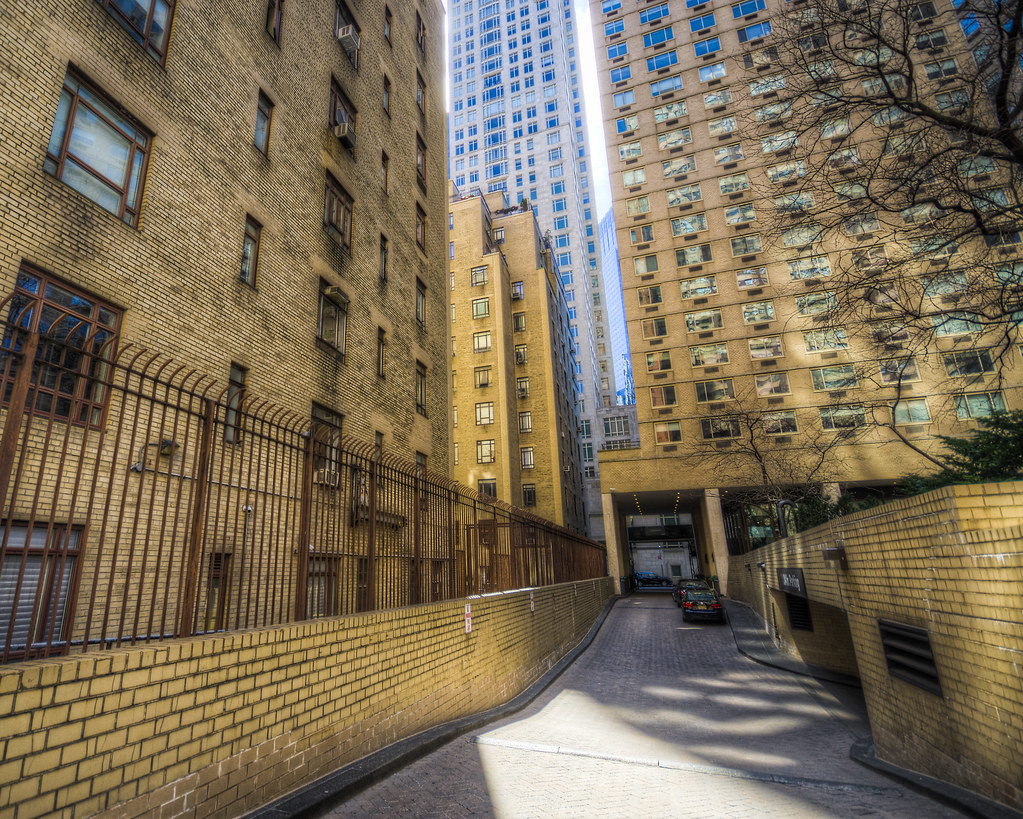
Nearly every surface in this image is brick. From the alleyway to the retaining walls to the towers: brick, brick, brick (or pavers). I understand sheathing a structural steel building in glass or densglass or (heaven forbid) “exterior insulation finishing system,” a.k.a. Dryvit, but the kind of person-hours necessary to assemble all of that orderly brick is mind-boggling.

Brick to Great Heights

Stealthy Empire State Building

Can a building hide? Or surprise? Or sneak?

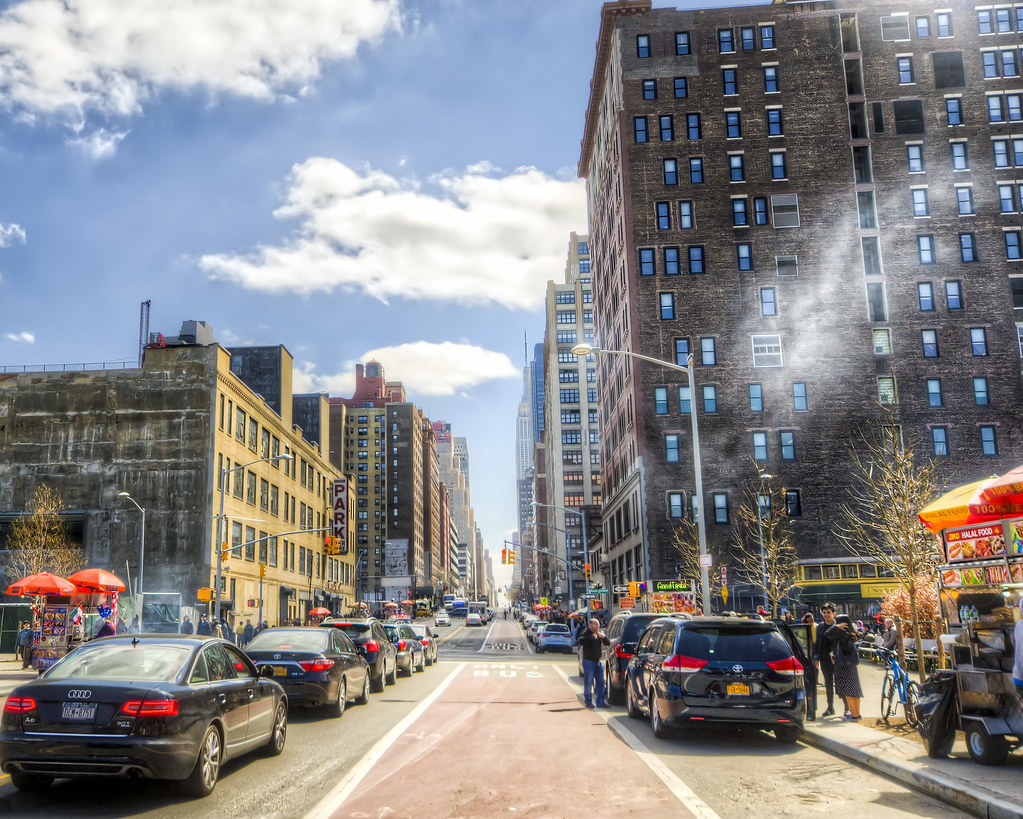
The Empire State Building, hiding at the other end of 34th St. in Manhattan, seems to support the possibility. The canonical modern New York street scene, one of luxury cars stuck in traffic and smoke from cooking street meat and old industrial buildings being converted into high-end condos, can still surprise. One step away is another scene built of different buildings and people in view.

Stealthy Empire State Building

Red, White, and Black at the New York International Auto Show

I’m not in the market for a hypercar (like the Bugatti Veyron below), nor a supercar, nor even really a car, at this particular moment. When friends and family heard that I had attended the New York International Auto Show last month, the response was often in the range of questions about what kind of car I planned to buy. I’m not planning on replacing the Mini just yet, I love the combination of graphic and industrial design on display at a show like this—not to mention the mix with civil and mechanical engineering. Cars have their costs and benefits, but it’s tough to wanter a place like the Javits Center and not feel a little bit of awe.

New York International Auto Show III

Porsche’s eternal and outwardly-unchanging 911 (like the R version here) is suprisingly subtle by the standards of similarly-performing vehicles, but it fit well into the classy setting of Porsche’s display: red and white matching perfectly.
New York International Auto Show I

Acura’s new NSX is a monster (in performance, engineering, and cost), and joins a category of hybrid hypercars that transform the environmental technology into a performance booster. Sure, the numbers are impressive, but the design just has so many creases and parts. Overdesigned?
New York International Auto Show II

The real star of the show (for me), however, was this humble Mazda MX-5 Miata. I might have some bias from owning a 1995 Miata in the past (in this same white paint/black top combination, even). This is a driver’s car for the masses. It’s light and fast and efficient. Shame about the trunk space…

New York International Auto Show IV

Inside the Century

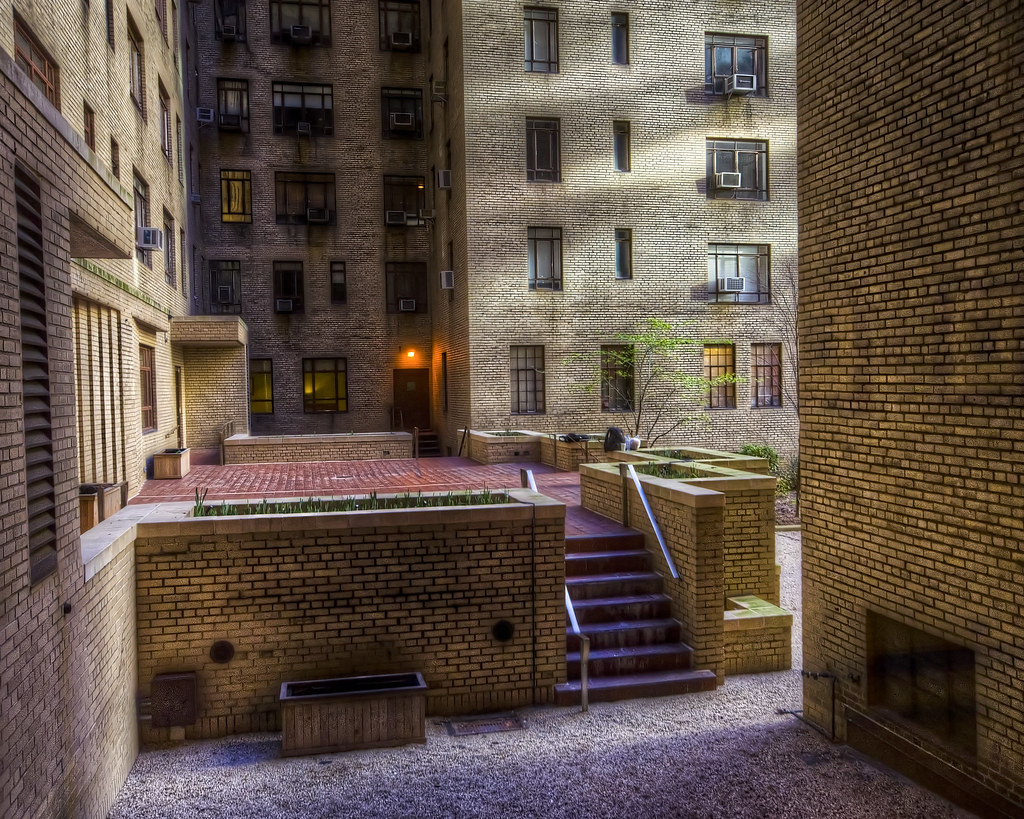
The Century is a classic of early-twentieth-century Art Deco styling, but I also appreciate the somewhat understated courtyard that it presents. There’s such great texture in the brick, and the setting looks almost boring until the lovely structures in the windows and their frames become apparent.

Inside the Century

Stone to Steel

The new structures of Hudson Yards are rising above the old rail yard and the old/updated High Line. The mix of old and new is a little obvious, but it’s one of the aspects of New York that I appreciate the most. The same species that made flint hand axes and mastered fire also developed structural steel. Perhaps the High Line’s gravel and 10 Hudson Yards‘s work-in-progress faces represent that.

Stone to Steel

Man Beneath the George Washington Bridge

In in the instant before the train passed under the George Washington Bridge, I took this picture, distorted by motion and extreme angle, of a lone man standing on the hillside above the train. That silhouette, isolated against the sky and near the framework of the bridge, is the stuff of conspiracy theories. In this case, of course, it would be the most mundane theory.

Man Beneath the George Washington Bridge

Hudson Ruin

Bannerman’s Castle on Pollepel Island in the Hudson River was once an arsenal, and then a tourist destination, before it burned down in 1969 and the island was closed to the public. Now the fortified silhouette of the ruins apparently inspires an incredible amount of use as a hideout for the supernatural in fantasy fiction. Though I didn’t know it at the time I took this picture, this island is one of the major inspirations for Lev Grossman’s Brakebills College. A sunset train ride down the Hudson River is the perfect occasion to stumble on a structure like this.

Hudson Ruin

Needle Buildings Above Central Park

There’s no better place to see the abrupt transition from the semi-“undeveloped” to the densely urban than the edge of Central Park. Trees give way directly to the new generation of “needle buildings,” these spiky skyscrapers that have attracted: (1) big money from Russian kleptocrats and (2) complaints from fans of New York’s traditional architecture. I might be sold on the futuristic spires for their sci-fi appeal.

Needle Buildings Above Central Park