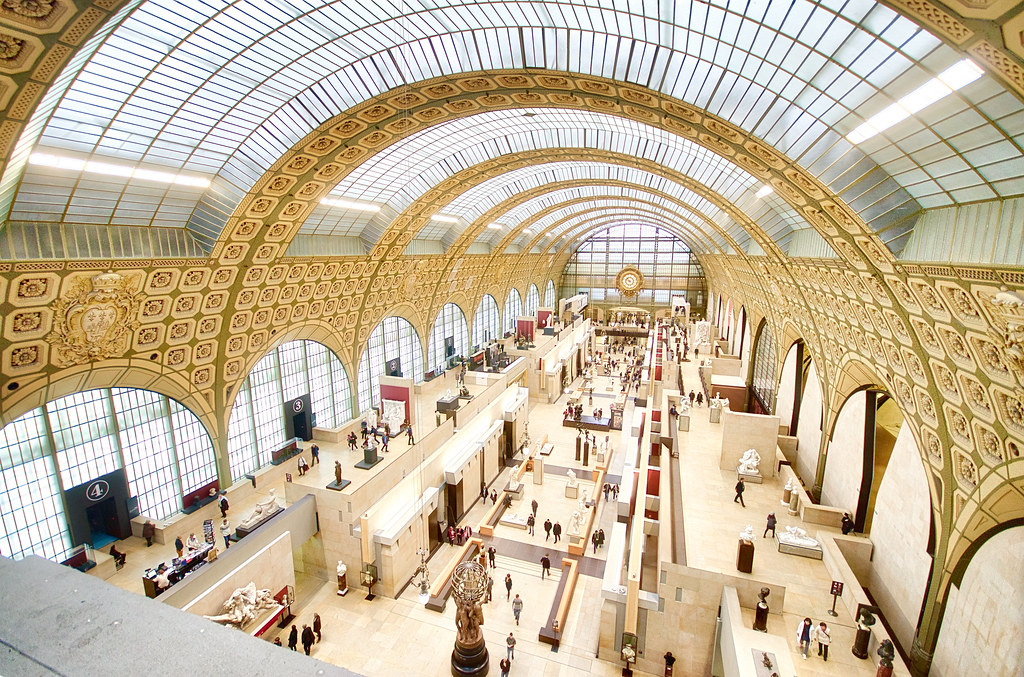
The bold train station geometry of the Musée d’Orsay couples with the high density of artistic masterpieces to produce some kind of dimensional portal.

HDR Photography
The bold train station geometry of the Musée d’Orsay couples with the high density of artistic masterpieces to produce some kind of dimensional portal.
The limits (practical, historical, and modern) on Parisian architecture make every street so dense with detail that glancing down one while passing left me moving on with a longing to explore.
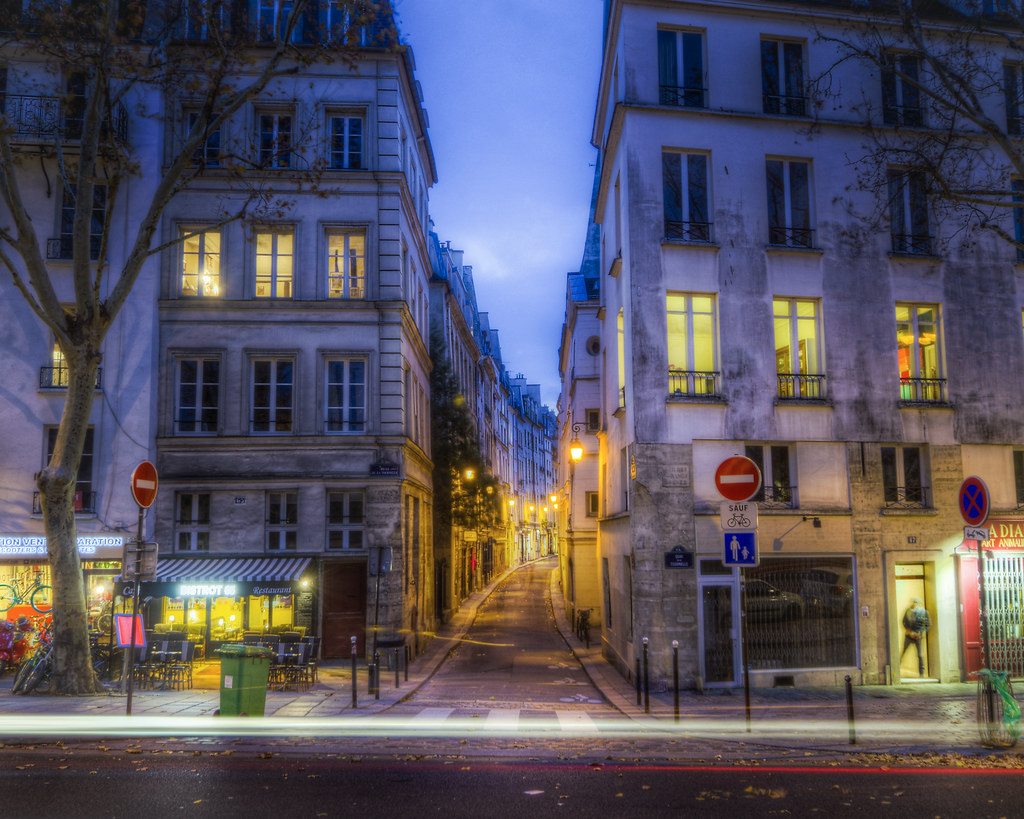
I took eight years of French classes as a middle- and high-school student, and those courses’ textbooks inevitably had charming pictures of Parisian locales throughout. In trying to cover a wide range of French experiences, those books tended to show “everyday” life alongside the expected pictures of the Eiffel Tower and the Louvre, and so I came to associate all of these images with a sort of “imaginary,” idealized Paris.
Imagine my surprise when I arrived in France and found that it looks exactly like my books.

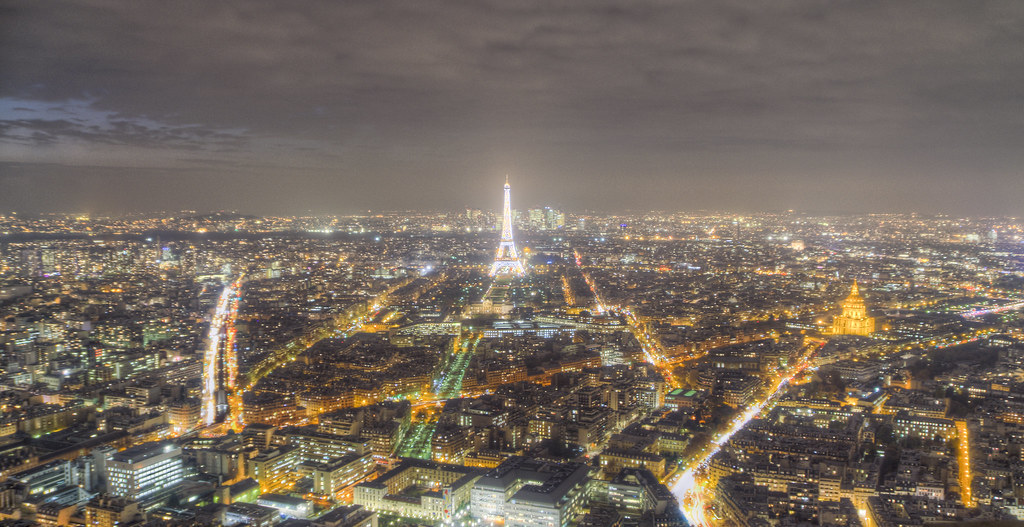
Spokes of major boulevard traffic stretch out from the Tour Montparnasse, golden streaks across the city. The Eiffel Tower makes a perfect vertical accompaniment to the earthbound light channels.

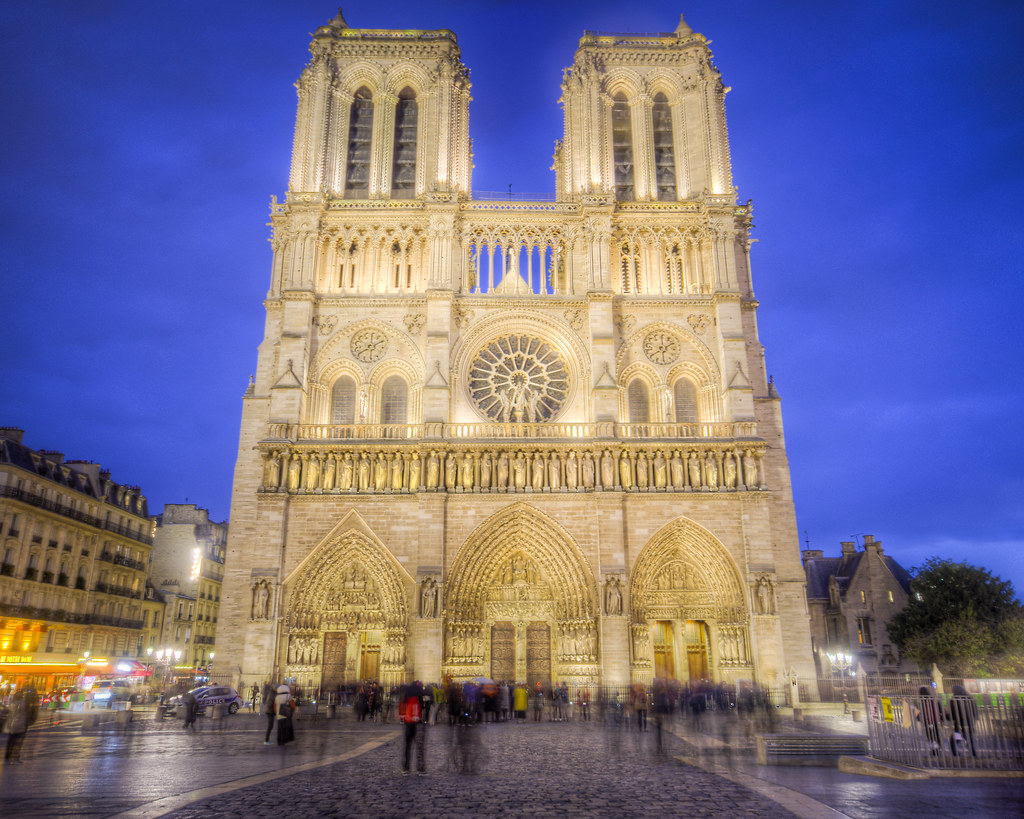
Though the symmetry of Notre Dame de Paris stands out from the mere mortal constructs around it, I enjoy playing the game of identifying the breaks in its symmetry. Some of those are small, like the different statues around the building. Others are more significant, like the triangle in place or an arch above the left-most set of doors.
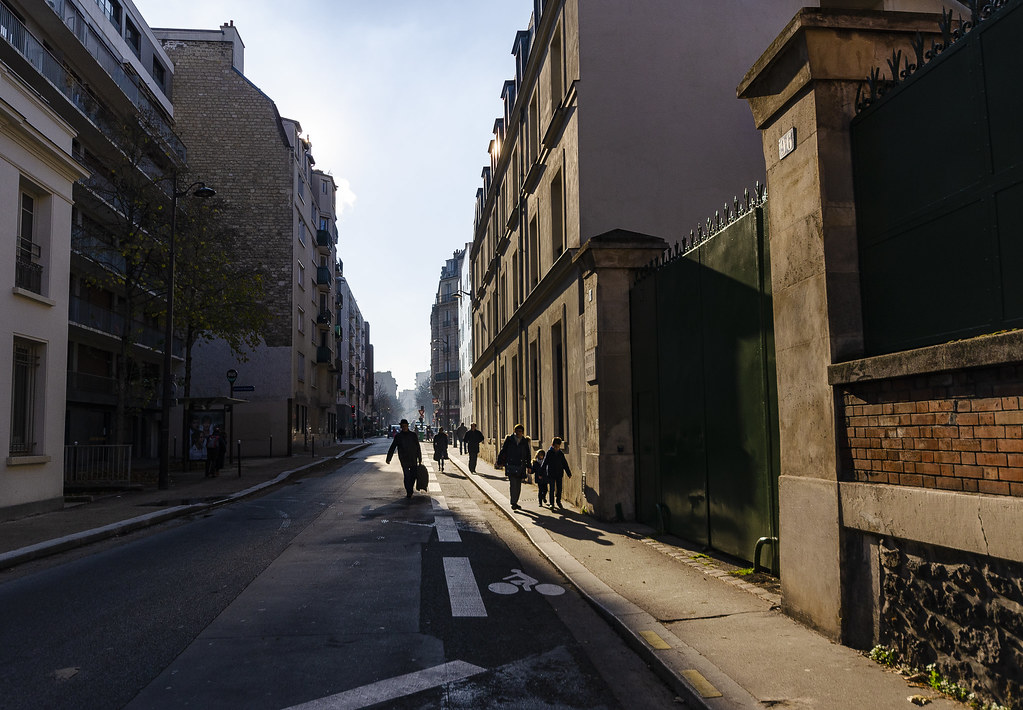
An early winter afternoon on a Parisian street means the minimal aliquot of sunlight peaking between buildings and turning the pedestrians to silhouettes. School just let out in the 15th arrondissement and parents walk their squads of enfants home.
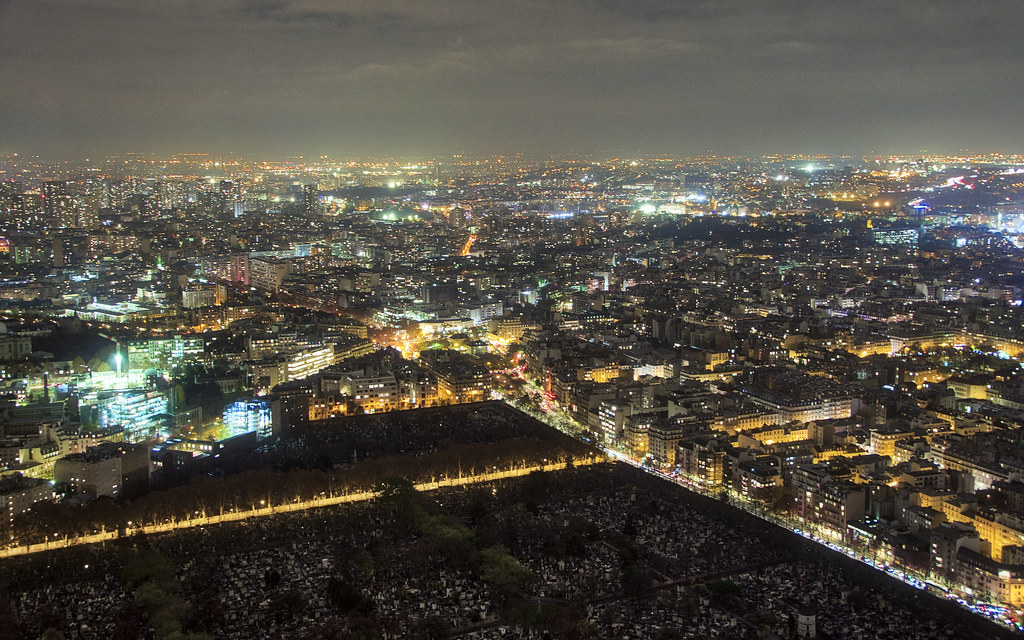
Though additional cemeteries in Paris were banned in the late 18th century, the Montparnasse Cemetery was opened in 1824 because the area had not yet been incorporated into the city. Today, it’s an odd dark space in the otherwise bright city. The idea of adjacent blocks belonging to graves and apartments has a polite kind of symmetry.
The homogeneity of Parisian streets seemed a little bit anomalous to me until I visited the Catacombs and came to realize that much of the stone making up the city had been quarried from directly beneath it. The cave-ins and collapses that this eventually produced demanded the project of stabilizing these artificial caverns and ultimately made room for the human remains that now occupy them.

After nightfall, the Eiffel Tower puts on an hourly strobe light show that transforms the tower into a sparkly pillar in the city skyline. Much as a flash can brighten a photograph, this effect also means that long-exposure photographs of the tower make it the brightest object in the skyline by an order of magnitude.
A certain anthropologist encouraged us to visit the Catacombs of Paris, and we were stunned by the walls of bones. In a decades-long project, more than six million remains were moved to caverns under the city.

I’m not sure I was really prepared to come face-to-face with so many skulls.

The bridge in the distance is the Pont au Double, and it is one of several that connect the Rive Gauche to Île de la Cité. That central island fascinates me because it is the site of the medieval refounding of the city. The island used to be packed with residences alongside government and religious buildings. Today it is almost entirely dominated by the latter buildings (like Notre Dame on the right), yet I heard that census information still lists a few hundred people living on the island. Where are those last homes hiding?

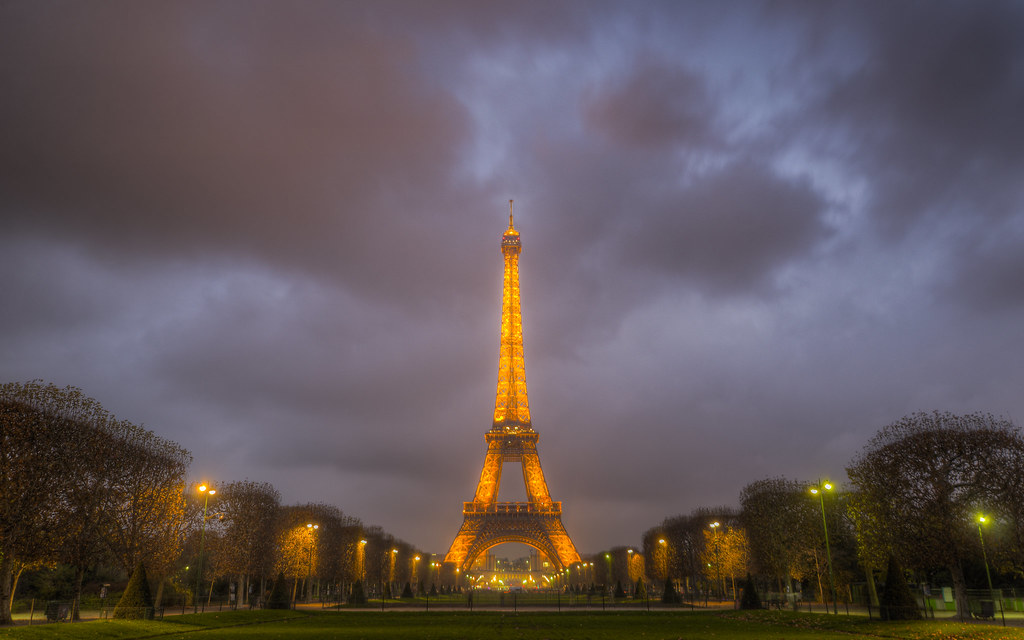
There’s that perfect moment when the sky is still blue but the oranges of sodium vapor lamps begin to scatter from the surfaces of the clouds and the Eiffel Tower looks particularly otherworldly. When so many American cities have switched to lighting their streets with white LED lights, I was surprised at how much of Paris is still lit by sodium lamps.
A Parisian cliché says that the best view of the city comes from the top of the Tour Montparnasse—because it’s the only shot in which the enormous tower can’t be seen. My trip to Paris last week didn’t give me the time to establish that definitively, but I can certainly attest that the city looks fantastic from the deck. Cityscapes like this were what originally inspired me to get into HDR photography a decade ago, and they still fascinate me now.

 Decaseconds