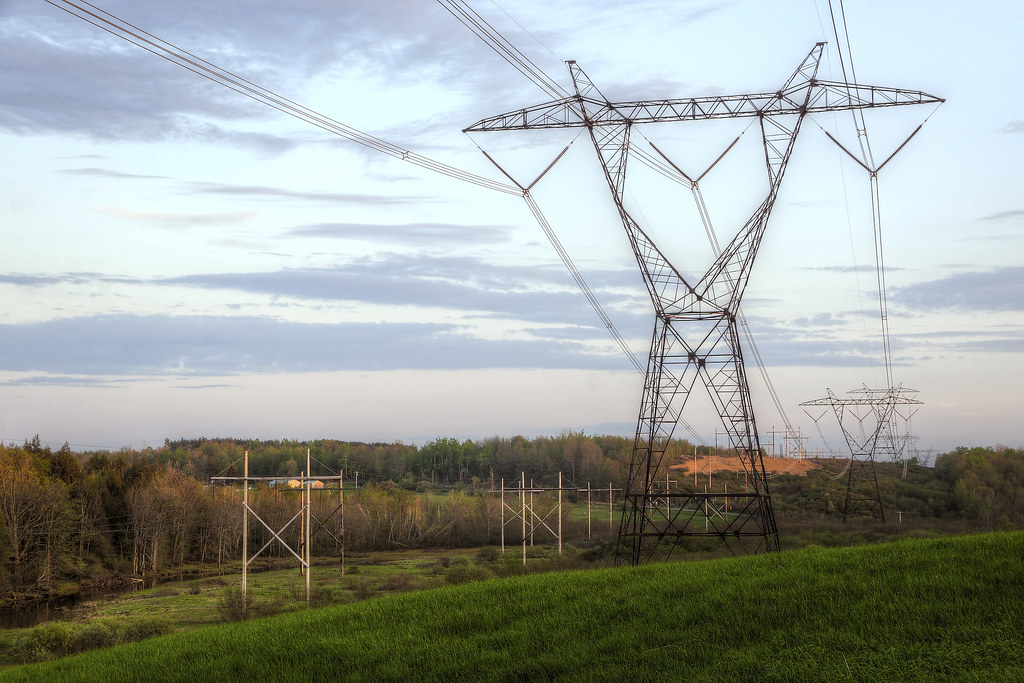
Forests and farms and “small”/”close” settings seem so common in the North Country; when the landscape opens to reveal wide bands of high-voltage lines amid the trees and streams, I’m always a bit surprised.
HDR Photography
Forests and farms and “small”/”close” settings seem so common in the North Country; when the landscape opens to reveal wide bands of high-voltage lines amid the trees and streams, I’m always a bit surprised.
On the quiet and winter-crushed roads outside of town, the density of nuclear mosquitoes skyrockets when summer finally arrives. Standing on the edge of a glacier-scared field, under the dome of clouds, and watching the thermonuclear fireball of our star vanish over the horizon, it’s easy to feel small. But if science allows me to understand these phenomena and my place in the world, the nature of what an image of that world means changes.

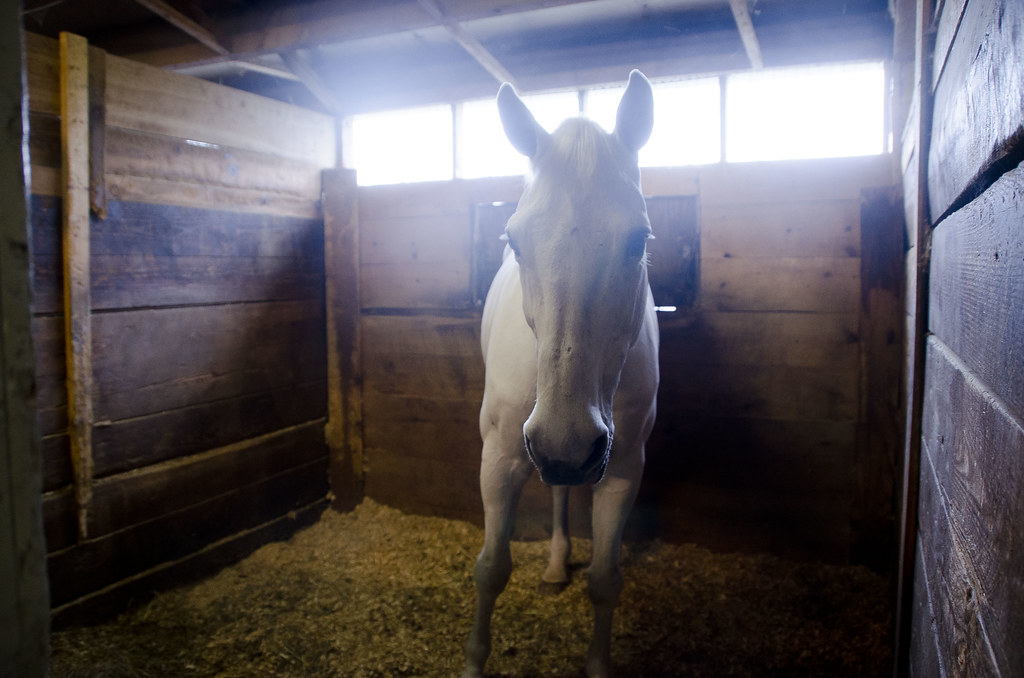
This charming warmblood, Winter Park (“Parker,” to his friends) was at St. Lawrence’s stables for a show this weekend. Seeing a gray bathed in light, with the gentle, weathered woods of the stall surrounding him, was quite (pardon the cliché) an experience.
There’s something about a red sky and an abandoned house that seems creepy and Halloween-esque, even when it’s April. Maybe it’s another case of Canton’s Lynchian vibes.

On a cloudy day, the Cathedral of Learning at the University of Pittsburgh has a softness to its stone exterior. (Its interior, as I’ve shown in the past, is equally stunning.) The sense of scale to the image (and the distortion of the wide-angle lens) can play tricks on your mind, making the whole scene seem smaller than it really is. To get a feel for the imposing/soft contradiction, concentrate on those improbably small revolving doors. They must be human-sized, right?

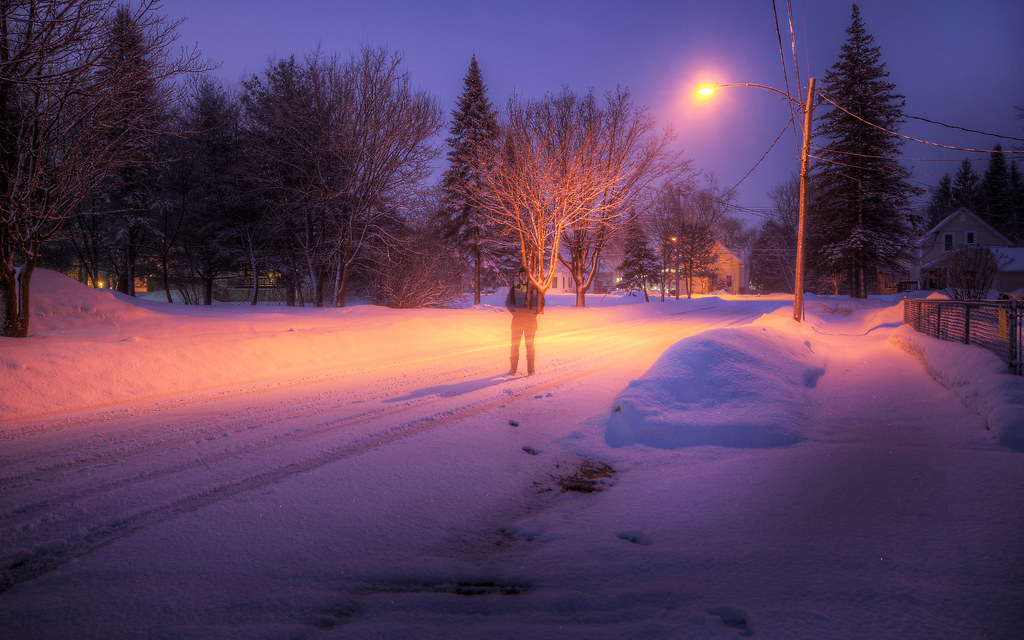
I often find myself using a timer in place of a cable release to remove camera shake on long-exposure shots—why not use that time for a bit of a “landscape self-portrait,” too? At the end of a long winter, in the dark of night, when it seemed that cold and precipitation dominate forever, my own presence in the environment and in reality is ghostly and insubstantial.
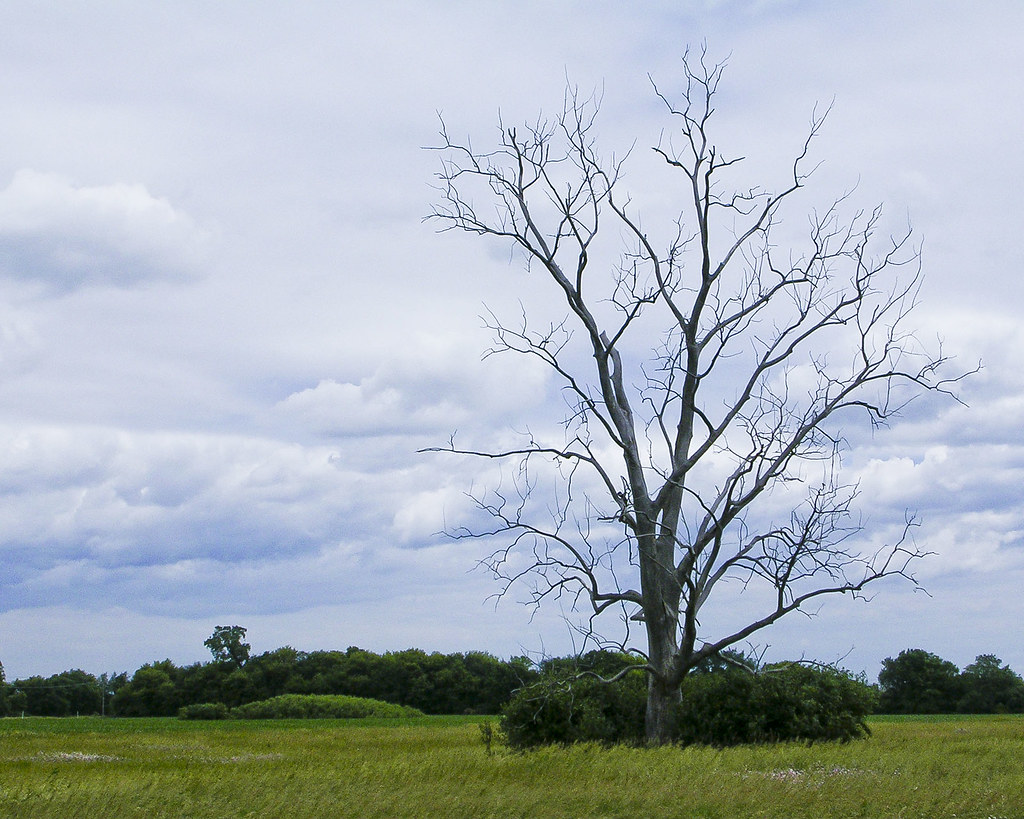
For 28 years, the Fermi National Accelerator Laboratory in Batavia, Illinois was the site of the now-dormant Tevatron particle accelerator. For three summers during high school and college, I worked in the archives there, helping to catalogue, maintain, and restore the physical history of the place. (Given the time frame of today’s pictures—the early 2000’s—you’ll forgive the poor image quality.) I wanted to share a few images of the place (in particular, its enormous swaths of restored prairie) and try to convey to you the everyday feel of the place.
Perhaps the most salient feature of the lab is the prairie itself. Other than a berm over the accelerator, a few tangential buildings, and the main complex, the vast majority of the 6,800-acre site is natural midwestern landscape, dotted with disused farms and watched over by birds of prey.

The reason for the old farms and strange buildings is linked to the provenance of Fermilab: in the early 1960s, towns competed to be the site of the latest and greatest national lab. The town of Weston, Illinois won the honor, and in doing so, ceased to exist. The residents were bought out (by the choice of their village board) and the remnants of the village still exist on site as ancillary buildings (including the archives, where I worked.)
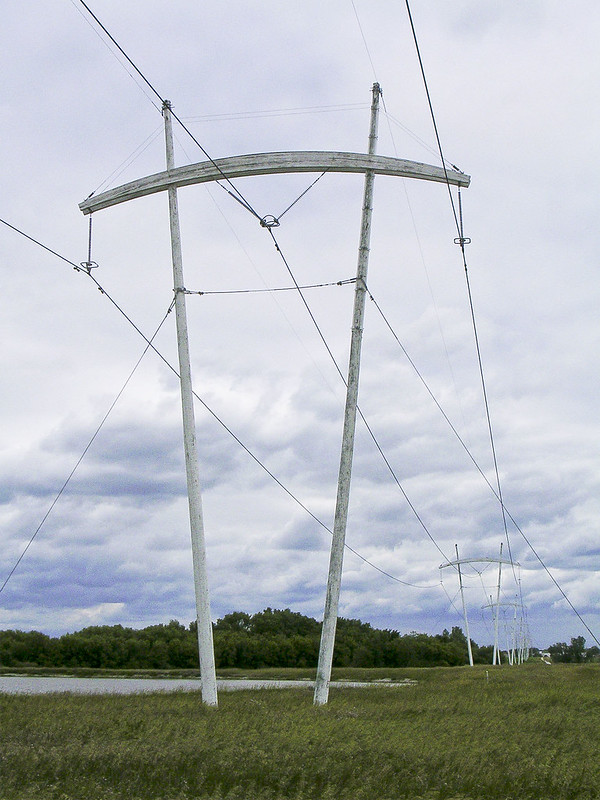
The farmland was largely restored to prairie, and the unique buildings of the lab were assembled. Among the fascinating sights at the lab are these Shinto-influenced power lines, designed by the lab’s first director, R.R. Wilson. (He was also responsible for the lab being finished on-time and under-budget.)
Wilson Hall, seen in the distance of this landscape, was named in his honor. Here you can see some of the lab facilities proper, including a beamline on the left of the image.

On Mother’s Day, the North Country feels alive and warm and breezy. Smells of vegetation and fresh earth and coniferous trees flood the air. A panorama of life restored to campus (even as it quiets down for the end of the school year) seemed highly appropriate.

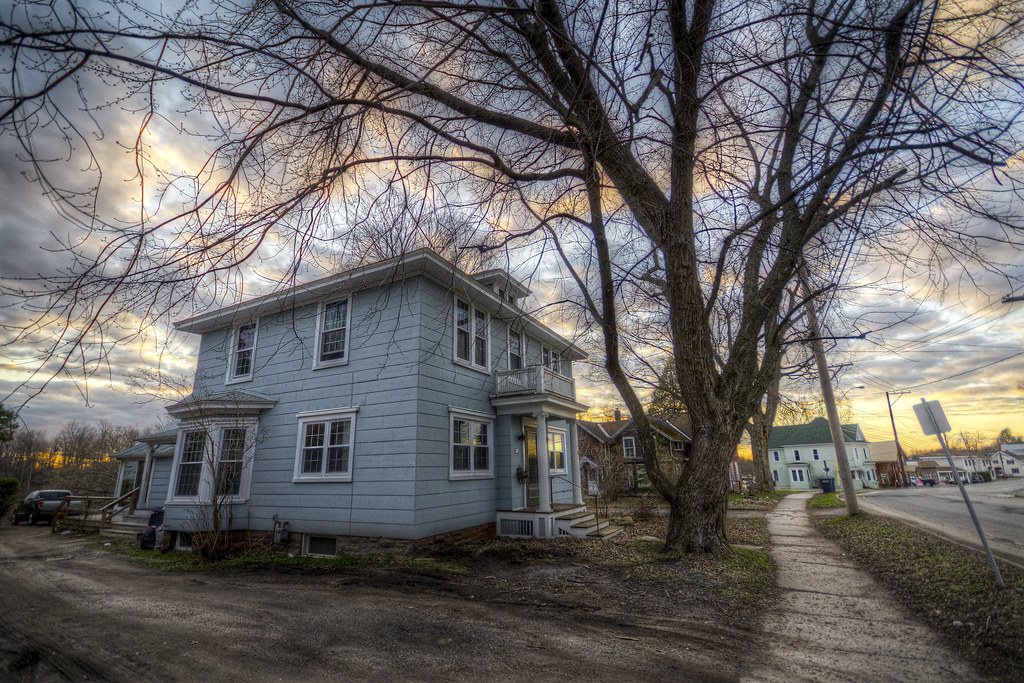
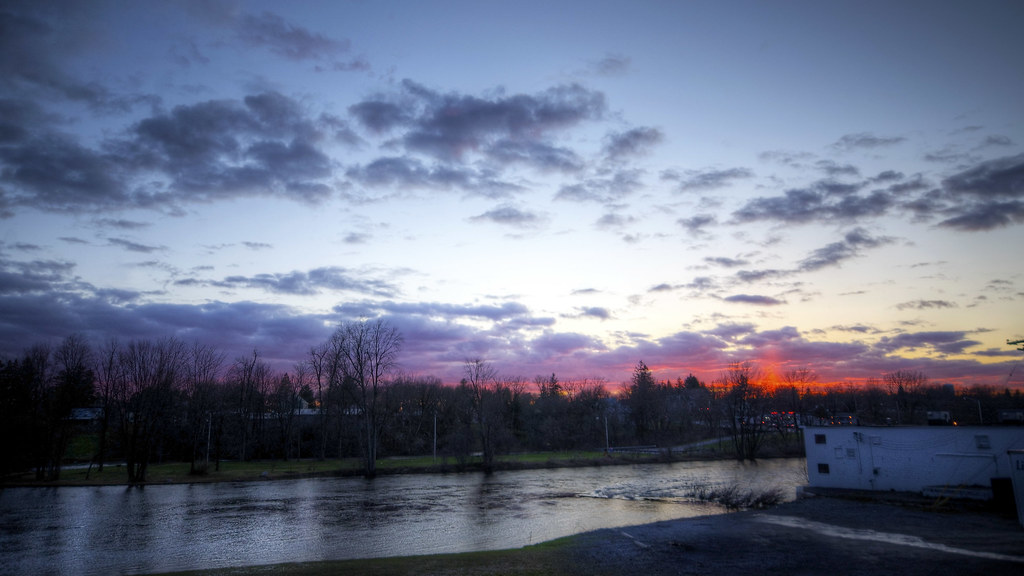
Spring is late to the North Country, and though the snow is gone and the homes have (mostly) survived, plant life hasn’t yet surpassed the “first hints of green grass” level. There’s nonetheless a certain crunchy, dusty beauty to the sunset now—one that is nicely offset by the glossy reflections from window panes.
I may continue to bemoan the theme-park-like atmosphere of Muir Woods by midday on Saturday, but in the very early morning, with dawnlight scattering through the marine layer, it’s easy to forget about all that. There are no words to describe the place without resorting to cliché. Even so, the echoes of “Six Flags: Muir Woods” still exist, like these wood pathways designed to lessen the destruction that would be caused by enormous numbers of visitors on dirt paths.

On those special nights, when ice crystals align correctly in the atmosphere, atmospheric optics get a bit crazy and a sun pillar like the one here appears.
Though, to be honest, even the Rayleigh scattering that makes the sky blue is crazy to begin with. The strange behavior of light and matter (thanks, Richard Feynman!) never ceases to amaze me.
While the early-morning pony divisions begin, the marine layer swathing the San Francisco Peninsula is still burning. I took this image almost exactly two years ago, and didn’t think much of it, but I viewed it today and found it an interesting study. The casual pose of the rider, one arm back, feet in motion, conveys a kind of confident swagger and nonchalance that matches the gentle stepping of the pony. The impact of her garb, a 1/2-scale version of the careful, quasi-historical hunter uniform, only adds to the effect. In reality, though, competition is never that simple or easy—and I think her face conveys that.

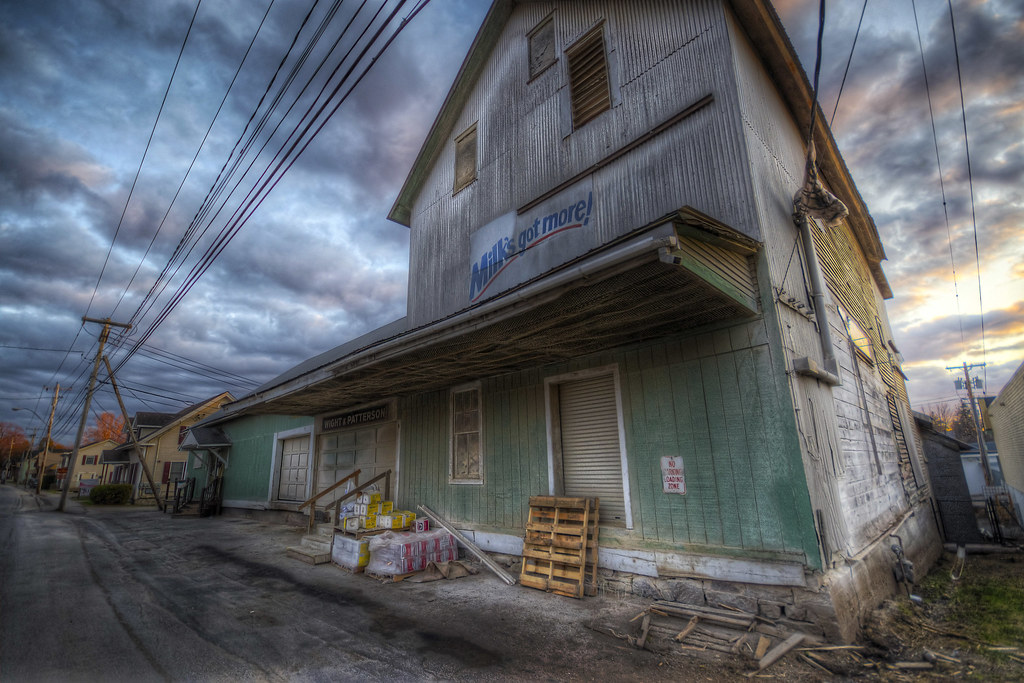
I’ve always been fascinated by the American colloquialism of calling any feed store an elevator. (Though Canton does have a larger grain elevator of its own, as well.) When the sunset sky is at its most glorious, reality highlights the hyperutilitarian aesthetic of a working building: it has to be painted some color, so it might as well be post-war pastels.
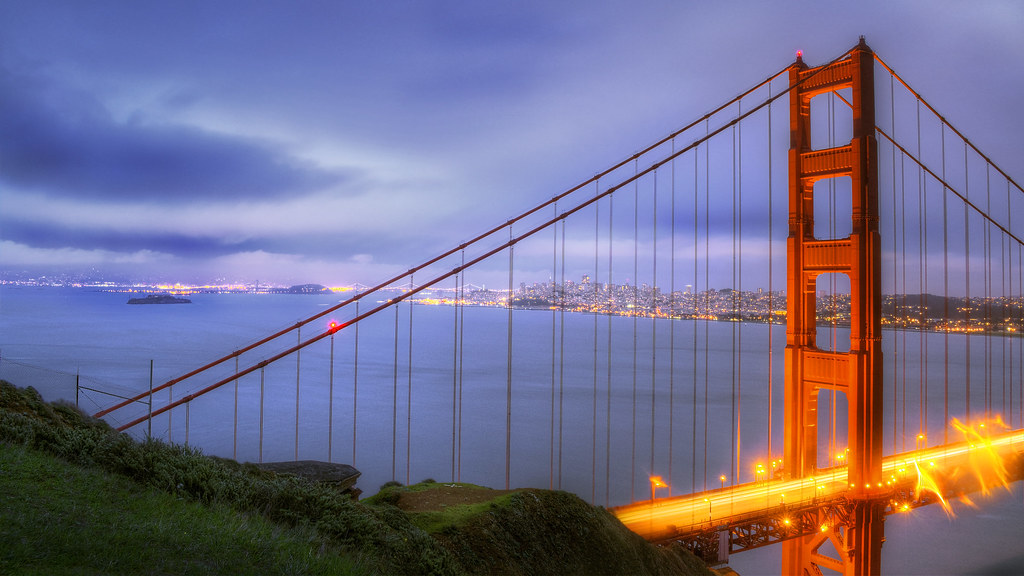
I sometimes sift through the RAW files I took long in the past, searching for meaning in images I captured long ago. In the case of this particular photograph, there’s more to the image than just my favorite Bay Area gradient of differing environments (e.g. Oakland and San Francisco and Alcatraz and two different enormous bridges and so on): there’s also a feeling of place and moment. The dramatic clouds and the grasses and the hint of the Golden Gate’s span are all spectacular, but the optics of a raindrop spattered across the lens add just as much to the image. You can practically smell the petrichor in the air.
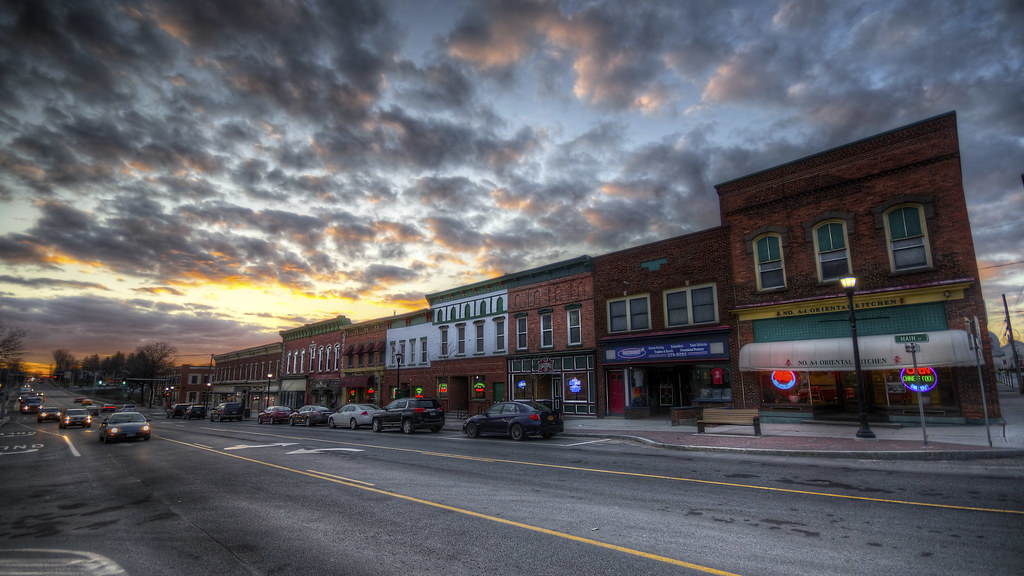
David Lynch brings an edge of dark menace to his films; I can still remember the first time I saw Blue Velvet and felt the crisp edge of real and unreal disintegrating. In particular, the director’s visions of Small Town America and the underbelly of that beast (in Blue Velvet and Twin Peaks, particularly) felt notable in “downtown” Canton last week. With the sky aflame and neon lights in every window, the scene was about 15 minutes away from some Lynch-level insanity.