For all of the fancy-looking holders and posts and hardware, an optical table is ultimately designed to put specific optics in front of the laser beam as it travels to generate a desired effect. This view of the space leading to our detector shows how many parts can accrue in pursuit of a given goal.
Tag: spectroscopy
Retroreflection I & II
Retroreflectors are used in optics to send a beam of light back from whence it came. While this can sometimes involve laborious alignment of adjustable mirrors, these custom-built “zero degrees of freedom” mounts hold the high-reflector mirrors against perfect-90º prisms to guarantee the correct geometry.
The Cell
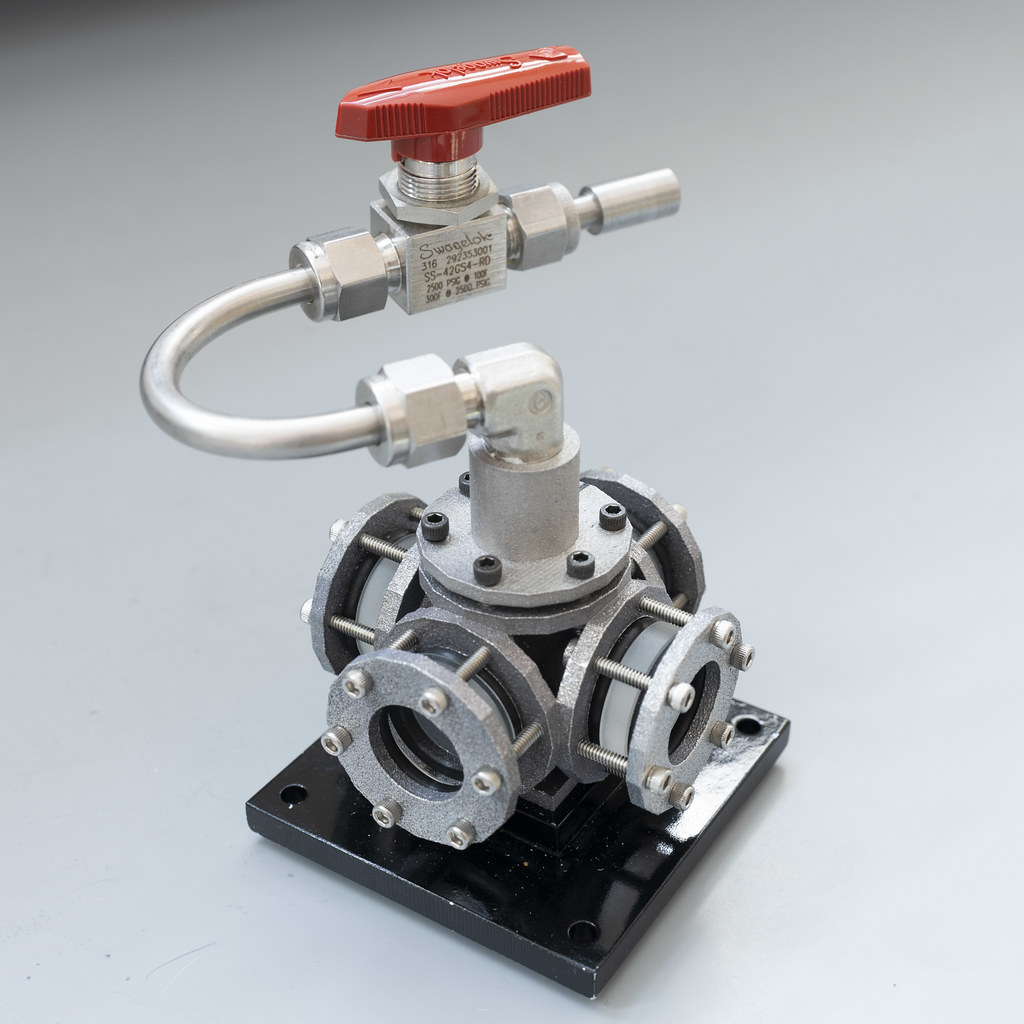
Over the course of the past two years, I’ve used OpenSCAD to design a gas/vacuum cell that can support a pressed silica nanoparticle pellet in front of a variety of spectroscopy systems. The core of the cell was 3D printed in aluminum by Shapeways, with some subsequent facing on our lathe to get good seals with the O-rings. This first version is designed to fit into our fluorimeter.
After using the first cell for a year, I realized I also wanted to be able to attach it to a fiber-optic-based spectrometer. Here, you can see the second cell attached to our Schlenk line.
Lasers
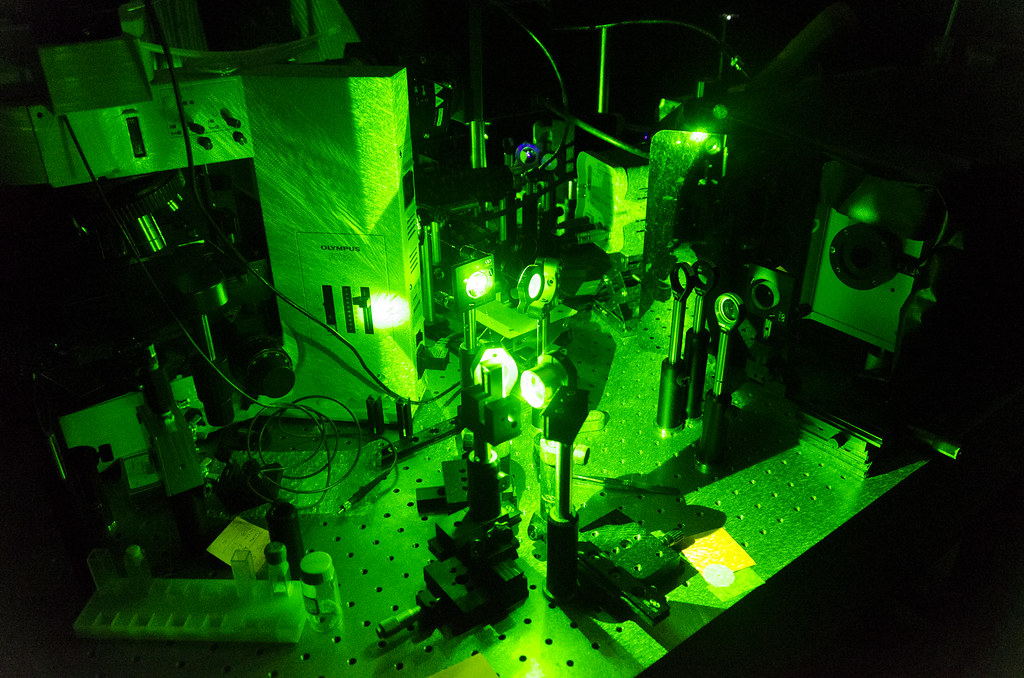
The hours I spend in the physics and chemistry labs of St. Lawrence University make me a bit inured to the optical shenanigans occurring when we take Raman spectra of the materials my students synthesize. Still, the effect is pretty fantastic. The grainy pattern of the laser on surfaces around lab is fantastic, but the fluorescence ink on the post-it note in the foreground fluorescing aggressively is pretty cool, too.
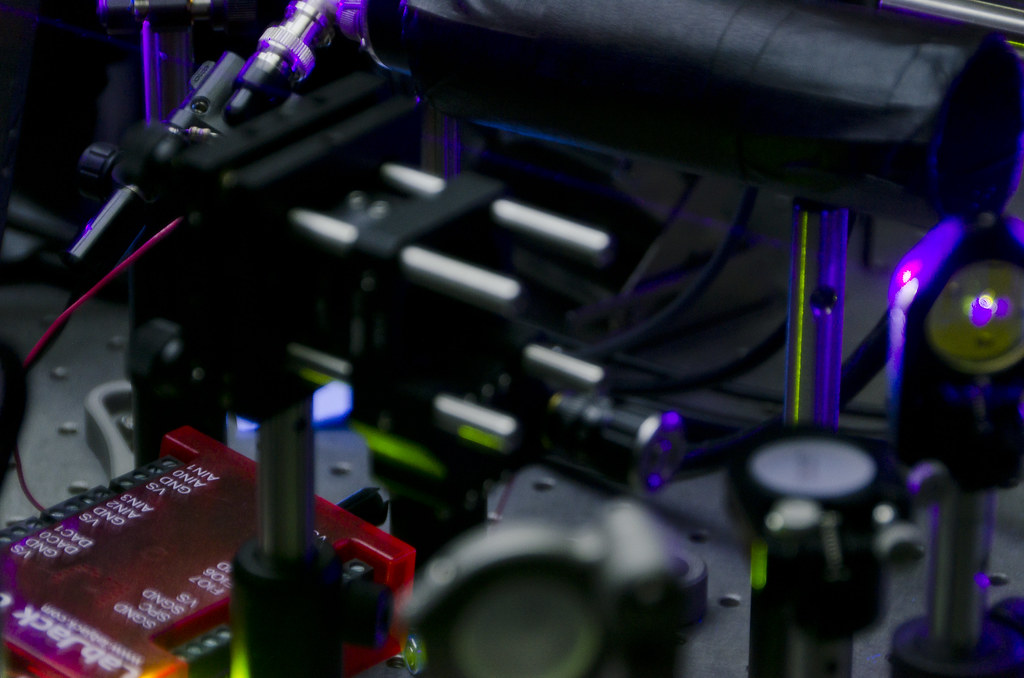
That violet-blue light in the background of the shot above is the 405 nm laser we use to initiate photochemical processes. The beam is poorly detected by the camera’s sensor, but the slightest hint of it is visible in the upper third of the image below.
Spectroscopy Lab
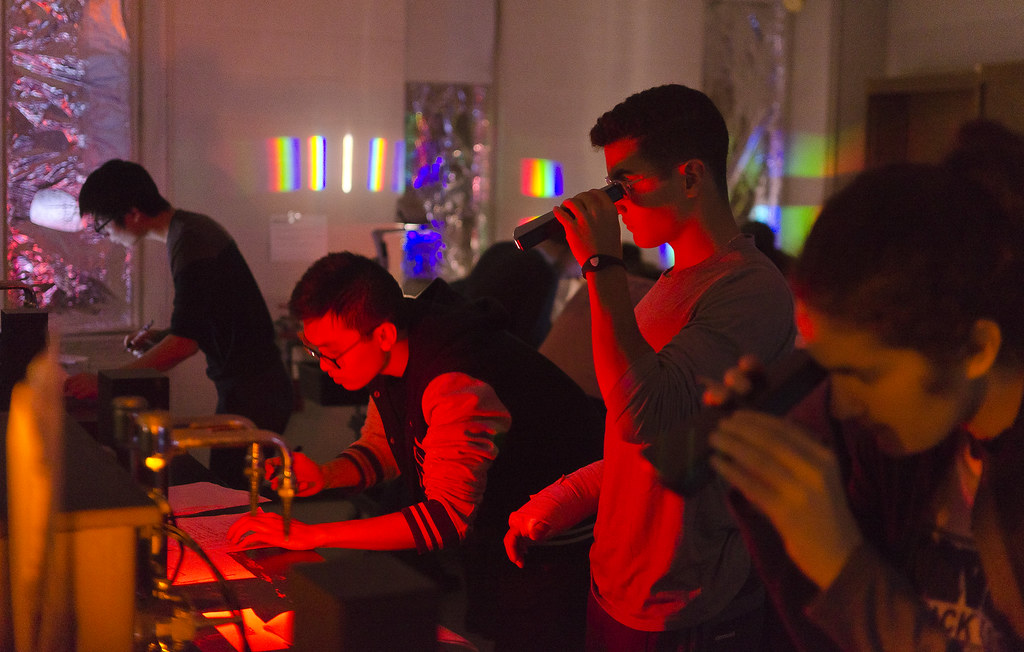
Approaching the summer solstice, the start of fall-semester classes and their attendant labs seems far away, but a new class of St. Lawrence first-year students will be here before I know it.
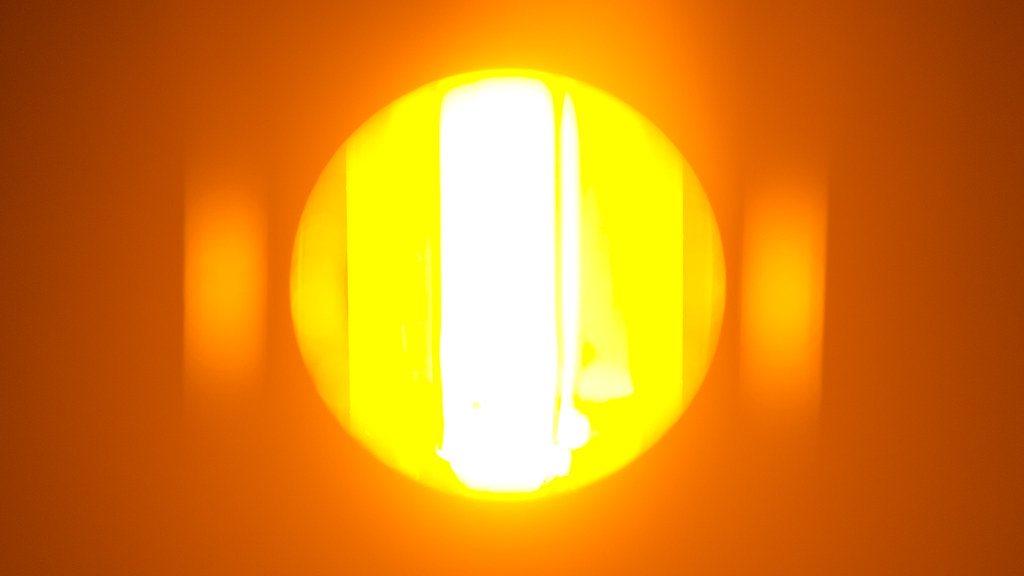
This was one of the light sources students were interrogating: a sodium lamp, like the ones used in street lights (at least in the twentieth century—LED street lamps are becoming increasingly dominant now.)
Spectroscopy Lab
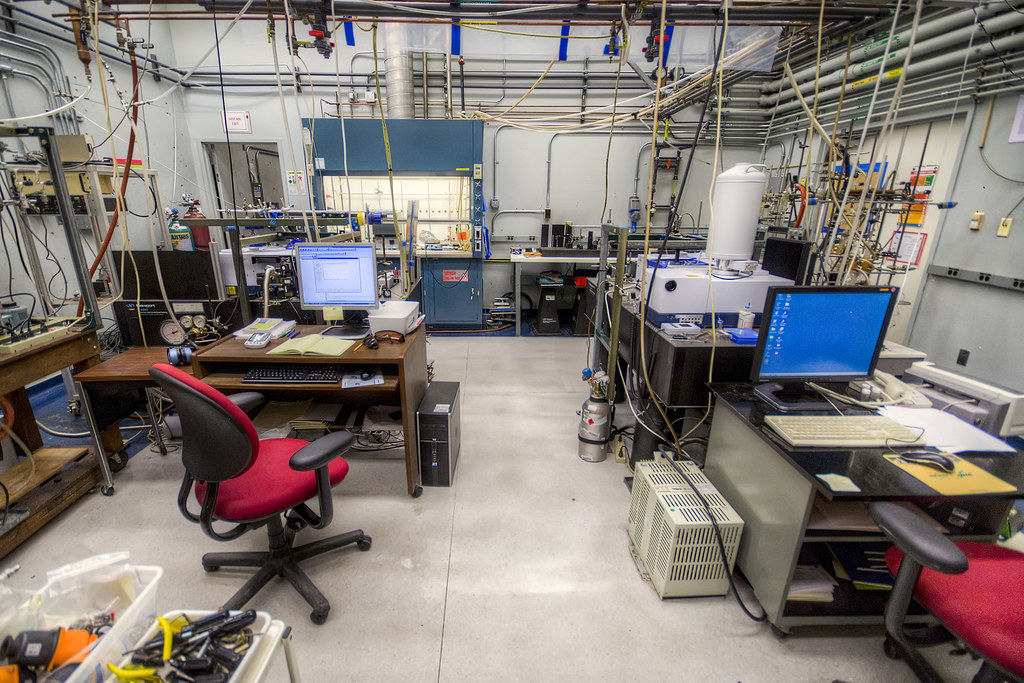
After spending my entire adult life as a laboratory scientist, the web of gas lines and vacuum pumps and electrical cable seems normal. I do understand, rationally, that all of this looks overwhelming. There’s so much purpose and productivity behind the network, however, that it’s worth the sophistication.